Last updated on May 22, 2026, by Lucy
Many buyers get confused when a supplier asks for MOQ. It can feel like a barrier, especially when you only need a small batch or prototype parts.
MOQ in manufacturing means “Minimum Order Quantity.” It is the smallest number of parts a supplier is willing to produce in one order. Manufacturers set MOQ to recover setup costs, reduce material waste, and keep production efficient. Higher MOQ usually lowers the cost per unit because fixed production expenses are spread across more parts.
MOQ sounds simple at first. Still, it affects pricing, lead time, sourcing strategy, and supplier relationships. I have worked with buyers who reduced costs by understanding MOQ early. I have also seen projects delayed because MOQ was ignored during the design stage.
What Is MOQ in Manufacturing?
Many engineers and purchasing managers hear MOQ during quoting. Yet many people still do not know how it really works in machining and custom manufacturing.
MOQ stands for Minimum Order Quantity. It refers to the lowest number of units a manufacturer accepts per order. In CNC machining, MOQ can range from one prototype part to hundreds of production parts depending on setup time, tooling requirements, materials, and machining complexity.
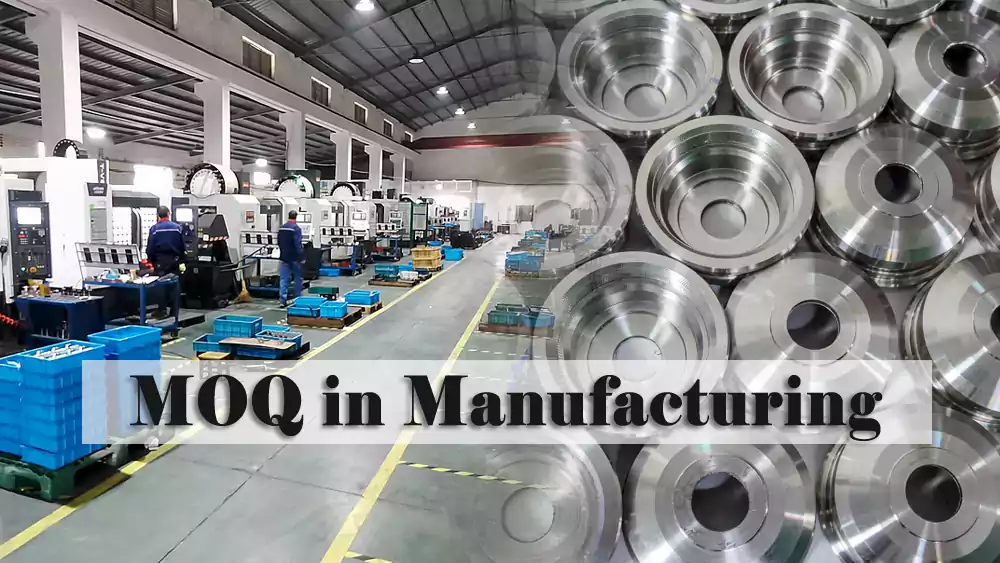
MOQ exists in almost every manufacturing industry. I see it often in CNC machining, injection molding, sheet metal fabrication, and casting. The number itself depends on how much effort the supplier must invest before the first part is made.
Why MOQ Exists
Before machining starts, a shop usually needs to:
- Program CNC toolpaths
- Prepare fixtures and tooling
- Purchase raw materials
- Schedule machine time
- Perform first article inspection
All these steps cost money. If the order quantity is too low, the supplier may lose profit.
MOQ in Different Manufacturing Processes
| Manufacturing Process | Typical MOQ | Main Reason |
|---|---|---|
| CNC Machining | 1–100 pcs | Setup and programming cost |
| Injection Molding | 500–10,000 pcs | Mold tooling investment1 |
| Die Casting | 1,000+ pcs | Expensive tooling |
| Sheet Metal Fabrication | 10–100 pcs | Material utilization |
| 3D Printing | 1 pc | Minimal setup cost |
In my own experience, CNC machining often has the most flexible MOQ. That is why many startups use CNC machining services for prototypes before moving to molding or casting.
MOQ Is Not Always Fixed
A good supplier may adjust MOQ based on:
- Long-term cooperation
- Material availability
- Production schedule
- Repeat orders
- Part complexity
I once worked with a robotics customer who only needed 8 aluminum housings for testing. The normal MOQ was 25 pieces. We accepted the small batch because the client planned larger production later.
Why Do Manufacturers Set MOQ?
Many buyers think MOQ is only about profit. That is partly true, but the real reason is production efficiency and cost control.
Manufacturers set MOQ to cover machine setup costs, labor, tooling preparation, and material purchasing. Small orders often require the same preparation work as large orders, which makes low-volume production far more expensive per part.
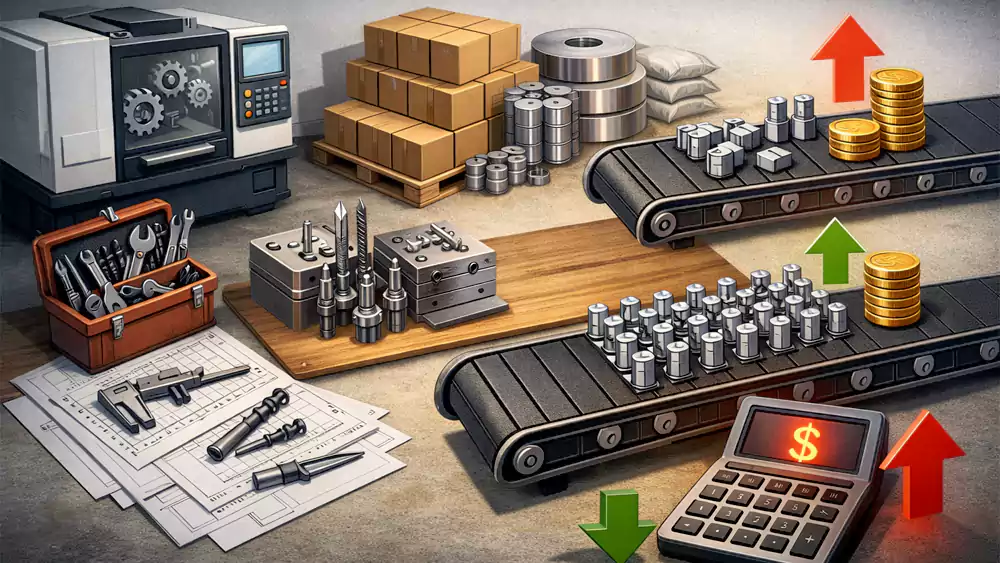
A CNC machine does not care if you produce one part or one hundred parts. The machine setup still takes time. Operators still need to prepare tools, verify dimensions, and inspect samples.
Main Cost Factors Behind MOQ
| Cost Factor | Impact on MOQ |
|---|---|
| CNC programming | High for custom parts |
| Tooling setup | Higher for complex geometries |
| Raw material purchase | Suppliers may require bulk material orders |
| Quality inspection | Same process for small or large orders |
| Packaging and logistics | Small shipments are less efficient |
Real CNC Machining Case Study
A customer from the USA asked me for custom stainless steel brackets used in industrial automation equipment.
| Parameter | Value |
|---|---|
| Material | SUS304 Stainless Steel |
| Quantity Requested | 12 pcs |
| Recommended MOQ | 50 pcs |
| CNC Machines Used | 4-axis machining center |
| Tolerance Requirement | ±0.01 mm |
| Surface Finish | Bead blasting |
| Setup Time | 5.5 hours |
| Machining Time Per Part | 18 minutes |
| Initial Quote at 12 pcs | $86/pc |
| Revised Quote at 50 pcs | $31/pc |
The customer first felt the MOQ was too high. After I explained the setup cost breakdown, he understood why the price changed so much. He later increased the order quantity because the lower unit cost made sense for future spare parts inventory.
MOQ Also Reduces Production Risk
Suppliers also use MOQ to avoid:
- Excessive machine interruptions
- Material leftovers
- Unprofitable one-time jobs
- Frequent small-batch scheduling2
This becomes even more important during busy production seasons.
How MOQ Affects Pricing and Purchasing
MOQ directly changes the final unit price. Many buyers focus only on the piece price and forget the hidden setup cost behind manufacturing.
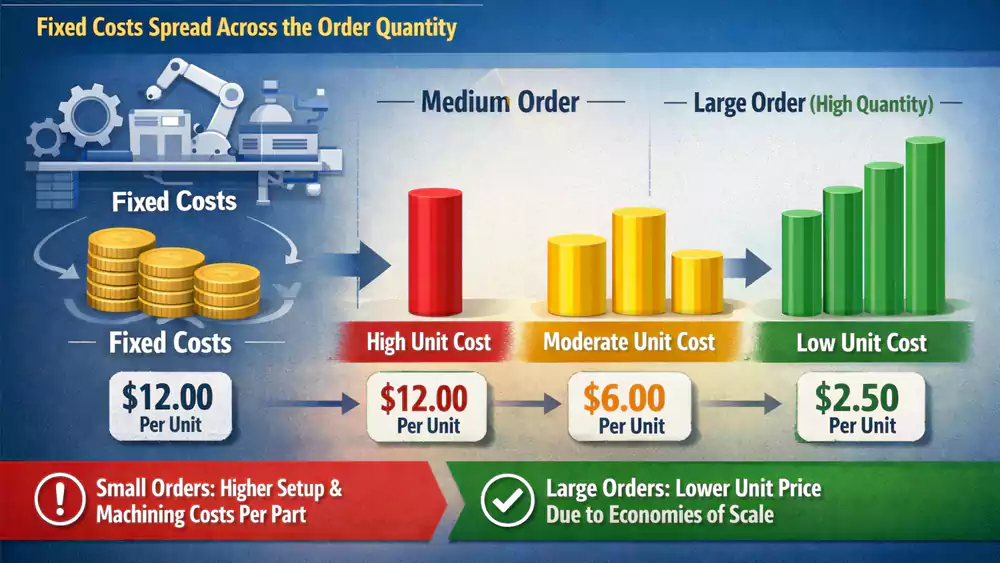
MOQ affects pricing because fixed production costs are shared across the total quantity ordered. Higher order quantities usually reduce the unit price, while very small orders often carry higher machining, setup, and inspection costs per part.
I always tell customers to think about total project cost instead of only the first quote.
Example of MOQ Price Breakdown
| Quantity | Setup Cost Allocation | Unit Price |
|---|---|---|
| 5 pcs | Very High | $120 |
| 20 pcs | Medium | $58 |
| 100 pcs | Low | $18 |
The machining process may barely change. The difference comes from how the fixed costs are distributed.3
MOQ and Inventory Strategy
MOQ also affects purchasing decisions.
Some companies order more parts because:
- They want safety stock
- They expect future demand
- They want lower unit pricing
- They want to reduce future lead times
Still, ordering too much inventory can create problems.
Risks of Ordering Above MOQ
| Risk | Result |
|---|---|
| Excess inventory | Higher storage cost |
| Engineering revisions | Old parts become obsolete |
| Cash flow pressure | More capital tied up |
| Demand uncertainty | Unsold inventory |
I have seen customers save money per unit but lose money overall because design updates made old inventory useless six months later.
How to Negotiate or Reduce MOQ?
MOQ is not always final. Many suppliers are willing to discuss alternatives if the project has long-term potential.
You can often reduce MOQ by simplifying the design, choosing common materials, accepting flexible lead times, or building a long-term relationship with the supplier. Prototype machining services also usually offer lower MOQ than mass production suppliers.
I have negotiated MOQ from both sides for years. The best results usually come from open communication instead of aggressive price pressure.
Practical Ways to Reduce MOQ
Use Standard Materials
Special alloys often force suppliers to buy large raw material quantities. Standard aluminum or steel is easier for small orders.
Simplify Machining Features
Tight tolerances and deep cavities increase setup complexity. Simple geometry lowers production risk.
Combine Multiple Parts
Some customers combine several components into one order to reach MOQ faster.
Accept Flexible Delivery
If production timing is flexible, suppliers may insert small orders into existing schedules.
Questions Buyers Should Ask
| Question | Why It Matters |
|---|---|
| Is the MOQ flexible? | Some suppliers allow exceptions |
| Can prototype MOQ differ? | Prototype runs are often lower |
| Can materials be shared? | Shared stock lowers costs |
| Are repeat orders expected? | Long-term business changes pricing |
I once helped a startup reduce MOQ by sharing material stock with another customer running the same aluminum grade. That reduced waste and helped both projects.
MOQ vs EOQ vs MPQ: What’s the Difference?
Many sourcing teams confuse MOQ with EOQ and MPQ. They are related but serve different purposes.
MOQ is the supplier’s minimum order requirement. EOQ stands for Economic Order Quantity and helps buyers balance inventory costs. MPQ means Minimum Packaging Quantity and refers to how products are packed or shipped.
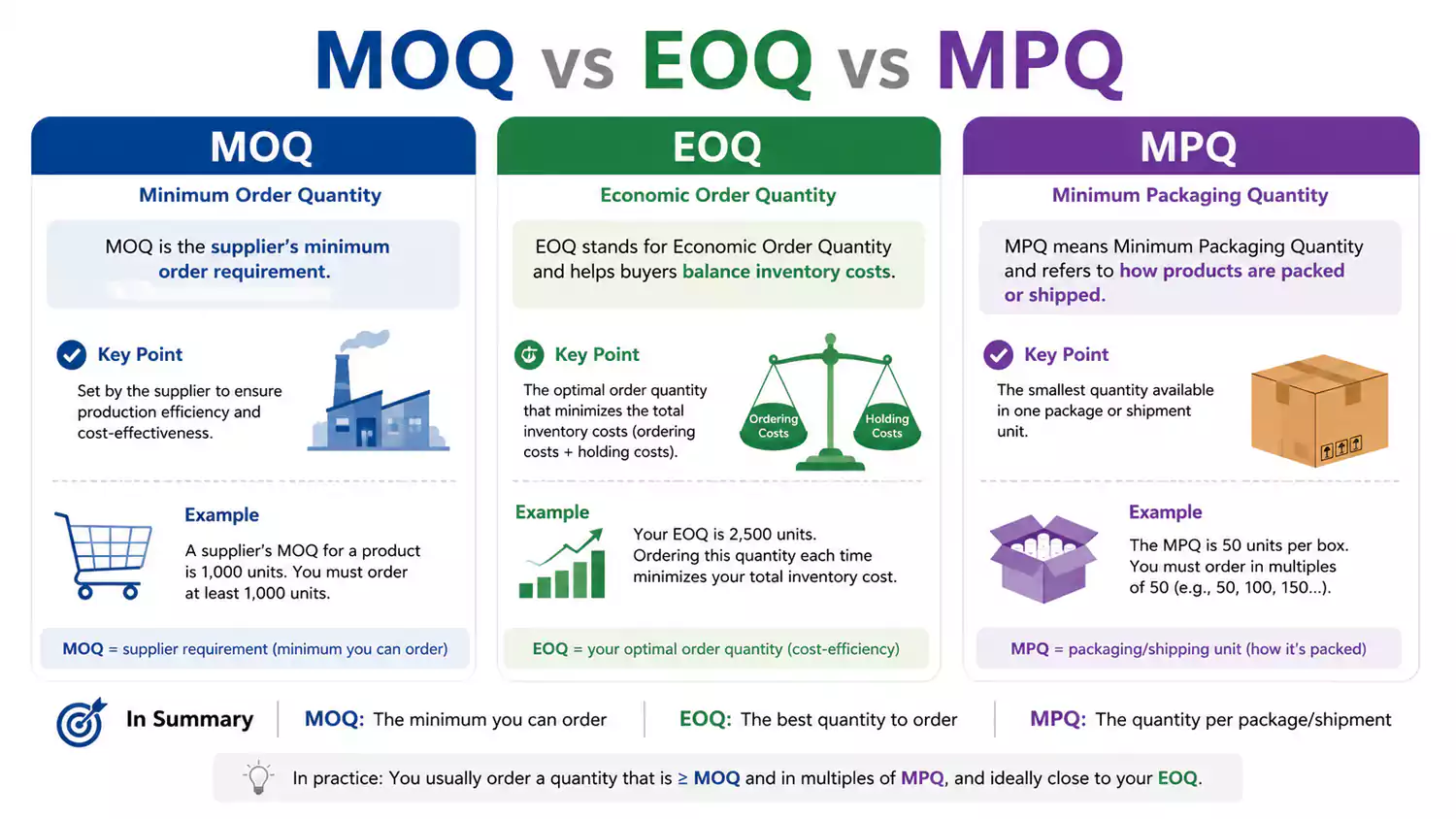
These terms often appear together in procurement and supply chain discussions.
Quick Comparison
| Term | Full Name | Controlled By | Purpose |
|---|---|---|---|
| MOQ | Minimum Order Quantity | Supplier | Protect production efficiency |
| EOQ | Economic Order Quantity | Buyer | Optimize inventory cost |
| MPQ | Minimum Packaging Quantity | Supplier or logistics team | Simplify packaging and shipping |
Real Manufacturing Example
A CNC supplier may set:
- MOQ = 50 pcs
- MPQ = 10 pcs per carton
Meanwhile, the buyer’s internal inventory system may calculate:
- EOQ = 120 pcs
This means the supplier wants at least 50 pieces, the packaging works in groups of 10, and the buyer believes 120 pieces is the best inventory quantity.
Why These Terms Matter
Understanding these terms helps buyers:
- Compare suppliers correctly
- Reduce sourcing mistakes
- Improve inventory planning
- Negotiate smarter pricing
In many cases, confusion around MOQ comes from mixing it with purchasing strategy instead of production limitations.
FAQs
Can MOQ be negotiated?
Yes. Many manufacturers are open to negotiation, especially for long-term customers, prototype projects, or repeat orders.
What is a typical MOQ for CNC machining?
CNC machining MOQ can range from 1 piece to around 100 pieces depending on setup complexity, material type, and supplier capacity.
Why is MOQ higher for custom parts?
Custom parts usually require dedicated programming, tooling, inspections, and setup work, which increases production cost.
Is low MOQ more expensive?
Yes. Low MOQ orders usually have higher unit prices because fixed setup costs are divided across fewer parts.
What happens if I order below MOQ?
Some suppliers may reject the order. Others may accept it but charge a setup fee or higher unit price.
Do prototype machining services have MOQ?
Many prototype machining services support very low MOQ, including single-piece orders, because CNC machining is flexible for short runs.
Conclusion
MOQ is not a barrier designed to stop small buyers. It is a practical way for manufacturers to balance setup costs, machine efficiency, and production planning. Once you understand how MOQ works, it becomes much easier to compare quotes, control costs, and build stronger relationships with reliable manufacturing partners.

-
"Injection moulding - Wikipedia", https://en.wikipedia.org/wiki/Injection_moulding. Technical descriptions of injection molding note that molds are specialized tooling with substantial upfront cost, making the process most economical for larger production runs. Evidence role: mechanism; source type: education. Supports: Injection molding commonly has higher minimum order quantities because the mold tooling requires significant upfront investment.. Scope note: This contextual evidence supports the reason for higher MOQs, but it may not directly confirm the specific 500–10,000 piece range shown in the table. ↩
-
"Batch Production: Boost Efficiency & Quality | Qoblex", https://qoblex.com/blog/batch-production-maximizing-efficiency-through-technology/. Production-planning research on lot sizing and scheduling identifies setup or changeover activities as constraints that affect machine utilization and production efficiency, providing context for why manufacturers may prefer larger batches or minimum order quantities. Evidence role: general_support; source type: paper. Supports: Frequent small-batch scheduling can increase interruptions, setup/changeover burden, and production-planning inefficiency, which suppliers may try to reduce through MOQ policies.. Scope note: The source would support the scheduling-efficiency rationale generally, not prove that every CNC supplier uses MOQ for this reason. ↩
-
"What Is Cost Allocation? Definition, Methods, and Benefits | NetSuite", https://www.netsuite.com/portal/resource/articles/accounting/cost-allocation.shtml. Standard cost-accounting and microeconomic treatments explain that fixed setup or overhead costs are spread over output volume, so average cost per unit falls as quantity rises, all else equal. Evidence role: mechanism; source type: education. Supports: The unit price can decrease as order quantity increases because fixed setup costs are allocated across more units.. Scope note: This supports the cost-allocation mechanism generally; it does not verify the specific dollar amounts in the article’s example table. ↩
