Last updated on May 11, 2026, by Lucy
Many engineers choose the wrong cutting process first. This often leads to higher costs, delayed production, and unnecessary redesign work.
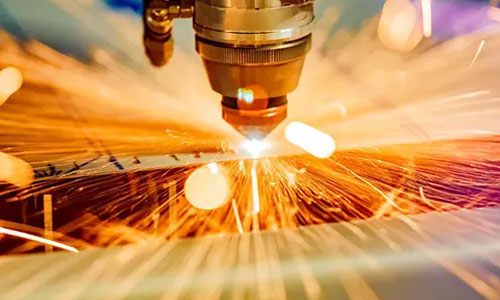
Laser cutting is a high-speed and highly accurate manufacturing process that uses a focused laser beam to melt, burn, or vaporize material. It is best for flat parts, intricate shapes, and low-to-medium volume production where precision, fast turnaround, and low tooling cost are critical.

Laser cutting is often the first step in modern sheet metal production. I have seen many projects start with a simple flat part, then move into bending, machining, coating, and final assembly. That is why understanding where laser cutting fits in the workflow helps engineers avoid expensive mistakes later.
What Is Laser Cutting and When Should You Use It?
Many buyers know laser cutting is fast, but they do not always know when it is the best option.
Laser cutting is best used for flat sheet parts that require clean edges, tight repeatability, complex contours, and fast production without tooling investment.
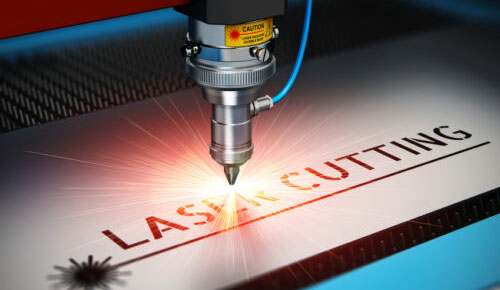
Before choosing any manufacturing process, I always ask one question first: is the part mostly flat? If the answer is yes, laser cutting is usually the first process worth considering. It is fast, scalable, and flexible.
How Laser Cutting Works
Laser cutting follows a simple process:
| Step | Description |
|---|---|
| Laser generation | Laser source creates concentrated energy |
| Beam delivery | Fiber or mirrors guide the beam |
| Beam focusing | Lens focuses beam to a small point |
| Material interaction | Material melts or vaporizes |
| Gas assist | Gas removes molten material |
Main Laser Cutting Methods
Fusion Cutting1
Fusion cutting melts material and removes it with nitrogen or inert gas.
Best for:
- Stainless steel
- Aluminum
- Clean edge requirements
Flame Cutting
Flame cutting combines laser energy with oxygen.
Best for:
- Carbon steel
- Thick mild steel
Benefits:
- Lower operating cost
- Faster thick steel cutting
Trade-off:
- Oxidized edge
Sublimation Cutting
Material turns directly into vapor.
Best for:
- Plastics
- Thin wood
- Paper products
Fiber vs CO2 vs Nd:YAG2 Laser Comparison
| Laser Type | Best For | Advantages | Limitations |
|---|---|---|---|
| Fiber Laser | Metals | Fast, efficient, low maintenance | Higher machine cost |
| CO2 Laser | Non-metals | Versatile material range | More maintenance |
| Nd:YAG | Micro precision | Fine features | Slower speed |
How to Choose the Right Laser System
I usually recommend:
- Fiber laser for most metal parts
- CO2 for acrylic, wood, and plastics
- Nd:YAG for precision micro parts
If speed, repeatability, and clean profiles matter, laser cutting is often the smartest starting point.
Laser Cutting Materials, Design Rules, and Technical Limits?
A design may look perfect in CAD but still fail in production if it ignores process limits.
Laser cutting supports many metals and non-metals, but material type, thickness, and design geometry directly affect edge quality, precision, and production cost.
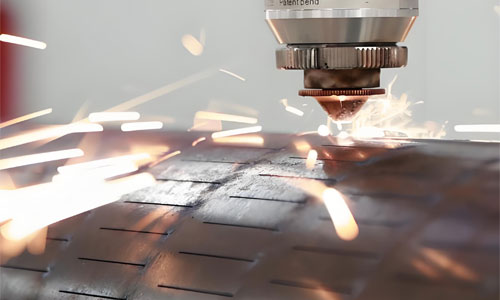
Material choice is one of the first cost decisions in any project. I often see engineers optimize geometry carefully but overlook how material behavior changes under heat.
Materials Compatible with Laser Cutting
Metals
Common metals:
- Stainless steel
- Carbon steel
- Aluminum
- Titanium
- Brass
- Copper
Non-Metals
Common non-metals:
- Acrylic
- ABS
- Polycarbonate
- MDF
- Wood
- Rubber
Thickness Capabilities
Typical industrial ranges:
| Material | Thickness Range |
|---|---|
| Stainless steel | 0.5–20 mm |
| Carbon steel | 0.5–25 mm |
| Aluminum | 0.5–15 mm |
| Acrylic | 1–25 mm |
As thickness increases:
- speed decreases
- kerf widens
- edge quality declines
Precision and Tolerances
Typical laser cutting tolerances:
| Feature | Tolerance |
|---|---|
| General profile | ±0.1 mm to ±0.2 mm |
| Small holes | ±0.05 mm to ±0.1 mm |
Laser cutting is precise, but not ideal for:
- bearing bores
- tight fits
- precision threads
These often require secondary machining.
Design Guidelines
Minimum Hole Diameter
Recommended rule:
- Hole diameter ≥ material thickness
Example:
- 3 mm sheet → minimum 3 mm hole
Corner Radius
Avoid zero-radius internal corners.
Recommended:
- radius ≥ 0.5 × thickness
Slot and Tab Design
Account for:
- assembly clearance
- coating thickness
- bending deformation
What Affects Laser Cutting Cost?
| Factor | Cost Impact |
|---|---|
| Material type | High |
| Thickness | High |
| Cutting length | Medium |
| Piercing quantity | High |
| Quantity | Medium |
| Secondary operations | High |
A simple-looking part with hundreds of holes can cost more than a larger part with fewer features.
Good design lowers cost before production even starts.
Industrial Applications and Laser Cutting vs Other Processes?
Laser cutting is widely used because many products begin as flat material before forming or machining.
Laser cutting is ideal for industries that require fast sheet fabrication, repeatable profiles, and efficient production of metal or plastic flat components.
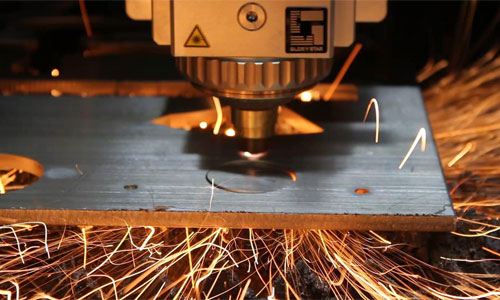
Laser cutting rarely exists alone in real manufacturing. In my experience, it works best as part of a larger production chain.
Common Applications
Aerospace
Used for:
- brackets
- mounting plates
- titanium panels
- housings
Automotive and Motorcycle
Used for:
- battery trays
- heat shields
- decorative panels
- exhaust components
Medical and Electronics
Used for:
- enclosures
- covers
- stainless frames
- control panels
Laser Cutting vs Other Processes
| Process | Best For | Weakness |
|---|---|---|
| Laser cutting | Fast sheet cutting | Heat affected zone |
| CNC machining | Tight tolerance 3D parts | Higher flat-part cost |
| Waterjet | Thick materials, no heat | Slower speed |
| Plasma | Thick steel, low cost | Lower precision |
When Laser Cutting Is Best
Choose laser cutting when:
- part is flat
- geometry is complex
- volume is low to medium
- tooling budget is limited
Choose CNC machining when:
- tight tolerances matter
- 3D features exist
- threaded or machined surfaces are required
Leave the flat work to the laser; leave the precision work to us.
Case Study: Stainless Steel Enclosure Project
A robotics customer required precision enclosure panels.
| Parameter | Value |
|---|---|
| Material | SUS304 stainless steel |
| Thickness | 2.0 mm |
| Quantity | 500 pcs |
| Tolerance | ±0.1 mm |
| Surface finish | Powder coating |
| Process | Laser cutting + bending + tapping + coating |
| Lead time | 9 working days |
Challenge:
- dense ventilation holes
- tight bend alignment
- assembly fit
Solution:
- fiber laser nesting optimization
- bend compensation
- post-bend tapping
Result:
- scrap rate below 1.5%
- 98% first-pass assembly success
This project is a good reminder that cutting alone is rarely the full manufacturing solution.
How to Choose a Reliable Laser Cutting Service Provider?
A supplier may offer a low price but still create hidden manufacturing risk.
A reliable laser cutting supplier should offer stable quality, accurate tolerances, fast quoting, secondary operations, and strong process control from prototype to production.
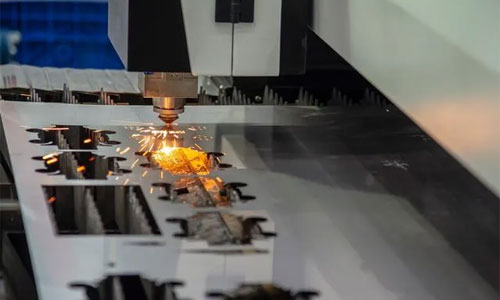
Choosing a supplier is not only about machine capability. It is also about communication speed, engineering support, and downstream manufacturing capacity.
Supplier Certifications
Look for:
Equipment Capabilities
Ask:
- laser brand
- max sheet size
- max thickness
- tolerance capability
Secondary Operations
Strong suppliers should also provide:
- CNC machining
- bending
- welding
- surface finishing
- assembly
Questions to Ask Before Ordering
Ask:
- Can you support prototyping and production?
- What tolerances are guaranteed?
- What reports are available?
- What is the lead time?
Red Flags to Avoid
Avoid suppliers with:
- no DFM feedback
- unclear material traceability
- no inspection reports
- slow quoting
- no downstream services
Integrated manufacturing partners reduce risk, shorten lead time, and simplify project management.
Frequently Asked Questions About Laser Cutting?
Engineers and buyers often ask the same practical questions before placing orders.
Laser cutting typically delivers tolerances around ±0.1 mm to ±0.2 mm, supports many sheet materials, and is highly cost-effective for prototypes and small-to-medium production runs.
Can Laser Cutting Replace CNC Machining?
No. Laser cutting is for flat geometry. CNC machining is better for precision 3D features.
Is Fiber Laser Better Than CO2 Laser?
For metal cutting, yes in most cases.
What Materials Cannot Be Laser Cut?
Difficult materials include:
- PVC
- hazardous coated materials
- certain composites
How Thick Can Metal Be Laser Cut?
Typical industrial systems cut:
- stainless steel up to 20 mm
- carbon steel above 25 mm
What File Format Is Needed?
Common formats:
- DXF
- DWG
- STEP reference files
Is Laser Cutting Cost-Effective for Low Volume?
Yes. No tooling makes laser cutting ideal for prototypes and small batches.
Conclusion
Laser cutting is one of the fastest ways to turn flat material into production-ready parts. The best results come from suppliers who can support the full workflow after cutting.
-
"Characterization of the melt removal rate in laser cutting of thick ...", https://www.academia.edu/23959626/Characterization_of_the_melt_removal_rate_in_laser_cutting_of_thick_section_stainless_steel. A technical reference on laser cutting processes can substantiate that fusion cutting operates by melting the workpiece and expelling the molten material with an inert assist gas such as nitrogen. Evidence role: definition; source type: education. Supports: Fusion cutting melts material and removes it with nitrogen or inert gas.. ↩
-
"Experimental study of Nd:YAG laser beam machining—An ...", https://www.sciencedirect.com/science/article/abs/pii/S0924013607005717. A technical or scholarly source should document that Nd:YAG lasers are solid-state lasers commonly used for precision micromachining applications where small spot sizes and fine feature control are required. Evidence role: general_support; source type: paper. Supports: Nd:YAG lasers are suitable for micro-precision laser cutting and fine-feature work.. Scope note: Support may address Nd:YAG micromachining broadly rather than directly comparing cutting speed against fiber or CO2 systems. ↩
-
"ISO 9001:2015 - Quality management systems — Requirements", https://www.iso.org/standard/62085.html. ISO 9001 is an internationally recognized standard specifying requirements for a quality management system, supporting its use as a supplier-screening indicator for consistent process control and quality assurance. Evidence role: definition; source type: institution. Supports: Buyers should look for ISO 9001 certification when evaluating manufacturing suppliers because it indicates adherence to a recognized quality management standard.. Scope note: ISO 9001 certification indicates that a quality management system has been assessed against the standard; it does not by itself prove product-specific performance or technical capability. ↩
-
"ISO 13485:2016 - Medical devices — Quality management systems", https://www.iso.org/standard/59752.html. ISO 13485 specifies quality-management-system requirements for organizations involved in one or more stages of the medical-device life cycle, supporting its relevance as a supplier qualification for medical or regulated manufacturing work. Evidence role: definition; source type: institution. Supports: ISO 13485 is a relevant certification to look for when evaluating suppliers, especially for medical-device-related manufacturing.. Scope note: This supports the relevance and meaning of the certification, not that any specific supplier holds it or performs better because of it. ↩
