Cost Reduction Strategies for CNC Machining
Practical Examples and Efficient Customized Machining Solutions
- March 12, 2025
- Tony

In today’s competitive landscape, every dollar saved on production goes straight to your bottom line. CNC machining services offer incredible precision, but they can also drain your budget if not managed smartly.
With over two decades of deep expertise in CNC machining, I’ve helped hundreds of manufacturers significantly reduce production costs while maintaining quality standards. Below are some proven, practical strategies that deliver real results on the shop floor.
1. Overview
Principles and advantages of CNC machining
CNC Machining Technology uses computer control to operate machine tools with precision, enabling the efficient production of complex parts.
Automation improves accuracy, reduces errors, and minimizes waste. Intelligent control and real-time monitoring optimize performance and enhance efficiency.
CNC customized machining in manufacturing applications
CNC custom machining supports personalized production and batch customization.
Advanced equipment and flexible programming enable quick parameter adjustments, optimizing costs. This approach also provides key data for evaluating equipment ROI.
2. CNC machining strategies to reduce production costs
To remain competitive, manufacturers must cut costs. CNC processing offers practical ways to boost efficiency and reduce waste. Here are three key strategies:
Lean Production & Process Optimization
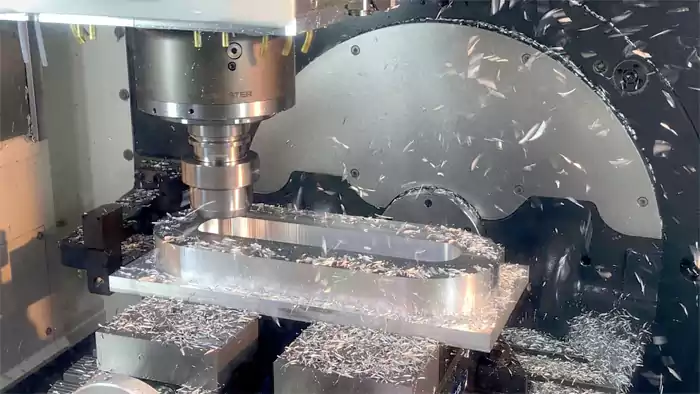
Stop wasting time and motion. On our shop floor, we’ve found that proper toolpath planning alone can reduce cycle times by 20-35%.
What this looks like in practice:
- Group similar operations to minimize tool changes
- Optimize cutting parameters for each material
- Implement real-time monitoring to catch issues early
Automation & Smart Control
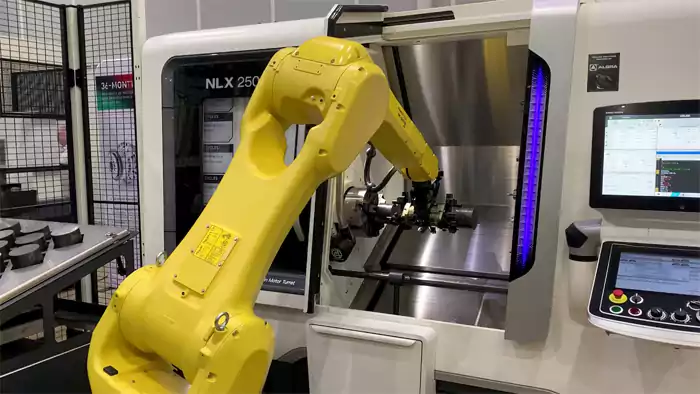
Labor costs are killing profitability. Our automated cells run 24/7 with minimal supervision, cutting labor costs by up to 60%.
Key automation benefits:
- Reduced human error and consistency issues
- Higher equipment utilization rates
- Predictive maintenance that prevents costly downtime
Smart Material Management & Procurement
Materials account for 40-60% of most part costs. Our digital supply chain integration helps clients cut material waste by 25% on average.
Material optimization tactics:
- Strategic nesting to maximize yield
- Recycling programs for metal scraps
- Bulk purchasing for high-volume materials
3. Successful Cases
🛠️Case : Aerospace Bracket Cost Reduction
We recently worked with an aerospace supplier who was spending $187 per unit on aluminum 7075 mounting brackets. Their production costs were eating into thin margins.
The Challenge:
- Part: Aluminum 7075 mounting bracket (220 × 180 × 25mm)
- Annual volume: 5,000 pieces
- Current cost: $187/part
- Production time: 47 minutes per part
- Material utilization: 58%
- Rejection rate: 6.2%
Our CNC Machining Solutions:
- Redesigned for manufacturability (reduced complex internal pockets)
- Implemented high-efficiency machining (HEM) toolpaths
- Switched to multi-part fixturing (4 parts per setup)
- Optimized tool selection for aluminum-specific cutting
- Added in-process probing to eliminate secondary operations
The Results (after 3 months):
- Unit cost: $124 (34% reduction)
- Cycle time: 28 minutes (40% faster)
- Material utilization: 82% (dramatically less waste)
- Rejection rate: 1.8% (quality improvement)
- Annual savings: $315,000
The key was treating this as a complete CNC machining service partnership , not just a supplier relationship. We became an extension of their engineering team.
4. Efficient customized processing solutions
Modern manufacturers must balance mass production with the need for individualization and small-batch runs. Advanced CNC machining and intelligent management systems now offer flexible, efficient customized machining solutions.
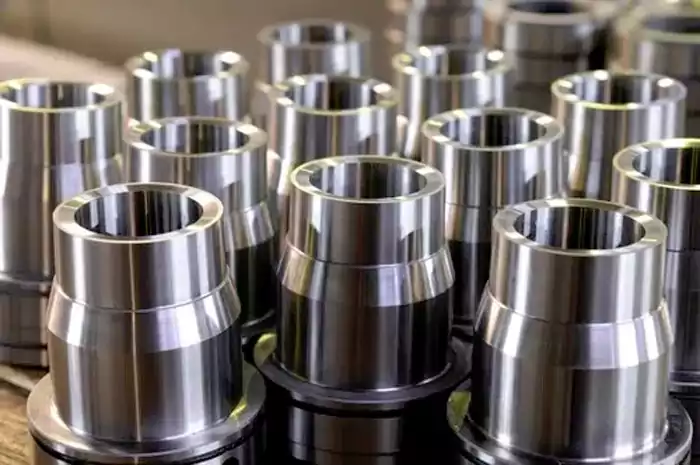
Flexible Process Planning & Parametric Programming:
Modular design and parametric programming enable quick switches between different CNC machining solutions, reducing setup time and boosting equipment utilization for varied, small-lot production.
Digital Design & Virtual Simulation:
Tools like CAD/CAM let companies simulate processes before production. This verifies feasibility, uncovers potential issues, and cuts trial costs while ensuring precision and consistency in custom CNC machining.
Integrated Intelligent Management Platform:
By linking ERP and MES systems, manufacturers can digitally manage the entire process—from order handling to production scheduling and quality control. Real-time data allows dynamic adjustments, ensuring efficient and flexible CNC machining.
Customized High-Precision Equipment & Tools:
High-precision CNC machines paired with specialized tools meet complex part requirements. Intelligent monitoring provides timely production feedback, driving continuous process optimization and cost reduction.
These solutions enable companies to quickly adapt to market changes, meet unique customer needs, and improve both production efficiency and cost control, delivering high-quality, competitive custom products.
5. CNC machining industry trends in the future
As Industry 4.0 and intelligent manufacturing evolve, CNC machining is undergoing a major transformation. The integration of smart control, data analytics, and cloud platforms will drive further automation and process optimization, enabling remote monitoring and predictive maintenance.
The future of CNC machining will be smarter, more interconnected, and more efficient:
- AI-driven optimization that continuously improves processes
- Hybrid manufacturing combining 3D printing and CNC machining
- Sustainable practices that reduce environmental impact and costs
- Remote monitoring that lets you watch your parts being made from anywhere
6. Conclusion
Precision automated manufacturing plays a key role in cutting costs and enhancing efficiency through accuracy, automation, and smart technology. By adopting lean production, automated workflows, and optimized machining solutions, companies can reduce expenses while improving quality and competitiveness.
Looking ahead, ongoing advancements in intelligent CNC machining and technological innovation will further enable flexible, efficient customized production, fostering sustainable growth across the industry.
