Last updated on March 17, 2026, by Lucy
Engineers often struggle with unclear machining quotes. Prices vary a lot. This makes budgeting hard and delays projects.
Custom CNC machining cost per part can range from $5 to $500+ in the US and EU markets, depending on material, complexity, tolerance, and volume. Prototypes cost more per part, while production reduces unit cost significantly.
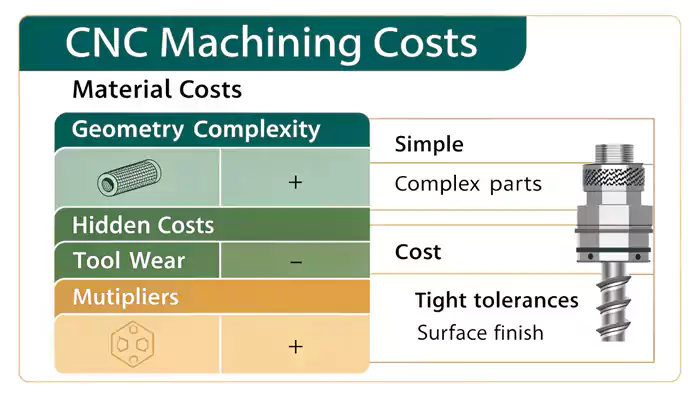
I have seen many engineers lose time and budget because they guessed costs too early. So I want to break this down in a simple and practical way.
How Much Does CNC Machining Cost Per Part?
Many engineers ask this first. They need a fast estimate before sending RFQs.
Prototype parts often cost 2–5× more per unit than production parts. In Western markets, simple aluminum parts may cost $30–$150, while complex steel parts can exceed $300 per piece.
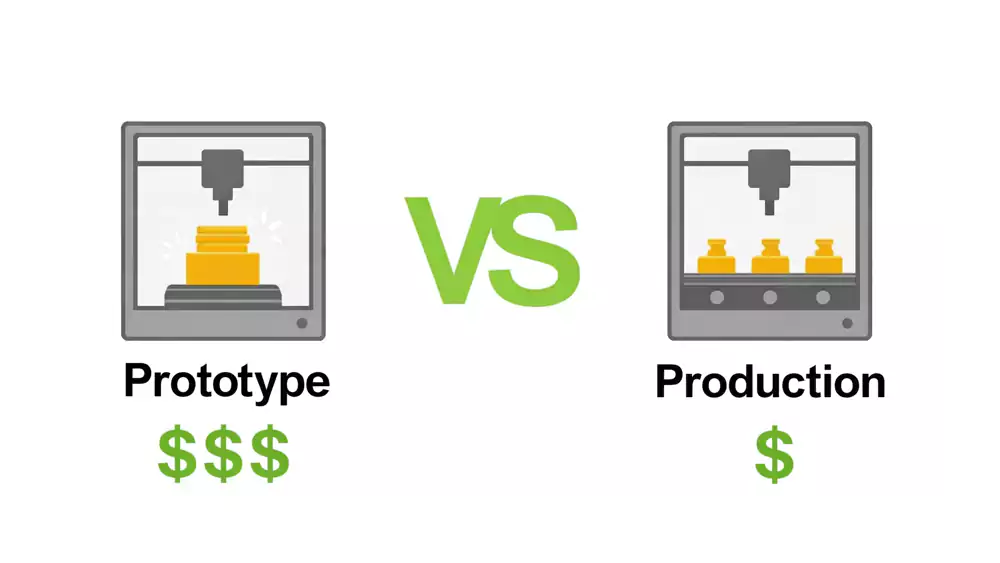
Prototype vs Production Cost
In my experience, prototypes are expensive because setup cost1 is shared across very few parts. Programming, fixturing, and tool selection take the same effort whether you make 1 part or 1000.
Production changes everything. Once setup is done, the cost per part drops fast.
| Quantity | Typical Cost Trend |
|---|---|
| 1–5 pcs | Highest cost per part |
| 10–50 pcs | Moderate reduction |
| 100+ pcs | Significant cost savings |
| 1000+ pcs | Optimized production pricing |
Typical Price Ranges (US/EU Market)
Here is a simple reference I often use:
| Part Type | Material | Cost Per Part |
|---|---|---|
| Simple bracket | Aluminum | $30–$80 |
| Medium housing | Aluminum | $80–$200 |
| Complex part | Stainless Steel | $150–$500+ |
| High precision | Titanium | $300–$1000+ |
These are not exact numbers. But they help set expectations early.
What Factors Affect CNC Machining Cost?
Many engineers underestimate how design decisions affect price. Small changes can double the cost.
CNC machining cost depends on material, geometry, tolerance, surface finish, quantity, and lead time. Among these, part complexity and tolerance have the biggest impact.
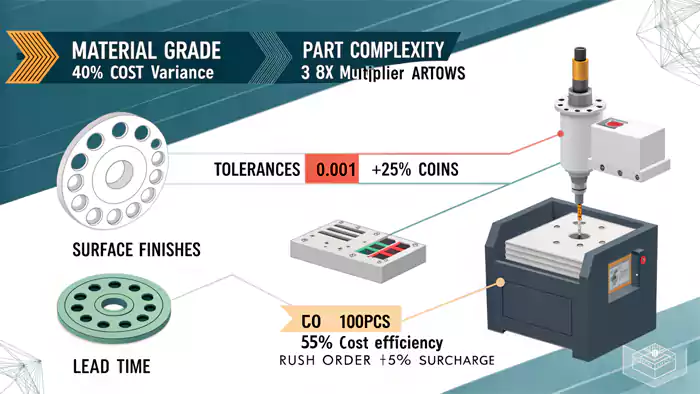
Key Cost Drivers
| Factor | Impact on Cost | Why It Matters |
|---|---|---|
| Material | Medium–High | Harder materials increase tool wear and time |
| Part Complexity | High | More setups and tool paths required |
| Tolerance | High | Tight tolerances slow machining |
| Surface Finish | Medium | Extra processes like polishing needed |
| Quantity | High | Affects cost distribution |
| Lead Time | Medium–High | Rush orders increase cost |
Deeper Insight
I often see engineers over-specify tolerances. For example, a ±0.01 mm tolerance may not be necessary for a non-critical feature. But it forces slower machining and more inspection.
Complex geometry is another hidden cost. Deep pockets, thin walls, and internal corners increase machining time. Each extra feature adds tool changes.
Material choice also matters more than expected. Aluminum is fast and cost-effective. Stainless steel is slower. Titanium is expensive due to tool wear and low cutting speed.
How to Estimate CNC Machining Cost?
Many engineers want a quick way to estimate cost before contacting suppliers.
A basic CNC machining cost estimate includes machining time, setup cost, programming cost, and tooling cost. Machining time is usually the largest contributor.
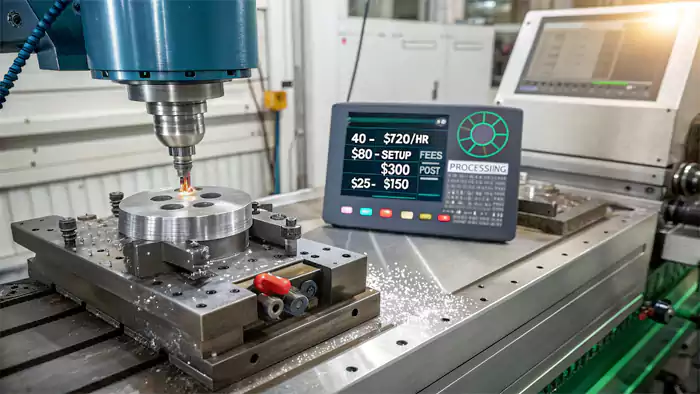
Simple Cost Formula
Total Cost = Setup Cost + Programming Cost + (Machining Time × Hourly Rate) + Tooling Cost
Typical Cost Breakdown
| Cost Element | Typical Range |
|---|---|
| Setup Cost | $50–$300 |
| Programming | $50–$200 |
| CNC Machining Cost Per Hour | $60–$150 |
| Tooling | $10–$100+ |
Practical Example
If a part takes 1 hour to machine:
- Hourly rate: $100
- Setup: $100
- Programming: $80
Total for 1 part = $280
If you produce 50 parts:
- Setup + programming spread across parts
- Cost per part drops to around $110–$140
This is why volume matters so much.
Case Study: Real CNC Machining Cost Breakdown?
Many articles stay theoretical. I prefer real numbers.
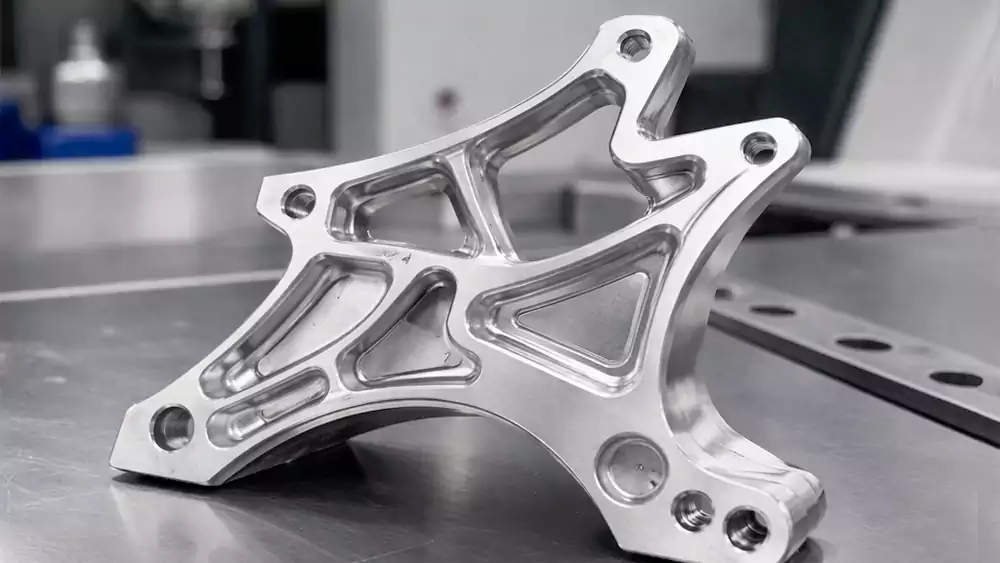
A real aluminum part with moderate complexity can cost $120 per piece at low volume, but drop below $40 at higher quantities.
Project Details
| Parameter | Value |
|---|---|
| Material | Aluminum 60612 |
| Size | 120 × 80 × 35 mm |
| Tolerance | ±0.02 mm |
| Surface Finish | Ra 1.6 |
| Quantity | 20 pcs |
Cost Breakdown
| Cost Element | Cost |
|---|---|
| Programming | $120 |
| Setup | $150 |
| Machining Time | 45 min/part |
| Hourly Rate | $90 |
| Total Cost | $2,400 |
| Cost Per Part | $120 |
What Happened Next
The client increased quantity to 200 pcs. We optimized tool paths3 and reduced cycle time to 30 minutes.
New result:
- Total cost: ~$7,200
- Cost per part: ~$36
This is a classic example. Volume and optimization change everything.
How to Reduce CNC Machining Cost Without Sacrificing Quality?
Many engineers think lower cost means lower quality. That is not true if you design smart.
You can reduce CNC machining cost by optimizing design, relaxing tolerances, selecting better materials, and increasing batch size without affecting functionality.

Practical Methods for Reducing CNC Costs
1. Apply DFM (Design for Manufacturability)
I always review designs before quoting. Simple changes help a lot:
- Avoid deep cavities
- Use standard drill sizes
- Reduce unnecessary features
2. Use Reasonable Tolerances
Only keep tight tolerances where needed. This alone can reduce cost by 20–50%.
3. Choose Cost-Effective Materials
- Aluminum instead of stainless steel (when possible)
- Standard grades instead of exotic alloys
4. Optimize Quantity
Even small batch increases reduce cost per part significantly.
How to Get an Accurate CNC Machining Quote?
Many delays come from incomplete RFQs.
To get accurate pricing fast, I always recommend:
- Provide 3D CAD files (STEP/IGES)
- Specify material clearly
- Define tolerances only where needed
- Indicate quantity range
- Include surface finish requirements
Many manufacturers reduce costs and avoid delays by working with experienced CNC machining suppliers who provide early DFM feedback and accurate quoting.
Your CNC quote does not start at the supplier. It starts when you choose a tolerance, a material, or a feature you may not need.
Conclusion
CNC machining cost depends on design decisions, not just suppliers. Smart engineering choices reduce cost, improve lead time, and increase project success.

-
Understanding setup cost helps you grasp why prototypes are expensive and how production scales reduce costs. ↩
-
Explore this link to understand why Aluminum 6061 is widely used in precision machining and its benefits for your projects. ↩
-
Learn how optimized tool paths can significantly cut machining time and costs, improving production efficiency. ↩
