I often see teams choose materials based on trends or cost alone. This leads to failures, delays, and redesigns. Many problems start with a poor understanding of performance.
High performance materials are engineered to maintain mechanical, thermal, and chemical stability under extreme service conditions. They are selected based on measurable properties such as fatigue strength, creep resistance, and corrosion resistance, not marketing claims or price alone.
When I review drawings from engineers like David, I first ask one question: what stress will this part truly see? The answer shapes everything that follows. Material selection and machining strategy must always be evaluated together. If you'd like to learn more, we recommend checking out the Ultimate Guide to CNC Machining.
What Defines a High Performance Material in Engineering Practice?
Many parts fail not because the design is wrong, but because the material cannot survive real stress. This creates downtime, warranty claims, and loss of trust.
A material is considered high performance when it maintains strength, dimensional stability, and surface integrity under high load, heat, corrosion, or cyclic stress, according to standards such as those from ASTM International and ISO.
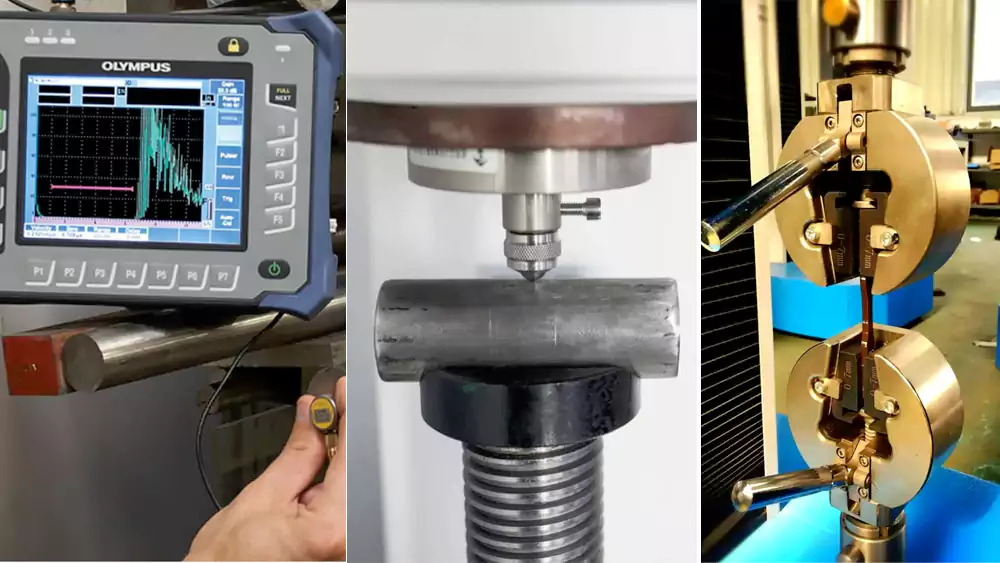
I define performance using measurable properties:
Key Engineering Indicators
| Property | Why It Matters | Typical Application Impact |
|---|---|---|
| Strength-to-weight ratio1 | Reduces mass without losing load capacity | Robotics arms, aerospace brackets |
| Fatigue resistance2 | Survives cyclic loading | Motor shafts, actuators |
| Creep resistance | Holds shape under heat and stress | Turbine parts |
| Corrosion resistance | Prevents chemical degradation | Marine automation systems |
| Wear resistance | Extends service life | Linear guides, tooling plates |
I do not look at price first. I look at service conditions. A titanium bracket may be high performance in aerospace. It may be overkill in a warehouse robot.
High performance means stable performance in extreme conditions. It does not mean expensive.
Categories of High Performance Materials and Their Engineering Trade-offs?
Engineers often group materials into simple categories. This is too basic for real sourcing decisions. Each category has strengths and limits.
High performance materials fall into four main categories: advanced metals, engineering polymers, ceramics, and composites. Each group offers specific benefits but also machining and cost trade-offs.

1. High Performance Metals & Superalloys
These include titanium alloys, nickel-based superalloys, and precipitation-hardening stainless steels.
Companies like Airbus and Boeing rely heavily on these materials for structural parts.
Advantages
- High strength
- Heat resistance
- Fatigue durability
Limitations
- High cost
- Difficult machining
- Tool wear acceleration
Failure Modes
- Thermal cracking
- Oxidation at extreme temperatures
2. High Performance Polymers
Materials like PEEK, PPS, and PTFE are widely used in automation and medical devices. Companies like Victrex specialize in PEEK production.
Advantages
- Lightweight
- Chemical resistance
- Electrical insulation
Limitations
- Lower stiffness than metals
- Thermal expansion
Failure Modes
- Creep under sustained load
- Deformation at elevated temperature
3. Advanced Ceramics
These include alumina and zirconia.
They offer extreme hardness and wear resistance. However, they are brittle.
Failure Mode
- Sudden fracture without warning
4. Composite Materials
Carbon fiber composites provide strong stiffness with low weight.
Limitation
- Complex repair
- Anisotropic properties
Each category must be evaluated with real load data, not assumptions.
Industry-Specific Material Selection Logic?
Different industries define “high performance” differently. Context matters.
Material selection depends on actual operating stress, regulatory requirements, and lifecycle expectations in each industry.
Automotive & Motorcycle
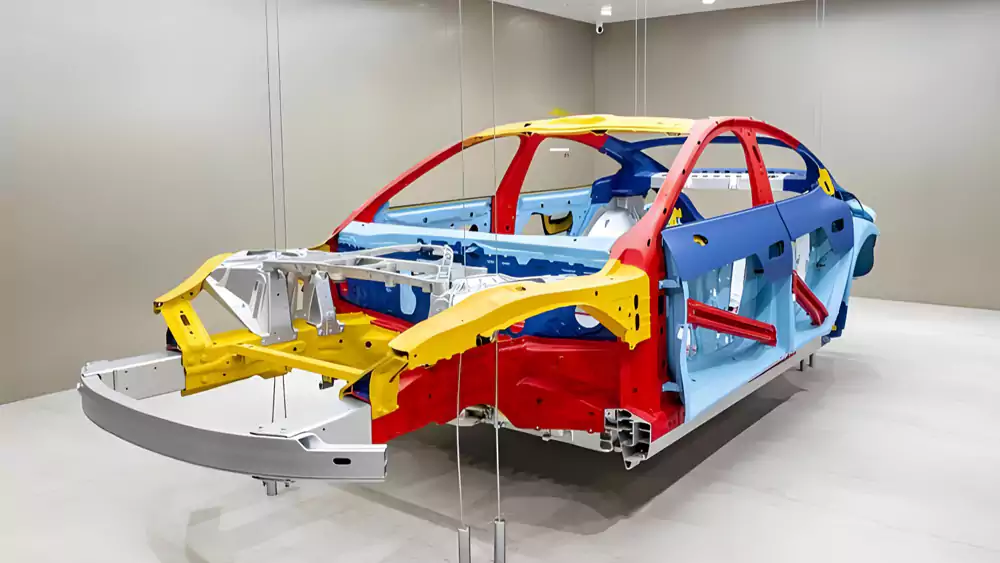
I focus on fatigue durability3 and cost balance. Lightweighting helps fuel efficiency. However, cost pressure remains high.
Aerospace
I consider creep resistance and oxidation resistance. Certification and traceability are critical. Agencies such as the European Space Agency enforce strict standards.
Medical Devices
Biocompatibility and sterilization resistance dominate. Regulatory bodies such as the European Medicines Agency set compliance expectations.
Industrial Automation Case Study
A robotics client once requested a Ti-6Al-4V actuator housing.
Operating parameters:
| Parameter | Value |
|---|---|
| Load | 3.5 kN cyclic |
| Temperature | 60°C max |
| Duty cycle | 18 hrs/day |
| Tolerance | ±0.01 mm |
| Batch size | 1,200 units/year |
After stress analysis, I found high-strength 17-4PH stainless steel4 met fatigue requirements.
Result:
| Metric | Titanium | 17-4PH |
|---|---|---|
| Raw material cost | $42/kg | $9/kg |
| Tool life | 35 parts | 110 parts |
| Machining time | 42 min | 28 min |
| Annual savings | — | 38% total cost reduction |
The client reduced cost without sacrificing reliability. This is real engineering logic.
Machining Challenges and Manufacturing Implications?
High performance materials often create production risk. Engineers must understand this early.
Material selection directly affects tool life, machining stability, cycle time, and delivery reliability.
Common Issues
- Tool wear increases rapidly in titanium.
- Nickel alloys cause work hardening.
- Low thermal conductivity traps heat.
- Dimensional stability becomes harder to control.
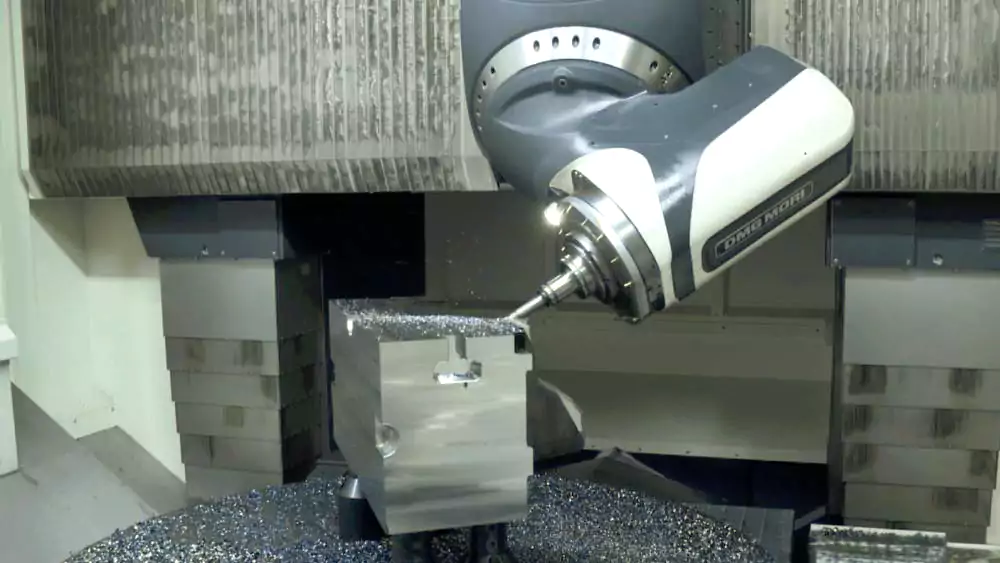
In my shop, titanium parts often require:
- Reduced cutting speed
- High-pressure coolant
- Rigid fixturing
- 5-axis machining for stability
If tolerances are ±0.01 mm, thermal expansion5 becomes critical.
Early DFM discussion prevents costly redesign. I always review material choice before finalizing process plans.
Cost, Compliance & Procurement Risk in High Performance Materials?
Procurement decisions should focus on lifecycle value, not raw material price.
Total cost of ownership includes machining efficiency, maintenance reduction, compliance risk, and long-term reliability.

EU Compliance Factors
- REACH
- RoHS
- ISO 9001
- ISO 13485
Traceability is critical. Batch certification protects against regulatory penalties.
Avoiding Over-Specification
I ask clients:
- Are you solving a real stress issue?
- Is a mid-grade alloy enough?
- Does higher strength justify machining penalties?
Many times, a mid-range alloy delivers better overall value.
Conclusion
High performance materials must match real stress conditions. Smart selection balances engineering need, machining reality, compliance risk, and lifecycle cost.

-
Explore this link to understand how strength-to-weight ratio optimizes performance by reducing mass while maintaining load capacity, crucial for robotics and aerospace. ↩
-
Learn why fatigue resistance is vital for components subjected to cyclic loading, ensuring longevity in motor shafts and actuators. ↩
-
Explore this link to understand how enhancing fatigue durability can optimize product lifespan and performance in engineering applications. ↩
-
Learn why 17-4PH stainless steel is preferred for actuator housings due to its cost efficiency and fatigue resistance, as demonstrated in real case studies. ↩
-
Learn why controlling thermal expansion is critical for maintaining tight tolerances and ensuring dimensional stability in precision machining. ↩
