Last updated on May 14, 2026, by Lucy
Automotive projects move fast. Engineering teams face tight deadlines, changing designs, and strict quality targets all at once.
CNC machining for automotive parts is the preferred solution for prototyping and low-volume production because it delivers tight tolerances, production-grade materials, fast lead times, and flexible scalability without the cost and delay of molds or tooling.
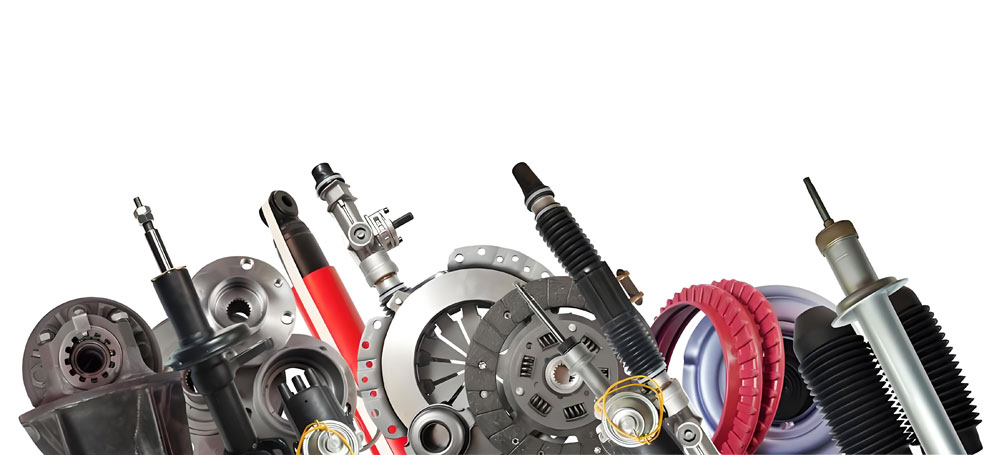
I have worked with engineering teams that needed prototype parts in days, not weeks. Some projects needed only ten parts for testing. Others needed several thousand units before mass production. In both cases, CNC machining gave them speed, accuracy, and production flexibility.
Why CNC Machining Is Essential for Automotive Manufacturing?
Automotive parts must meet demanding standards. Even small dimensional errors can delay assembly, testing, or vehicle launch schedules.
CNC machining is essential in automotive manufacturing because it produces high-precision parts quickly, supports complex geometries, and allows engineers to validate designs or manufacture low-volume parts using real production materials.
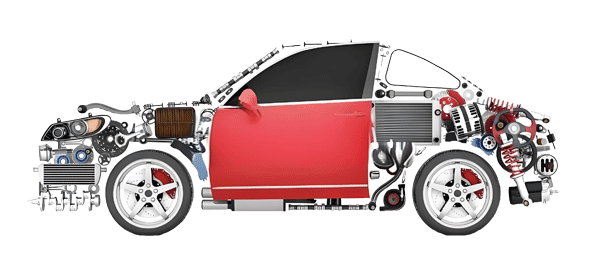
Before a vehicle reaches production, every part must be tested, adjusted, and verified. This is why many automotive teams rely on CNC machining early in development and continue using it for pilot runs, service parts, and engineering updates.
Why OEMs and Tier Suppliers Use CNC Machining
I often see OEM engineers choose CNC machining when they need accuracy without committing to tooling too early.
For automotive development, CNC machining offers three major advantages:
| Benefit | Why It Matters |
|---|---|
| High precision | Critical for sealing, alignment, and assembly performance |
| Material flexibility | Allows testing with real production materials |
| Fast turnaround | Eliminates mold and tooling lead times |
OEMs and Tier suppliers commonly use CNC machining for:
- prototype verification
- design revisions
- pilot production
- replacement parts
- engineering change orders
For example, if a gearbox housing changes by 0.3 mm, modifying a mold is expensive and slow. A CNC program can be updated much faster.
CNC vs Casting vs Injection Molding for Automotive Parts
Different production methods serve different goals.
| Process | Best For | Limitation |
|---|---|---|
| CNC Machining | prototypes, low-volume, precision parts | higher unit cost at mass scale |
| Die Casting | medium to high-volume metal parts | tooling investment required |
| Injection Molding | plastic mass production | expensive molds and setup |
I often explain it this way:
- Need 20 parts? Use CNC.
- Need 2 million parts? Use molding.
- Still validating design? CNC is the safer path.
Why CNC Is Ideal for EV and Lightweight Vehicle Programs
EV programs evolve quickly. Battery layouts change. Cooling systems improve. Lightweighting targets keep getting stricter1.
This makes CNC machining highly valuable.
EV manufacturers often machine:
- battery enclosure parts
- motor housings
- cooling plates
- lightweight brackets
- sensor mounts
These parts usually require:
- thin walls
- flatness control2
- corrosion resistance
- tight tolerances
CNC machining handles these demands efficiently.
Automotive Prototyping and Low-Volume Production Capabilities?
Many people still think CNC is only useful for prototypes. That idea is outdated.
CNC machining supports both automotive prototyping and low-volume production by enabling fast design iteration, bridge manufacturing, spare part production, and aftermarket customization without tooling investment.
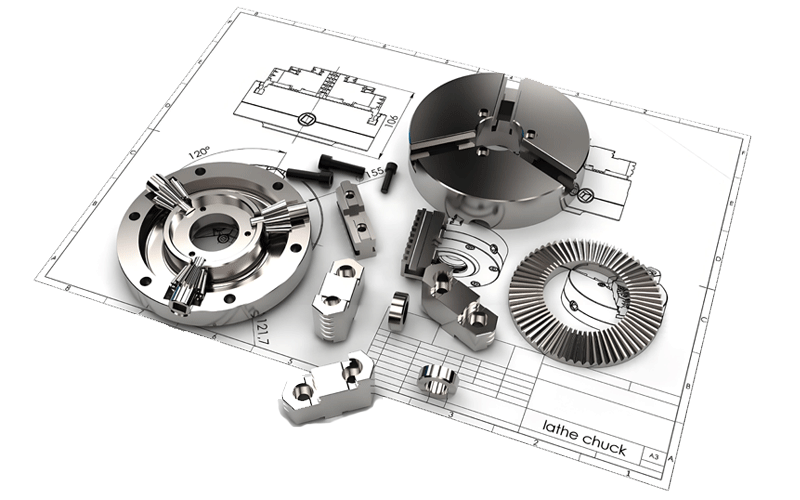
A project rarely jumps directly from CAD to mass production. Most successful automotive products go through several validation stages first. CNC machining fits naturally into this process.
Rapid Prototyping for Automotive Product Development
Development teams need physical parts fast.
Common prototype goals include:
Functional prototypes
Used to test:
- strength
- wear
- vibration
- heat resistance
Real materials are critical here.
A plastic mockup cannot replace machined aluminum during thermal or vibration testing.
Design validation
Before tooling, teams validate:
- geometry
- critical interfaces
- assembly dimensions
This reduces tooling risk later.
Fit and assembly testing
Assemblies must fit correctly before release.
Automotive teams often prototype:
- housings
- brackets
- mounts
- covers
Low-Volume Production for Automotive Parts
CNC remains useful after prototyping.
Common low-volume applications include:
Bridge productio
Production begins before tooling is complete.
Typical quantity:
- 50–5,000 pcs
Spare parts manufacturing
Legacy or discontinued vehicle platforms often require replacement parts in smaller quantities.
Aftermarket customization
Performance brands and specialty builders often need:
- billet parts
- custom brackets
- modified housings
CNC Processes Used for Automotive Components
Different parts require different processes.
CNC Milling
Best for:
- housings
- plates
- brackets
- enclosures
CNC Turning
Best for:
- shafts
- bushings
- collars
- threaded components
5-Axis Machining
Best for:
- complex geometries
- multi-angle features
- precision contours
EDM and Secondary Operations
Useful for:
- hardened materials
- sharp internal corners
- tapping
- deburring
- post-processing
Common Automotive Parts, Materials, and Finishes?
Material and finishing choices directly affect durability, performance, weight, and corrosion resistance.
Automotive CNC machining commonly uses aluminum, steel, copper alloys, and engineering plastics to manufacture precision components such as battery housings, gearbox parts, brackets, brake components, and motor housings.
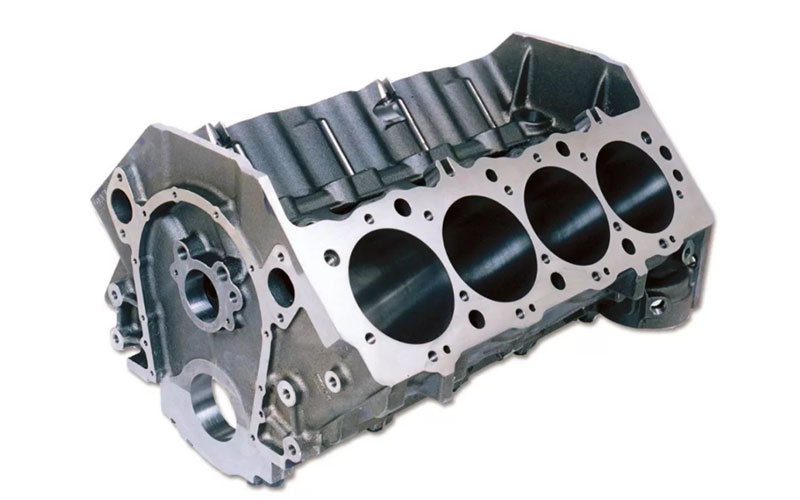
Selecting the right material is not only about machinability. It also affects vehicle performance, cost, and long-term reliability.
Automotive Parts Suitable for CNC Machining
Common automotive CNC parts include:
- battery enclosure parts
- motor housings
- gearbox components
- suspension parts
- brake components
- brackets and mounts
- sensor housings
These parts benefit from tight tolerances and repeatable quality.
Materials Used in Automotive CNC Projects
Aluminum Alloys (6061, 7075, 6082)
Best for:
- lightweight structures
- EV housings
- thermal parts
Benefits:
- corrosion resistance
- excellent machinability
- high strength-to-weight ratio3
Stainless Steel
Best for:
- corrosion-sensitive parts
- structural components
Alloy Steel
Best for:
- gears
- shafts
- wear-resistant components
Brass and Copper
Best for:
- electrical systems
- thermal conductivity parts
Engineering Plastics (POM, ABS, Nylon, PEEK)
Best for:
- insulation
- lightweight functional parts
- wear surfaces
Surface Finishes for Automotive Components
| Finish | Function |
|---|---|
| Anodizing | corrosion protection and appearance |
| Powder coating | wear resistance and surface durability |
| Black oxide | light corrosion resistance |
| Electropolishing | smoother surface and cleanliness |
How to Choose the Right Automotive CNC Machining Supplier?
Not every machine shop can meet automotive expectations.
A qualified automotive CNC machining supplier should offer precision inspection, certified quality systems, export experience, stable lead times, and strong engineering support for prototype and low-volume projects.
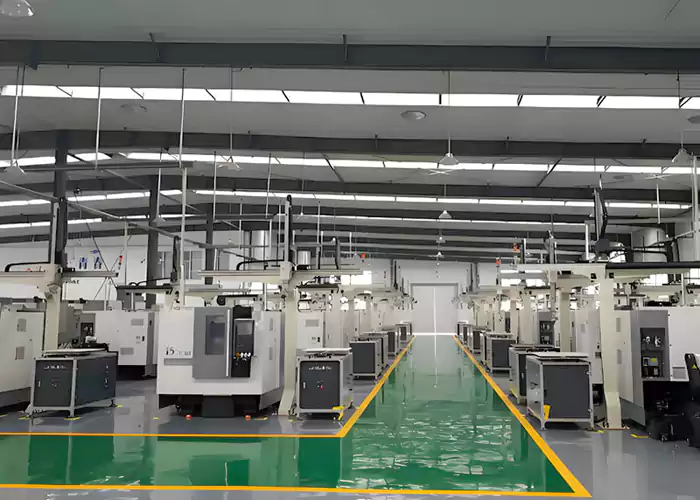
Choosing the wrong supplier creates risk long before production starts. A reliable supplier reduces project delays, quality failures, and sourcing uncertainty.
Quality Standards Automotive Buyers Should Expect
A capable supplier should provide:
- ISO 9001 certification
- IATF 16949 awareness
- material traceability
- inspection reports
- CMM dimensional reports
Without these, quality risk increases significantly.
What European and US Automotive Buyers Care About
From my experience, buyers usually evaluate suppliers on these points:
- export experience
- lead time reliability
- DFM support
- communication speed
- NDA protection
- IP security
A supplier is not only machining parts.
A supplier is helping reduce engineering risk and supply chain uncertainty.
Case Study: EV Battery Cooling Plate Project
One customer needed low-volume cooling plates before tooling approval.
| Parameter | Specification |
|---|---|
| Part name | EV battery cooling plate |
| Material | Aluminum 6061-T6 |
| Quantity | 500 pcs |
| Tolerance | ±0.02 mm |
| Surface finish | Clear anodized |
| Flatness | 0.05 mm |
| Lead time | 18 days |
| Process | CNC milling + tapping + anodizing |
The customer first ordered 20 prototype units.
After validation, the order expanded to 500 parts for bridge production.
This is a common growth path for automotive CNC projects.
Future Trends in Automotive CNC Machining
Automotive CNC demand is growing in:
- battery systems
- lightweight structures
- thermal management parts
- rapid design iteration
As EV programs move faster, CNC machining becomes even more important in early and mid-stage production.
Conclusion
CNC machining is no longer only a prototyping method. It has become a practical manufacturing backbone for automotive innovation, EV development, and low-volume production.
-
"Lightweight Materials for Cars and Trucks - Department of Energy", https://www.energy.gov/cmei/vehicles/lightweight-materials-cars-and-trucks. A government or international-agency source should show that vehicle efficiency and emissions regulations, together with electrification requirements, have increased pressure to reduce vehicle mass through lightweighting strategies. Evidence role: historical_context; source type: government. Supports: Automotive lightweighting targets are becoming more demanding, especially in the context of EV and efficiency-focused vehicle development.. Scope note: Such sources typically establish regulatory and engineering pressure for lightweighting broadly, not a direct causal link to CNC machining use in a specific EV program. ↩
-
"Flatness Vs. Profile Controls ...", https://www.tes-tec.net/en/flatness-vs-profile-controls/. Flatness is a tolerance used for form alone, and is not able to control position and orientation of surfaces (not even within a group) . Evidence role: mechanism; source type: paper. Supports: EV manufacturers often machine battery enclosure parts, motor housings, cooling plates, lightweight brackets, and sensor mounts, and these parts usually require flatness control.. Scope note: Support may apply most directly to battery cooling plates and enclosures, rather than every listed EV-machined component. ↩
-
"Printable aluminum alloy designed to balance strength and cost", https://www.mse.engineering.cmu.edu/news/2025/04/30-aluminum-alloys.html. The source characterizes aluminum alloys as low-density structural materials with favorable specific strength, a property that explains their use where mass reduction is important in vehicle components. Evidence role: general_support; source type: education. Supports: Aluminum alloys such as 6061, 7075, and 6082 can offer a high strength-to-weight ratio for automotive CNC parts.. Scope note: Support is contextual because strength-to-weight ratio varies substantially by alloy grade and heat treatment. ↩
