Last updated on May 13, 2026, by Lucy
Choosing the wrong alloy can ruin a good design. I have seen parts fail early, tools wear out fast, and lead times double because the material choice did not match the machining process.
Alloy metals improve strength, corrosion resistance, machinability, and durability compared to pure metals. CNC manufacturers use aluminum, stainless steel, titanium, alloy steels, brass, and nickel alloys to balance part performance, production speed, cost, and long-term reliability in industries like aerospace, automotive, robotics, and medical manufacturing.
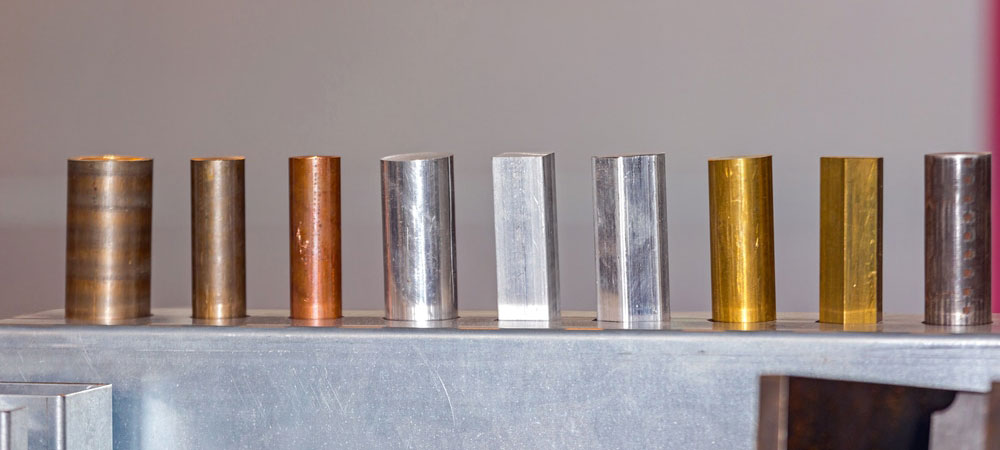
Every engineer wants stronger and lighter parts. Every machinist wants stable cutting and repeatable results. I work between those two goals every day. I do not only look at the material datasheet. I look at how the material behaves under a spindle, how fast tools wear, and how stable the dimensions stay after machining. A material that looks perfect on paper can still create major problems on the shop floor. That is why alloy selection matters so much in CNC machining.
What Are Alloy Metals and Why Are They Used in Machining?
Pure metals often look good in theory. In real production, they can wear too fast, corrode quickly, or deform during machining.
Alloy metals are materials made by combining a base metal with elements like chromium, nickel, zinc, or titanium to improve strength, hardness, corrosion resistance, and machinability. CNC machining shops prefer alloy metals because they provide better performance, longer service life, and more stable machining results than pure metals.

I still remember a project where a customer selected pure aluminum to reduce weight on an industrial fixture. The material machined easily, but the finished part bent under repeated loading after only a few weeks in production. We switched the design to 6061 aluminum alloy, and the problem disappeared immediately. That experience reminded me that machining success starts long before the first cut begins.
Pure Metals vs Alloy Metals
Pure metals contain one main metallic element. Aluminum, copper, and titanium can exist in nearly pure forms. These materials often have good conductivity or corrosion resistance. Still, they are usually too soft or unstable for demanding mechanical applications.
Alloy metals solve this problem by adding controlled amounts of other elements. For example, chromium improves corrosion resistance in stainless steel. Zinc increases the strength of aluminum. Nickel helps alloys survive high temperatures.
I often explain this to customers using a simple example. Pure aluminum cuts easily, but it bends too much under heavy loads. 7075 aluminum is much stronger because of its alloying elements.1 That is why aircraft manufacturers use it for structural components instead of pure aluminum.
Why Alloy Metals Are Preferred for CNC Machined Parts
Machining performance depends heavily on material behavior. Some alloys cut smoothly and create stable chips. Others generate heat, vibration, or rapid tool wear.
I usually evaluate alloy materials based on five production factors:
| Factor | Why It Matters |
|---|---|
| Strength | Prevents deformation during use |
| Machinability | Reduces cycle time and tool wear |
| Corrosion Resistance | Extends service life |
| Thermal Stability | Maintains dimensional accuracy |
| Cost Efficiency | Controls manufacturing budget |
Many engineers only focus on mechanical properties. On the shop floor, machinability is just as important. A strong material that destroys tools every few hours can become very expensive in production.
Common Alloying Elements and Their Effects
Chromium
Chromium improves corrosion resistance and hardness.2 It is essential in stainless steels like 304 and 316.
Nickel
Nickel improves toughness and heat resistance. It is common in superalloys like Inconel 718.
Molybdenum
Molybdenum increases high-temperature strength and wear resistance. It also improves corrosion resistance in 316 stainless steel.
Zinc
Zinc strengthens aluminum alloys such as 7075.
Magnesium
Magnesium improves strength while keeping aluminum lightweight.
Copper
Copper increases strength and fatigue resistance in aluminum alloys like 2024.
Titanium
Titanium additions improve strength, heat resistance, and weight reduction.
How to Choose the Right Alloy Metal for Machined Parts
Many CNC problems start with poor material selection. I have seen projects fail before production even began.
The best alloy metal depends on strength requirements, corrosion resistance, weight, machinability, operating environment, and production cost. Engineers must balance material performance with real machining conditions to reduce tool wear, improve production efficiency, and maintain part quality.
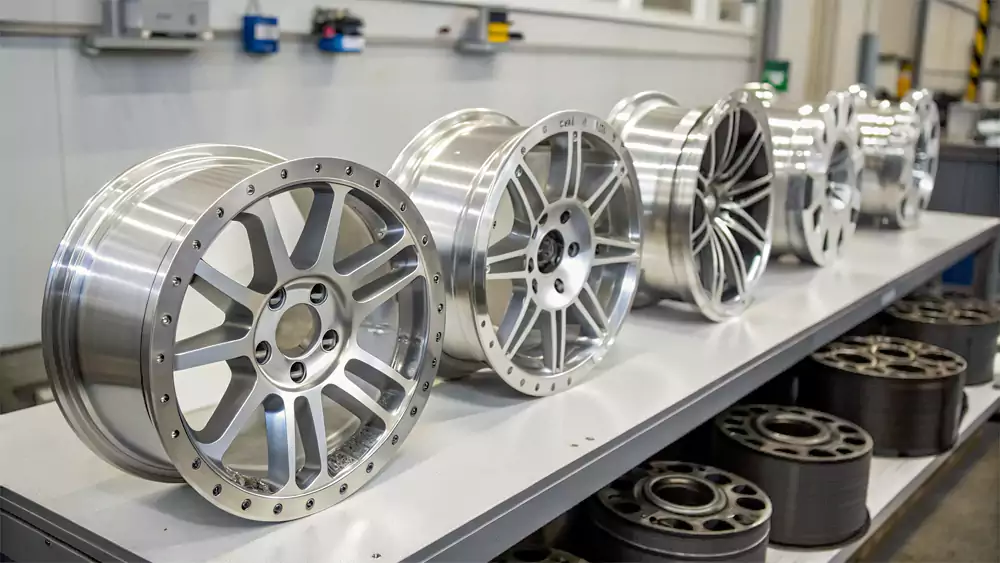
A material that works well in CAD software may still fail on the shop floor. I have seen strong alloys create long lead times because the tooling wore out too fast. I have also seen low-cost materials increase warranty problems because they could not survive real operating conditions. Good alloy selection is always a balance between engineering goals and manufacturing reality.
Mechanical Strength and Hardness
High-strength alloys work well in structural applications. Aerospace, robotics, and automotive systems often require strong materials under repeated stress.
Still, higher hardness usually means more difficult machining. D2 tool steel, for example, provides excellent wear resistance. At the same time, it increases tool wear and machining time.
Corrosion and Chemical Resistance
Parts exposed to moisture, chemicals, or salt environments need strong corrosion resistance.
316 stainless steel performs better than 304 in marine environments because molybdenum improves chloride resistance3. Titanium Grade 2 also performs extremely well in corrosive conditions. Many engineers compare stainless steel vs alloy steel during material selection because corrosion resistance and strength requirements often overlap in industrial applications.
Weight and Thermal Conductivity
Lightweight materials help reduce energy consumption and improve performance. Aluminum and titanium dominate aerospace because of their high strength-to-weight ratios.
Thermal conductivity also matters. Aluminum dissipates heat well, which helps electronics housings and heat sinks.
Machinability and Tool Wear
This is where many material decisions become expensive.
C360 brass machines extremely well. Inconel 718 does not. Titanium generates heat during cutting and often requires slower feeds and specialized tooling.
I always remind customers that difficult materials increase both lead time and production cost.
Cost and Material Availability
Exotic alloys may improve performance, but they also increase sourcing risks and machining costs.
For many industrial projects, 6061 aluminum or 1018 steel provides the best balance between performance and affordability.
20 Common Alloy Metals Used in CNC Machining
Poor material selection often creates hidden production problems. I have learned that stable machining starts with understanding how each alloy behaves in real cutting conditions.
The most common CNC machining alloys include aluminum, stainless steel, alloy steels, titanium, brass, copper, bronze, and nickel-based superalloys. These materials are widely used because they offer different combinations of strength, corrosion resistance, machinability, heat resistance, and production cost efficiency.
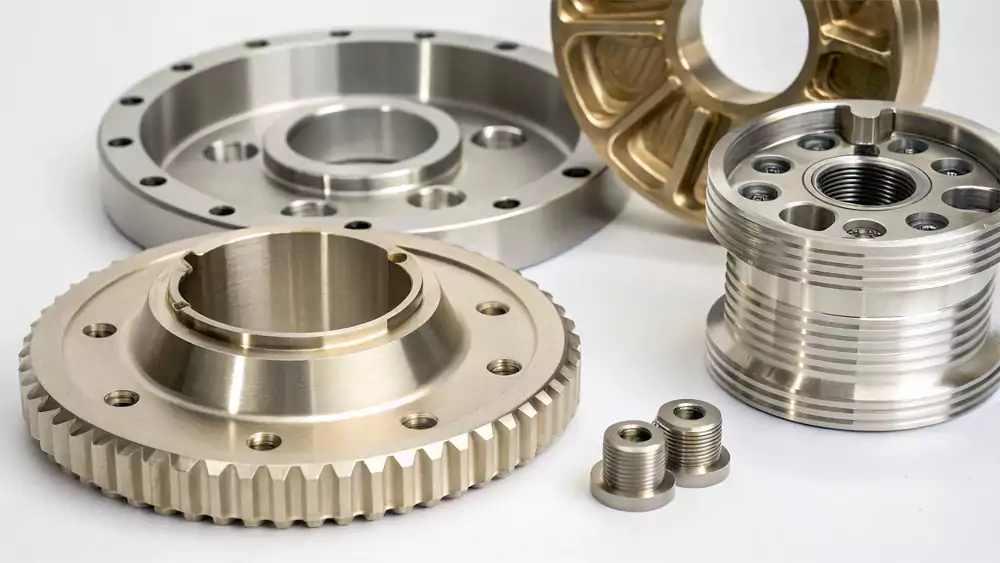
I often tell engineers that every alloy has its own personality in machining. Some materials cut cleanly and predictably. Others fight every tool path. Understanding these differences helps avoid production delays, unstable tolerances, and unnecessary manufacturing costs later in the project.
Aluminum Alloys
1. 6061 Aluminum
6061 aluminum offers excellent machinability, corrosion resistance, and weldability. I use it frequently for industrial equipment, fixtures, automation frames, drone components, hydraulic manifolds, and general-purpose CNC parts.
2. 7075 Aluminum
7075 aluminum provides very high strength with low weight. Aerospace, racing, and motorcycle industries use it heavily for aircraft brackets, suspension parts, gear housings, and lightweight structural components.
3. 2024 Aluminum
2024 aluminum delivers excellent fatigue resistance. Aircraft structural ribs, wing supports, and aerospace fastener systems often rely on this alloy.
4. 5052 Aluminum
5052 aluminum resists corrosion very well. It works well for marine panels, battery enclosures, electronics housings, fuel tanks, and outdoor equipment parts.
Stainless Steel Alloys
5. 304 Stainless Steel
304 stainless steel offers balanced corrosion resistance and durability. It is common in food processing equipment, kitchen hardware, medical brackets, and industrial piping systems.
6. 316 Stainless Steel
316 stainless steel provides stronger chemical resistance than 304. Marine fittings, pharmaceutical equipment, surgical tools, and chemical processing parts often require it.
7. 303 Stainless Steel
303 stainless steel machines much easier than 304. It is common in precision turned shafts, valve fittings, threaded connectors, and instrumentation components.
8. 17-4 PH Stainless Steel
17-4 PH stainless steel combines high strength with heat treatment capability. Aerospace fasteners, pump shafts, turbine components, and medical devices use it widely.
Carbon and Alloy Steels
9. 1018 Steel
1018 steel machines easily and costs relatively little. It is common for machine bases, shafts, brackets, fixtures, and industrial support structures.
10. 1045 Steel
1045 steel provides better strength than 1018 and works well for gears, couplings, sprockets, and machinery drive components.
11. 4140 Alloy Steel
4140 alloy steel offers strong toughness and wear resistance for crankshafts, hydraulic cylinders, heavy-duty gears, and industrial automation equipment.
12. 4340 Alloy Steel
4340 steel delivers ultra-high strength for aerospace landing gear parts, military vehicle components, and heavy-load transmission systems.
13. A2 Tool Steel
A2 tool steel maintains dimensional stability after heat treatment. It is commonly used for punches, dies, gauges, and precision cutting tools.
14. D2 Tool Steel
D2 tool steel provides excellent hardness and abrasion resistance for stamping dies, industrial blades, shear tools, and wear-resistant machine parts.
Titanium Alloys
15. Ti-6Al-4V (Grade 5 Titanium)
This titanium alloy combines excellent strength, corrosion resistance, and lightweight performance. Aerospace brackets, orthopedic implants, racing parts, and turbine components rely heavily on it.
16. Titanium Grade 2
Titanium Grade 2 offers excellent corrosion resistance and improved weldability. It is often used in marine heat exchangers, medical equipment, and chemical processing systems.
Copper and Brass Alloys
17. C360 Brass
C360 brass machines extremely well and supports high-speed production of fittings, pneumatic connectors, plumbing valves, and electrical terminals.
18. C110 Copper
C110 copper delivers outstanding electrical conductivity for bus bars, electrical contacts, transformer parts, and conductive heat transfer components.
19. C932 Bronze
C932 bronze provides wear resistance and anti-friction performance for bushings, bearings, sleeve liners, and industrial rotating assemblies.
Nickel-Based Superalloys
20. Inconel 718
Inconel 718 withstands extreme heat and oxidation. Aerospace engine housings, turbine blades, exhaust systems, and oilfield components rely heavily on this alloy.
Quick Comparison Table
| Alloy | Strength | Corrosion Resistance | Machinability | Relative Cost | Common Applications |
|---|---|---|---|---|---|
| 6061 Aluminum | Medium | High | Excellent | Low | Robotics frames, automation fixtures, drone housings, hydraulic manifolds |
| 7075 Aluminum | High | Medium | Good | Medium | Aircraft brackets, racing suspension parts, motorcycle triple clamps |
| 304 Stainless | Medium | High | Moderate | Medium | Food processing equipment, medical brackets, industrial tubing |
| 316 Stainless | Medium | Very High | Moderate | High | Marine pumps, surgical devices, chemical processing valves |
| 4140 Steel | High | Low | Good | Medium | Drive shafts, industrial gears, heavy-duty couplings |
| Ti-6Al-4V | Very High | Very High | Poor | Very High | Aerospace fasteners, implants, turbine housings |
| C360 Brass | Medium | Good | Excellent | Medium | Pneumatic fittings, electrical connectors, valve bodies |
| Inconel 718 | Very High | Excellent | Difficult | Very High | Jet engine parts, turbine discs, high-temperature exhaust systems |
Real Production Case Study From My Shop Floor
I once worked on a robotic actuator housing for an industrial automation customer. The engineer originally selected 304 stainless steel because of corrosion resistance. During prototyping, machining time became too high and dimensional stability was inconsistent.
After reviewing the design, we switched the housing material to 6061-T6 aluminum with hard anodizing.
| Parameter | Original Material | Optimized Material |
|---|---|---|
| Material | 304 Stainless | 6061-T6 Aluminum |
| CNC Cycle Time | 142 min | 58 min |
| Tool Life | 38 pcs/tool | 140 pcs/tool |
| Weight | 2.8 kg | 1.1 kg |
| Surface Finish | Ra 1.8 μm | Ra 0.9 μm |
| Delivery Time | 21 days | 9 days |
| Production Cost | Baseline 100% | Reduced 37% |
The customer still achieved corrosion resistance after anodizing. At the same time, machining efficiency improved dramatically. This is why I always say that manufacturing reality matters as much as engineering theory.
Best Machining Methods for Different Alloy Metals
Even the best alloy can fail in production if the machining method is wrong. Material and process must work together.
CNC milling works best for aluminum and brass alloys, CNC turning is ideal for steel and stainless steel components, EDM handles hardened tool steels and superalloys, and precision grinding improves surface finish and tight-tolerance accuracy after machining.
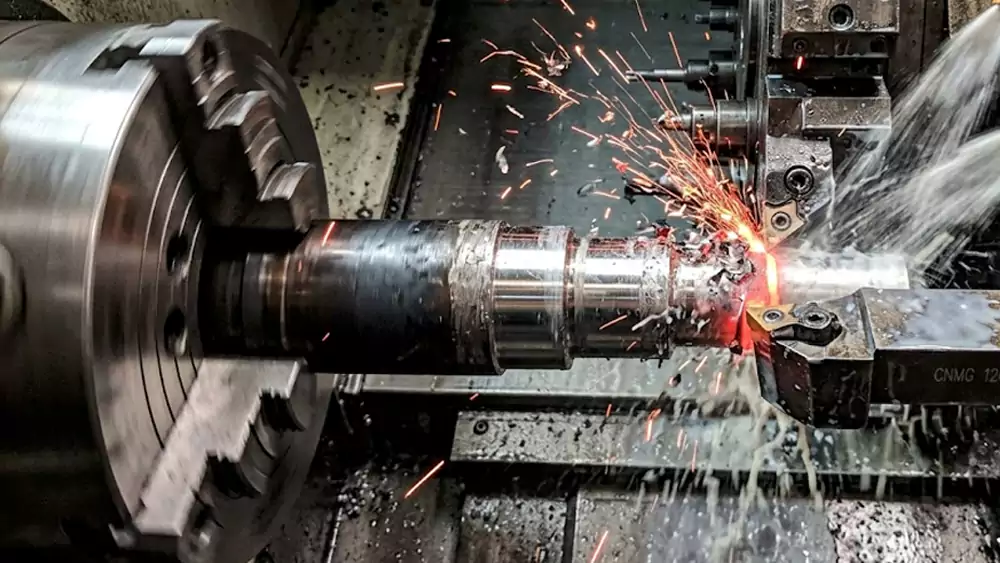
The machining process changes how an alloy behaves during production. I have seen shops use the wrong process simply because the equipment was available. That usually creates unnecessary heat, unstable tolerances, or poor surface finishes. Choosing the right machining method protects both quality and production efficiency.
CNC Milling for Aluminum and Brass
Aluminum and brass machine well at high spindle speeds. CNC milling works especially well for complex geometries, lightweight structures, and electronics housings.
6061 aluminum and C360 brass both produce stable chips and excellent surface finishes.
CNC Turning for Steel and Stainless Steel
Turning works efficiently for cylindrical steel and stainless steel parts like shafts, fittings, and threaded components.
303 stainless steel performs especially well in CNC turning because sulfur improves machinability.
EDM for Hardened Tool Steels and Superalloys
Electrical discharge machining helps process materials that are difficult to cut conventionally.
D2 tool steel and Inconel 718 often require EDM for intricate geometries or hardened conditions.
Grinding and Surface Finishing for Tight Tolerances
Grinding improves dimensional precision and surface finish. Aerospace and medical industries often require grinding after heat treatment.
I usually recommend secondary finishing when tolerances become extremely tight or surface roughness requirements are critical.
FAQ
What is the easiest alloy metal to machine?
C360 brass is one of the easiest alloy metals to machine because it creates stable chips, supports high cutting speeds, and produces excellent surface finishes with low tool wear.
Which alloy is best for aerospace CNC parts?
7075 aluminum and Ti-6Al-4V titanium are among the best alloys for aerospace CNC parts because they combine high strength, lightweight performance, and strong fatigue resistance.
What alloy offers the best corrosion resistance?
316 stainless steel, titanium alloys, and Inconel 718 provide excellent corrosion resistance in marine, chemical, and high-humidity environments.
Which alloy metal is most cost-effective for machining?
6061 aluminum is usually the most cost-effective CNC machining alloy because it offers good strength, easy machining, corrosion resistance, and low material cost.
Is titanium harder to machine than stainless steel?
Yes. Titanium is generally harder to machine than stainless steel because it generates more heat, causes faster tool wear, and requires slower cutting speeds.
Conclusion
The right alloy does more than meet a specification. It helps balance machining efficiency, part performance, production cost, and long-term reliability in real manufacturing conditions.
-
"7075 aluminium alloy - Wikipedia", https://en.wikipedia.org/wiki/7075_aluminium_alloy. Materials data comparing commercially pure aluminum with 7075 aluminum alloy show substantially higher tensile and yield strengths for 7075, consistent with strengthening from alloying and heat treatment. Evidence role: statistic; source type: institution. Supports: 7075 aluminum is much stronger than pure aluminum because of its alloying elements.. Scope note: Strength values vary by temper, processing history, and test standard, so the source should specify the condition being compared. ↩
-
"[PDF] Chromium--Makes Stainless Steel Stainless - USGS.gov", https://pubs.usgs.gov/fs/2010/3089/pdf/fs2010-3089.pdf. Metallurgical references explain that chromium promotes passive oxide-film formation in stainless steels and can increase hardness through solid-solution and carbide-forming effects, supporting its role in corrosion resistance and hardness. Evidence role: mechanism; source type: education. Supports: Chromium improves corrosion resistance and hardness in alloy metals.. Scope note: The magnitude of the effect depends on alloy composition, carbon content, heat treatment, and service environment. ↩
-
"304 vs 316 Stainless Steel: Which Is Better for Corrosion Resistance ...", https://www.ryerson.com/metal-resources/metal-market-intelligence/304-stainless-vs-316-stainless. Metallurgical references describe Type 316 stainless steel as containing molybdenum, which improves resistance to chloride-induced pitting compared with Type 304, providing contextual support for its common use in marine or chloride-bearing environments. Evidence role: mechanism; source type: institution. Supports: 316 stainless steel performs better than 304 in marine environments because molybdenum improves chloride resistance.. Scope note: Performance still depends on chloride concentration, temperature, surface finish, crevice conditions, and maintenance; 316 is not immune to marine corrosion. ↩
