Last updated on April 29, 2026, by Lucy
Launching a new product with the wrong manufacturing process can waste budget, delay delivery, and create avoidable quality issues.
CNC machining is usually the best choice for precision parts and low-volume production, 3D printing is ideal for rapid prototyping and design validation, and injection molding delivers the lowest unit cost only when demand is stable and production volume is high enough to justify tooling investment.
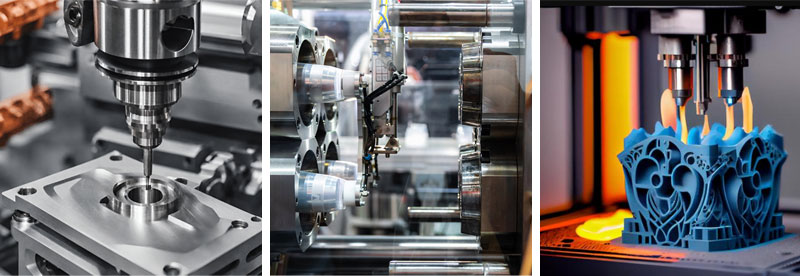
When customers come to me with a new project, they often focus only on unit price. I understand why. Price is easy to compare. But in real manufacturing, the wrong process creates much bigger costs later. Tooling revisions, scrap, poor tolerances, and inventory pressure can quickly erase any early savings. That is why process selection should always begin with product stage, quantity, and design maturity.
What Are CNC Machining, Injection Molding, and 3D Printing?
Many engineers compare these processes only after finalizing their design. At that point, manufacturing flexibility is already limited.
CNC machining removes material from a solid block for high precision, injection molding forms plastic parts using a mold for mass production, and 3D printing builds parts layer by layer for fast prototyping and complex geometry.
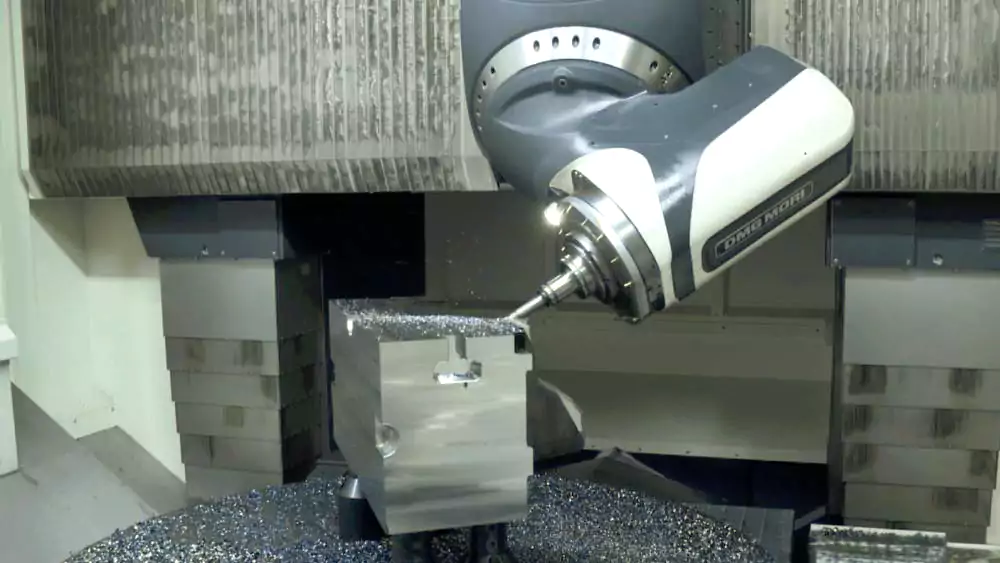
Before choosing a process, I usually ask four simple questions: What material is required? How many parts are needed? What tolerance matters most? Is this a prototype or a mature product? These four answers often eliminate the wrong options immediately.
Process Snapshot
| Process | Best For | Main Limitation |
|---|---|---|
| CNC Machining | Precision parts, low-volume production | Higher unit cost at scale |
| Injection Molding1 | Mass production of plastic parts | High upfront tooling cost |
| 3D Printing | Prototyping and complex geometries | Lower accuracy and finish consistency |
Common Materials
- CNC Machining: aluminum, stainless steel, brass, POM, ABS
- Injection Molding: ABS, PP, PC, PA, PEEK
- 3D Printing: PLA, resin, nylon, TPU
Typical Applications
- CNC machining for brackets, housings, fixtures, shafts, and metal prototypes
- Injection molding for enclosures, consumer plastics, and repeat production parts
- 3D printing for concept models, fit testing, and design iteration
CNC Machining vs. Injection Molding vs. 3D Printing: What Are the Key Differences?
Many buyers compare only part price. That is often the fastest way to choose the wrong process.
The best manufacturing process depends on production volume, tolerance requirements, material selection, lead time, and total lifecycle cost rather than unit price alone.

If I simplify the decision, I usually think of these three processes this way:
- Choose 3D printing when speed matters most.
- Choose CNC machining when precision and flexibility matter most.
- Choose injection molding when scale and repeatability matter most.
Quick Comparison Table
| Factor | CNC Machining | Injection Molding | 3D Printing |
|---|---|---|---|
| Startup Cost | Medium | High | Low |
| Prototype Cost | Medium | Very High | Low |
| Mass Production Cost | High | Low | High |
| Lead Time | 3–10 days | 3–8 weeks | 1–5 days |
| Best Production Volume | 10–5,000 pcs | 10,000+ pcs | 1–50 pcs |
| Tolerance | ±0.01–0.05 mm | ±0.05–0.10 mm | ±0.10–0.30 mm |
Cost by Production Stage
For most projects, the economics are predictable:
- 1–50 pcs: 3D printing is usually the lowest-risk option
- 50–5,000 pcs: CNC machining often gives the best balance of cost and quality
- 10,000+ pcs: Injection molding becomes the lowest long-term cost option
Engineering Considerations
When making a process decision, I pay close attention to these technical factors:
- Tight tolerances usually favor CNC machining
- Complex internal channels2 often favor 3D printing
- Cosmetic plastic consistency usually favors injection molding
- Metal end-use parts3 usually favor CNC machining
Many teams make a common mistake here. They compare processes in isolation instead of thinking about the entire product lifecycle. A process that is perfect for prototyping can be terrible for scaling. A process that is cheap at high volume can be financially dangerous during early validation.
That is why I always recommend thinking in stages rather than in absolutes.
What Hidden Costs and DFM Issues Do Buyers Often Miss?
The quoted price is rarely the real project cost.
Tooling, engineering changes, scrap, secondary finishing, and inventory costs often have a larger financial impact than the initial part quote.

Many sourcing mistakes happen because teams focus too heavily on visible costs while ignoring hidden operational risks.
Common Hidden Costs
- Mold amortization across insufficient production volume
- Mold revisions after design changes
- Material scrap and startup losses
- Surface finishing such as anodizing, polishing, painting, or texturing
- Inventory storage and cash flow pressure
Common DFM Issues
- Missing draft angles for molded parts
- Sharp internal corners that increase machining difficulty
- Thin wall sections that cause warping or instability4
- Overly tight tolerances with no functional need
Case Study: Choosing the Right Process for an Industrial Sensor Housing
A customer once approached me with an industrial sensor housing project for automation equipment.
For this project, 3D printing was used for concept validation, CNC machining supported bridge production, and injection molding was selected only after demand was validated and design stability was confirmed.

Project Data
| Parameter | Project Data |
|---|---|
| Product | Industrial Sensor Housing |
| Material | ABS + Aluminum 6061 |
| Annual Demand | 18,000 pcs |
| Prototype Qty | 10 pcs |
| Pilot Run | 300 pcs |
| Mass Production | 18,000 pcs/year |
| Tolerance | ±0.05 mm |
| Surface Finish | Matte texture + anodizing |
| Decision | 3D Printing → CNC → Injection Molding |
My decision logic was simple.
First, the customer still needed rapid design validation, so 3D printing reduced iteration cost. Then CNC machining handled pilot production without tooling risk. Only after geometry was frozen and market demand was validated did injection molding become financially reasonable.
In most cases, I do not recommend injection molding below 10,000 units unless the design is already frozen and future demand is predictable.
This workflow reduced launch risk and lowered projected manufacturing cost by 37%.
Why Is Prototype → CNC Bridge Production → Injection Molding the Smartest Workflow?
Many teams invest in tooling too early and lock design problems into production.
The most efficient manufacturing strategy is often 3D printing for validation, CNC machining for bridge production, and injection molding for full-scale production.

This staged workflow works because each process solves a different business problem.
Stage 1: 3D Printing
Use 3D printing for:
- concept models
- design iteration
- fit checks
- stakeholder review
Stage 2: CNC Machining
Use CNC machining for:
- pilot runs
- low-volume customer orders
- functional validation
- market testing
Stage 3: Injection Molding
Use injection molding only when:
- geometry is stable
- demand is predictable
- tooling investment is justified
This sequence reduces both engineering risk and financial risk.
How Do You Choose the Right Manufacturing Partner for Custom Parts?
A machine supplier makes parts. A manufacturing partner solves production problems.
The best supplier should support prototyping, CNC machining, and production scaling while also providing engineering support and quality assurance.
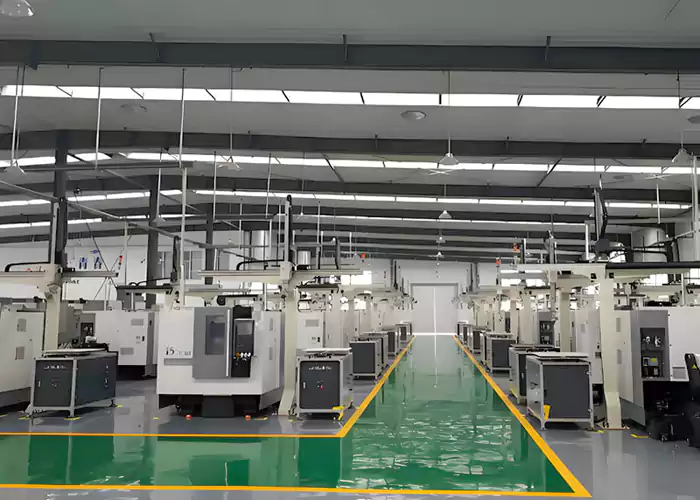
Before requesting a quote, I usually evaluate suppliers in three areas.
Engineering Support
Look for:
- DFM review capability
- material recommendations
- tolerance consultation
Manufacturing Capability
Check whether the supplier supports:
- CNC machining
- mold tooling
- rapid prototyping
Quality Assurance
Confirm:
- ISO certifications
- inspection reports
- material traceability
- process documentation
Questions to Ask Before Requesting a Quote
- Can you review my design for manufacturability?
- Which process do you recommend for my target volume?
- Can you support both prototypes and production scaling?
FAQs
Is CNC machining cheaper than injection molding?
For low-volume production, yes. Injection molding only becomes cost-effective after tooling costs are spread across larger production runs.
When should I choose 3D printing over CNC machining
Choose 3D printing for rapid prototyping, early-stage design validation, and complex internal geometries.
What is the best manufacturing process for low-volume production
CNC machining is usually the best balance of quality, speed, and flexibility.
Which process offers the tightest tolerances
CNC machining generally provides the tightest tolerances and best repeatability.
Can one supplier handle prototyping, CNC machining, and mass production
Yes. This often improves communication, consistency, and speed.
What affects the total manufacturing cost of custom parts
Tooling, material, quantity, tolerances, finishing, scrap rate, logistics, and inventory all influence total cost.
Conclusion
There is no single best manufacturing process for every project. The right choice depends on your product stage, production volume, material requirements, and cost targets. In my experience, the most efficient path is usually 3D printing for validation, CNC machining for bridge production, and injection molding for scalable mass production once the design is stable. This approach helps reduce risk, control costs, and avoid costly production mistakes.
If you are planning a custom part or new product launch, contact Allied Metal for DFM support, process recommendations, and a fast quote tailored to your project.
-
"Injection Molding", https://encyclopedia.che.engin.umich.edu/injection-molding/. A manufacturing textbook or government resource describes injection molding as suitable for mass production of plastic parts, noting the high upfront tooling costs as a primary limitation. Evidence role: general_support; source type: education. Supports: Injection molding is best for mass production of plastic parts, but has high upfront tooling cost.. Scope note: The citation may not cover all types of plastics or production volumes. ↩
-
"Technique makes complex 3D printed parts more reliable | MIT News", https://news.mit.edu/2025/technique-makes-complex-3d-printed-parts-more-reliable-0925. Scholarly sources explain that 3D printing (additive manufacturing) is particularly advantageous for producing parts with complex internal channels, as it allows for geometries that are difficult or impossible to achieve with traditional subtractive or molding processes. Evidence role: mechanism; source type: paper. Supports: Complex internal channels often favor 3D printing. Scope note: Support is specific to the ability of 3D printing to create complex internal geometries, not necessarily to all types of complexity or materials. ↩
-
"Computer numerical control - Wikipedia", https://en.wikipedia.org/wiki/Computer_numerical_control. Scholarly sources indicate that CNC machining is commonly preferred for manufacturing metal end-use parts due to its ability to achieve high precision, tight tolerances, and compatibility with a wide range of metals. Evidence role: expert_consensus; source type: paper. Supports: Metal end-use parts usually favor CNC machining.. Scope note: This consensus applies primarily to low- and medium-volume production; for very high volumes, other processes like metal injection molding or die casting may be considered. ↩
-
"Figure 2 - from Interpretation of warpage simulation results", https://www.academia.edu/figures/40253620/figure-2-warping-of-molding-due-differential-shrinkage-the. Engineering literature on injection molding highlights that thin wall sections are prone to warping and dimensional instability due to uneven cooling and insufficient structural support. Evidence role: mechanism; source type: education. Supports: Thin wall sections in molded parts can cause warping or instability.. Scope note: The severity depends on material choice and part geometry. ↩
