Author's Note: Last updated on May 20, 2026, by Lucy
Bushings often fail long before the machine does. In many cases, the real problem is poor material choice, bad tolerances, or the wrong manufacturing method.
A bushing is a mechanical component used to reduce friction, absorb wear, support rotating or sliding motion, and protect mechanical assemblies from premature damage. Precision bushings are widely used in automotive, aerospace, robotics, and industrial equipment because they improve alignment, reduce maintenance, and extend machine life.
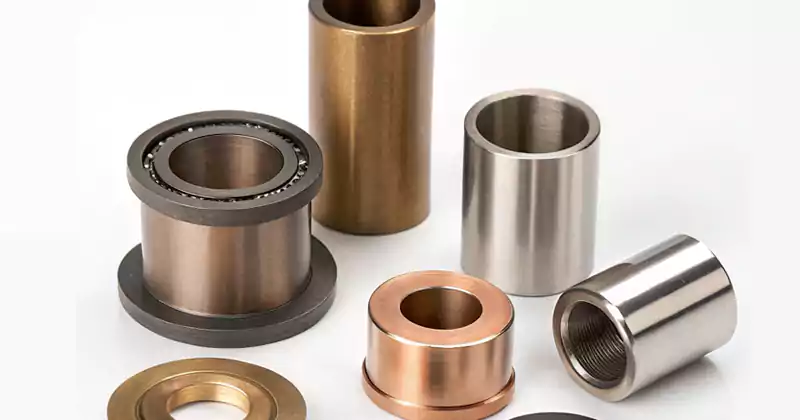
I have worked with engineers who focused heavily on bearings while ignoring bushings completely. Then six months later, the machine started vibrating, shafts wore unevenly, and assemblies became loose. In many systems, the bushing quietly controls alignment, friction, and stability. That is why I always treat bushing design as a serious engineering decision, not just a small accessory part.
What Is a Bushing and Why Is It Important?
Many mechanical failures start with small alignment problems. A poorly designed bushing can create friction, noise, heat, and premature wear across the entire assembly.
A bushing acts as a protective sleeve between moving parts. It reduces metal-to-metal contact, controls friction, improves alignment, and helps machinery operate smoothly under load, vibration, and repeated motion.
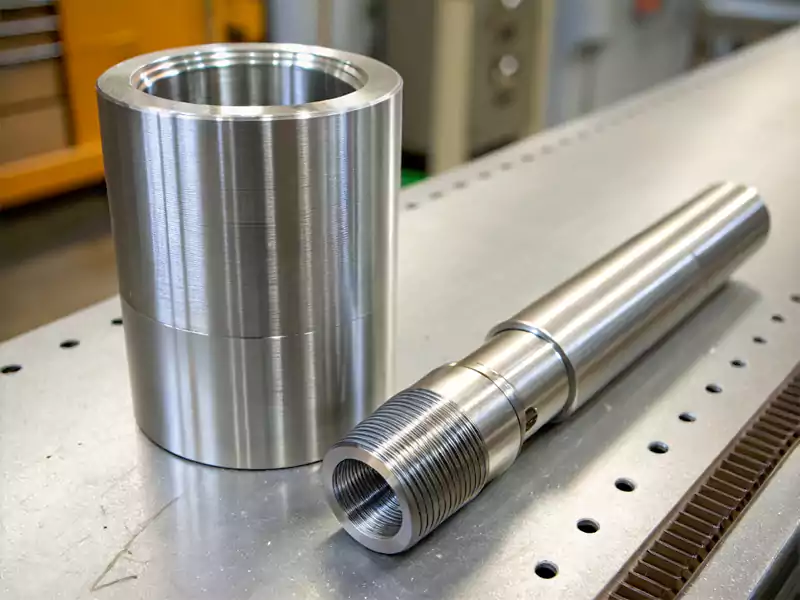
I usually explain a bushing as a controlled wear component1. Instead of allowing expensive shafts or housings to wear out, the bushing absorbs the friction first. When the bushing eventually wears, it can be replaced at a much lower cost.
What Does a Bushing Do in a Mechanical Assembly?
Bushings also help stabilize rotating or sliding motion. In robotics and industrial automation systems, even slight shaft movement can affect repeatability and positioning accuracy. A precision-machined bushing keeps movement controlled and predictable.
If you are designing assemblies with rotating shafts, it also helps to understand how shaft accuracy affects long-term fit and wear performance. Many engineers reviewing custom shaft manufacturing often overlook the relationship between shaft concentricity and bushing lifespan.
How Bushings Reduce Friction and Wear
Different materials reduce friction in different ways. Bronze bushings create a stable sliding surface. PTFE bushings reduce dry friction without lubrication. Oil-impregnated bushings slowly release lubricant during operation.
I often see engineers focus only on hardness. That is not enough. Friction control depends on material pairing, lubrication, operating temperature, and surface finish together.
| Bushing Material | Main Advantage | Typical Use |
|---|---|---|
| Bronze | Excellent wear resistance | Heavy industrial equipment |
| Stainless Steel | Corrosion resistance | Food and medical equipment |
| PTFE / Plastic | Low friction without oil | Robotics and electronics |
| Oil-Impregnated Bronze | Self-lubricating | Motors and rotating systems |
Common Materials Used for Bushings
Bronze Bushings
Bronze remains one of the most common bushing materials because it handles heavy loads and continuous motion very well. I often recommend C93200 bronze for industrial machinery because it machines cleanly and performs reliably under pressure.
Stainless Steel Bushings
Stainless steel bushings work well in wet or corrosive environments. I have supplied many stainless bushings for food processing equipment where rust resistance mattered more than cost.
PTFE and Plastic Bushings
Plastic bushings are useful when noise reduction and low friction are priorities. PTFE bushings are common in automation systems because they operate smoothly without constant lubrication.
Oil-Impregnated Bushings
These bushings contain oil inside the porous bronze structure. During operation, heat releases lubricant gradually. This reduces maintenance and improves long-term performance.
Common Types of Bushings and Their Industrial Applications
Many engineers choose the wrong bushing simply because the external shape looks similar. The internal design matters much more than appearance.
Sleeve, flanged, tapered, and split bushings are designed for different load conditions, shaft movements, and installation methods. Choosing the correct type improves equipment stability, wear resistance, and service life.
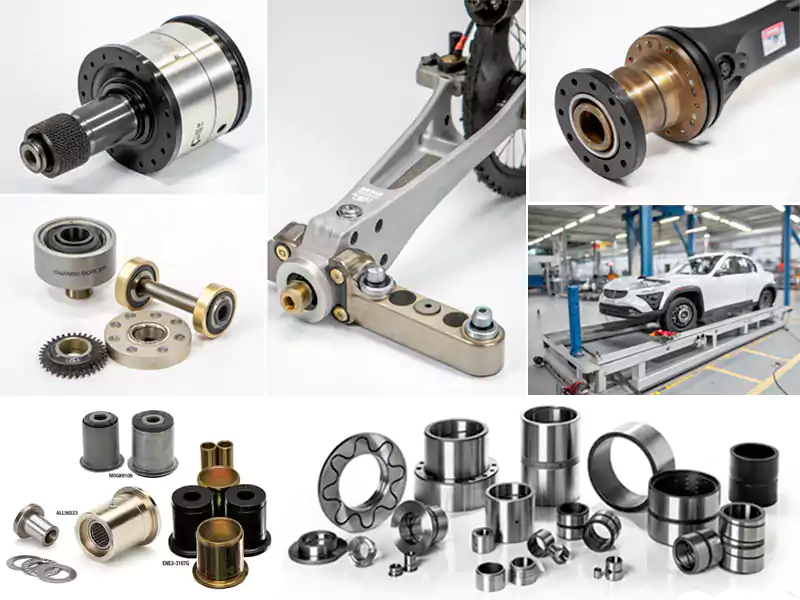
In one automation project I worked on, the customer originally selected a standard sleeve bushing. The assembly experienced constant axial movement. The shafts started drifting after long production cycles. We later changed the design to a flanged bushing, and the positioning problem disappeared immediately.
Sleeve Bushings
Sleeve bushings are the simplest and most widely used type. They support radial loads2 and work well in rotating assemblies. I see them often in motors, conveyors, and hydraulic systems.
Flanged Bushings
Flanged bushings include an extended lip that controls axial movement. They are useful when the shaft needs both radial support and thrust positioning.
Tapered and Split Bushings
Tapered bushings simplify installation and improve shaft locking performance. Split bushings help absorb vibration and allow easier assembly in tight spaces.
Where Are Bushings Commonly Used?
Automotive
Automotive suspension systems, steering assemblies, and drivetrain components all use bushings to reduce vibration and absorb shock loads.
Aerospace
Aircraft systems require lightweight bushings with extremely stable tolerances. Material consistency and precision machining become critical here.
Industrial Equipment
Industrial equipment uses bushings in pumps, motors, compressors, and conveyor systems where constant motion creates wear.
Robotics
Robotics systems rely on precision bushings to maintain repeatable movement and minimize backlash.
Agricultural Machinery
Agricultural machines operate in dirty and abrasive environments. Bushings here need strong wear resistance and contamination tolerance.
Real CNC Bushing Manufacturing Case Study
One OEM customer approached me with a recurring alignment issue inside an automated packaging system. The original supplier focused heavily on outer diameter tolerance but ignored wall thickness consistency.
The result was predictable. The bushings entered the housing correctly, but the internal shaft alignment shifted slightly during operation.
| Parameter | Original Supplier | Revised CNC Process |
|---|---|---|
| Material | C93200 Bronze | C93200 Bronze |
| Outer Diameter Tolerance | ±0.002 mm | ±0.005 mm |
| Inner Diameter Tolerance | ±0.015 mm | ±0.008 mm |
| Wall Thickness Variation | ±0.050 mm | ±0.008 mm |
| Surface Finish | Ra 3.2 μm | Ra 0.8 μm |
| Assembly Failure Rate | 7.4% | 0.6% |
That project reinforced something I always tell customers:
I’m not afraid of tight tolerances. I’m afraid of tolerances that don’t make sense.
A bushing with a perfect outer diameter but unstable wall thickness can still install crooked3. Functional tolerance balance matters more than chasing unrealistic numbers.
How Are Precision Bushings Manufactured with CNC Machining?
Poor machining creates unstable tolerances, rough surfaces, and early wear problems. Bushings may look simple, but precision matters heavily during manufacturing.
Precision bushings are commonly manufactured with CNC turning, boring, drilling, and surface finishing processes. CNC machining delivers accurate dimensions, smooth surface finishes, and stable concentricity for OEM and industrial applications.
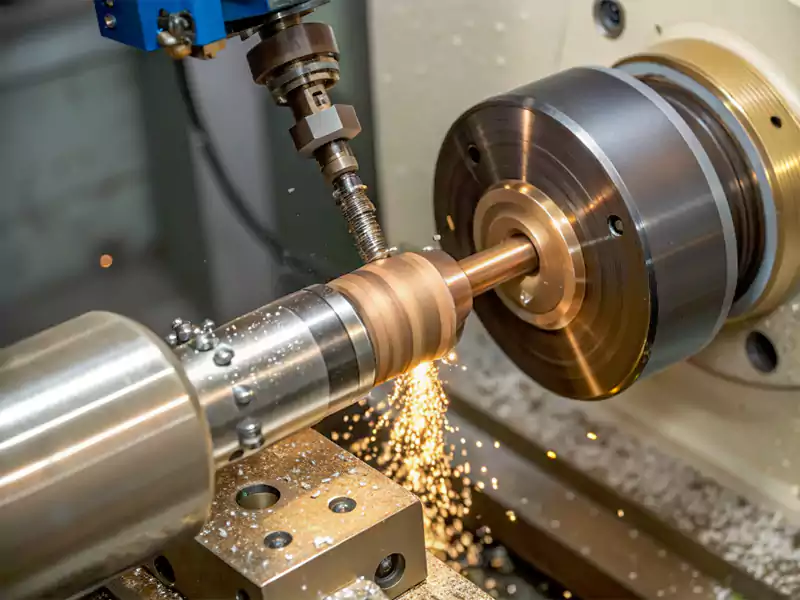
I have machined thousands of bushings over the years. Most dimensional problems do not come from machine capability. They come from poor process planning.
Why CNC Machining Is Ideal for Precision Bushings
CNC machining provides consistent concentricity, tight tolerance control, and repeatable quality across large production runs. That is especially important when bushings must fit precisely with shafts and housings.
For engineers sourcing precision components, modern CNC machining services make it possible to produce custom bushings with complex geometries, specialty materials, and highly repeatable tolerances.
Common CNC Processes for Bushing Manufacturing
CNC Turning
CNC turning creates the primary outer and inner diameters. This is usually the core process for cylindrical bushings.
Boring
Boring improves internal diameter accuracy and surface finish after rough machining.
Drilling
Drilling creates lubrication holes or mounting features when needed.
Surface Finishing
Finishing operations improve wear resistance and friction performance. Honing, polishing, and coating are common secondary processes.
Tolerance and Surface Finish Requirements
Many engineers over-specify tolerances without understanding actual assembly needs. Extremely tight tolerances increase machining cost quickly.
I usually recommend focusing on:
- Concentricity
- Roundness
- Surface roughness
- Functional fit
- Thermal expansion behavior
Instead of blindly tightening every dimension.
A proper understanding of tolerance and fit selection also helps avoid unnecessary machining costs while improving assembly consistency and long-term reliability.
Custom CNC Bushing Services for OEM Projects
OEM projects often require non-standard dimensions, special materials, or low-volume prototypes. CNC machining allows flexible customization without expensive tooling investment.
That flexibility is very useful during product development and validation stages.
Bushing vs Bearing: What's the Difference?
Many buyers confuse bushings and bearings because both reduce friction. Still, they work very differently in real applications.
Bushings reduce friction through sliding motion, while bearings use rolling elements such as balls or rollers. Bushings are simpler, more durable in dirty environments, and better for heavy loads, while bearings support higher rotational speeds.
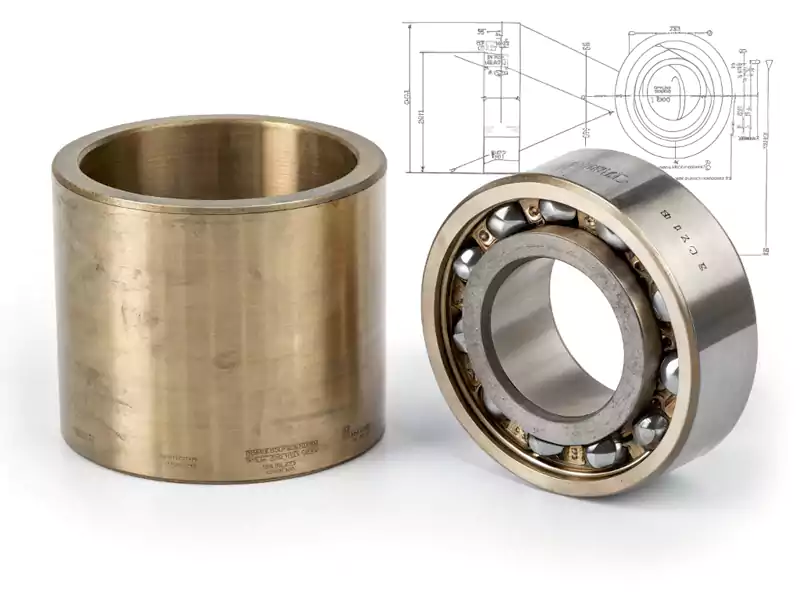
I often help customers choose between the two during prototype development. There is no universal winner. The correct choice depends on speed, load, contamination, maintenance, and budget.
Structural Differences
Bushings are usually one-piece sleeves. Bearings contain rolling elements and more complex internal structures.
Load and Speed Capabilities
Bushings handle shock loads and contamination better. Bearings support higher rotational speeds with lower friction.
Lubrication and Maintenance
Some bushings operate dry or self-lubricated. Bearings often require more consistent lubrication management.
Which One Should You Choose?
Choose bushings when:
- Load is heavy
- Speed is moderate
- Environment is dirty
- Maintenance must stay simple
Choose bearings when:
- Rotational speed is high
- Friction must stay extremely low
- Precision motion control is critical
How to Choose the Right Bushing for Your Application
Many sourcing problems start before manufacturing even begins. The wrong material or tolerance strategy creates problems that machining alone cannot fix.
The right bushing depends on operating load, shaft movement, environmental conditions, material compatibility, lubrication needs, and machining tolerances. Proper selection improves wear life, stability, and overall equipment performance.
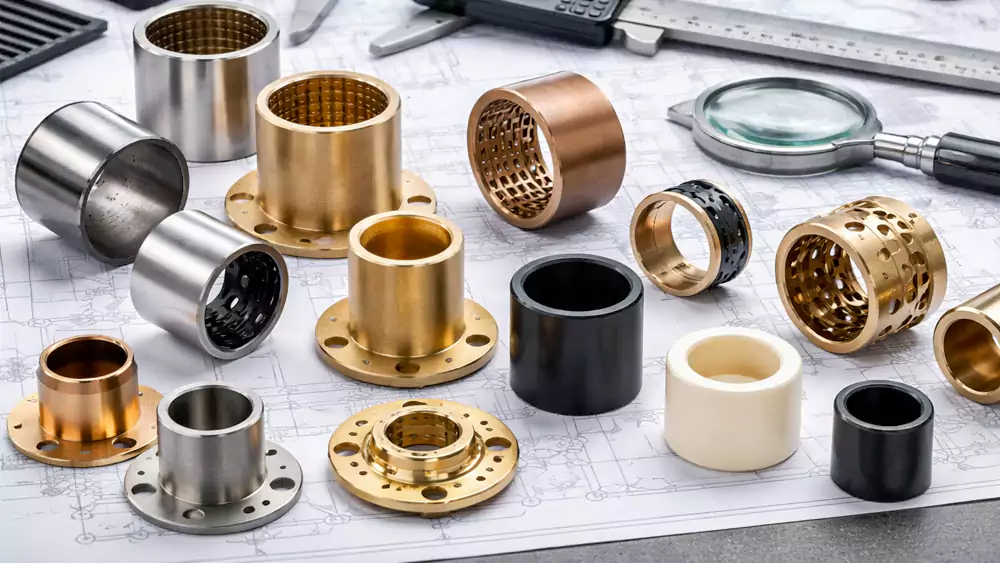
I always tell engineers to think about the entire system first. Bushings do not operate alone. Shafts, lubrication, temperature, and vibration all affect performance.
Consider the Load and Operating Environment
Heavy radial loads require stronger materials like bronze or hardened steel. Wet or chemical environments may require stainless steel or engineered plastics.
Choose the Right Material
Material selection affects:
- Friction
- Wear life
- Noise
- Corrosion resistance
- Lubrication needs
No single material works best for every application.
Evaluate Tolerance and Precision Requirements
Avoid overengineering tolerances that provide no functional benefit. Balanced tolerances usually produce better long-term assembly stability.
Prototype vs Low-Volume vs Mass Production
Prototype projects prioritize flexibility and fast lead times. Mass production focuses more on process consistency and cost optimization.
Work with an Experienced CNC Machining Supplier
A good machining supplier does more than cut metal. They help identify tolerance risks, manufacturability issues, and material trade-offs before production starts.
That early communication saves enormous time later.
Conclusion
Bushings may be small components, but they directly affect friction, alignment, wear resistance, and long-term machine stability. Choosing the right material, structure, and CNC machining process helps prevent costly failures, improve assembly performance, and extend equipment life across demanding industrial applications.
Need custom precision bushings for your OEM project? Allied Metal provides CNC-machined bronze, stainless steel, and engineered plastic bushings built for tight tolerances, stable quality, and reliable production performance.
-
"Towards eliminating friction and wear in plain bearings operating ...", https://pmc.ncbi.nlm.nih.gov/articles/PMC10576080/. A tribology or machine-design reference explains that plain bearings and bushings act as replaceable bearing surfaces that can protect shafts and housings from direct wear. Evidence role: mechanism; source type: education. Supports: A bushing functions as a controlled wear component that absorbs friction before more expensive shafts or housings wear out.. Scope note: This supports the general design principle, not the cost difference for every specific assembly. ↩
-
"Plain bearing - Wikipedia", https://en.wikipedia.org/wiki/Plain_bearing. A mechanical-engineering reference on plain or sleeve bearings supports that cylindrical sleeve bushings primarily carry radial loads in rotating shaft applications. Evidence role: definition; source type: education. Supports: Sleeve bushings support radial loads and work well in rotating assemblies.. Scope note: This supports the load-function description, but not the separate claim that sleeve bushings are the most widely used type. ↩
-
"Bushing and Shaft Alignment - Engineering Stack Exchange", https://engineering.stackexchange.com/questions/16854/bushing-and-shaft-alignment. A precision-manufacturing or bearing-design source explaining that wall-thickness variation affects concentricity and alignment supports the claim that dimensional balance, not only outside diameter tolerance, influences installed shaft alignment. Evidence role: mechanism; source type: paper. Supports: A bushing with a perfect outer diameter but unstable wall thickness can still install crooked.. Scope note: This would support the engineering principle behind the case study, but it would not independently verify the reported project data or failure-rate reduction. ↩
