Silicone prototypes often take too long and cost too much when traditional tooling is the only option. Many product teams lose valuable time before they can even test a design.
Silicone molding is a manufacturing process that uses flexible silicone molds to create prototypes and low-volume production parts quickly and cost-effectively. It accurately reproduces complex geometries, shortens product development cycles, and allows engineers to validate designs before investing in expensive production tooling.
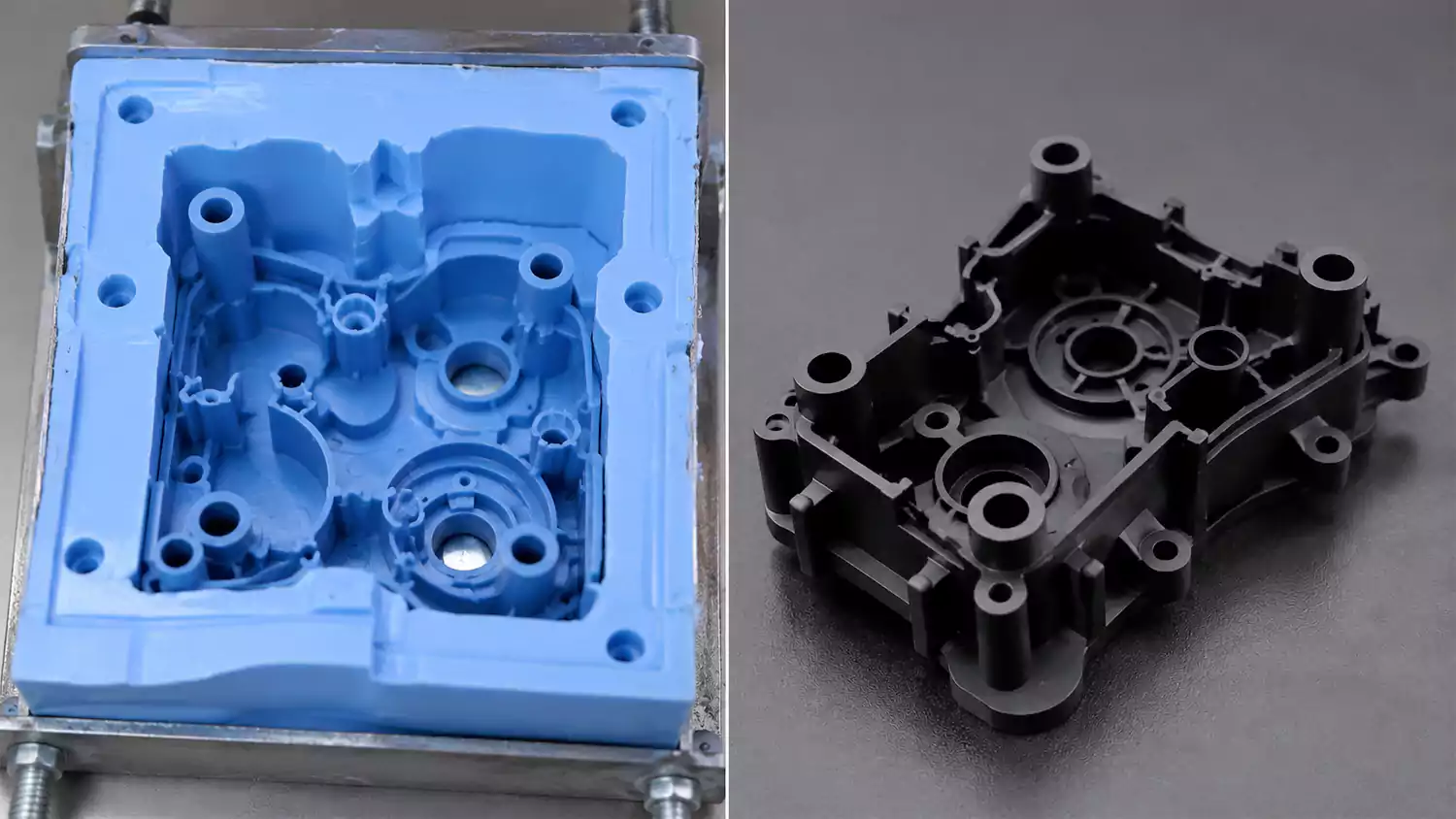
In my years working with product development teams, I have seen many projects stall because prototype costs became too high. Silicone molding changed that. The value is simple. It can reduce iteration cycles from three months to as little as two weeks. It can also lower iteration costs from tens of thousands of dollars to only a few thousand. That speed gives engineers more opportunities to test, improve, and launch better products.
For companies focused on fast product validation, silicone molding is often used alongside rapid prototyping services to accelerate development while keeping costs under control.
What Is Silicone Molding and How Does It Work?
Many engineers need functional prototypes quickly, yet traditional injection molding often requires expensive tooling and long lead times. That creates delays when designs are still changing.
Silicone molding works by creating a silicone mold from a master pattern and then casting resin or elastomer materials into the mold cavity. The process delivers highly accurate prototypes with excellent surface finishes, making it one of the fastest and most cost-effective methods for product development and design verification.
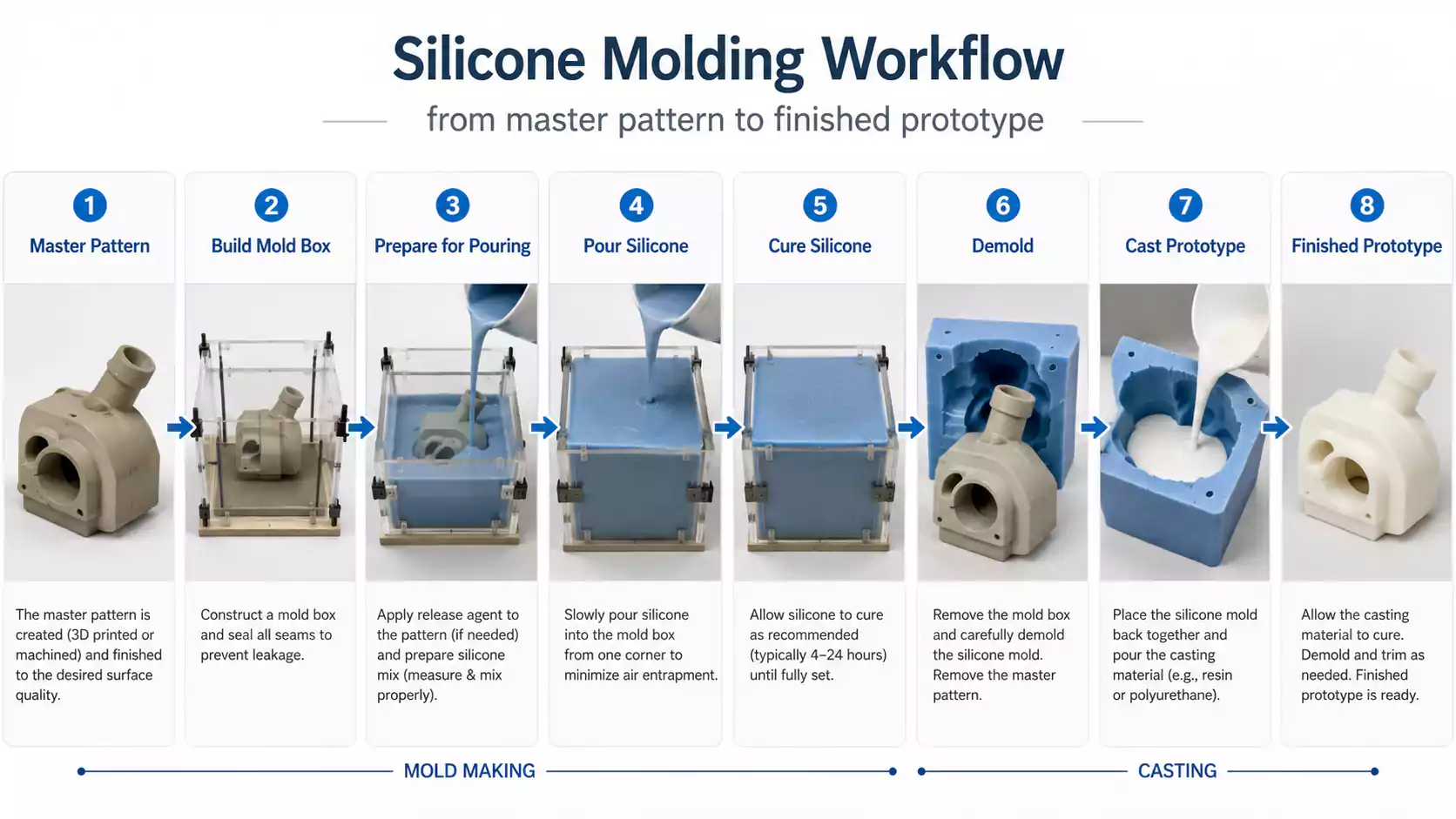
Understanding the Silicone Molding Process
I often explain silicone molding as a bridge between prototyping and production. The process starts with a master model. This model is usually produced through CNC machining, SLA 3D printing, or another high-precision manufacturing method.
The master pattern is placed inside a mold box. Liquid silicone is then poured around it. After curing, the silicone mold is cut open and the master is removed. The resulting cavity becomes an accurate copy of the original part.
The mold can then be filled with casting materials such as polyurethane resins, elastomers, or specialized engineering plastics. Vacuum casting is often used to remove air bubbles and improve surface quality1.
| Process Step | Purpose | Typical Time |
|---|---|---|
| Master Pattern Creation | Create reference geometry | 1–3 days |
| Silicone Mold Production | Form mold cavity | 1–2 days |
| Mold Curing | Stabilize silicone | 8–24 hours |
| Casting | Produce parts | 30–120 minutes |
| Finishing | Trim and inspect parts | 1–2 hours |
This approach works especially well when engineers need multiple design revisions before committing to production tooling. It gives teams the freedom to test designs without major financial risk.
Types of Silicone Molding for Rapid Prototyping and Production?
Many buyers assume silicone molding refers to a single process. In reality, several methods exist, and each serves different development goals.
The main types of silicone molding include vacuum casting, compression molding, transfer molding, and liquid silicone rubber molding. Vacuum casting is best for rapid prototyping, while LSR molding is better suited for high-volume production where consistency and efficiency are critical.
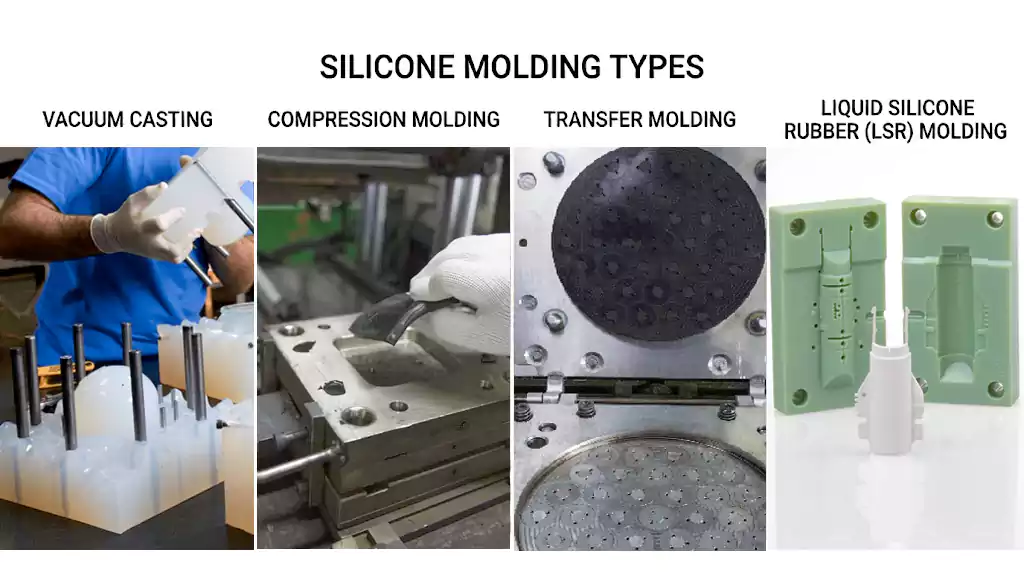
Comparing Different Silicone Molding Methods
I usually help customers choose a molding process based on volume requirements and functional needs.
Vacuum casting remains the most popular choice for rapid prototyping. It delivers excellent surface finishes and accurate dimensions while keeping tooling costs low.
Compression molding is often used for larger silicone components. The process places silicone material into a heated mold and applies pressure to form the final shape.
Liquid Silicone Rubber (LSR) molding supports higher production volumes2. It uses automated injection systems and delivers exceptional consistency.
Transfer molding fills a cavity through a runner system. It is useful for complex geometries that require detailed features.
| Method | Best Use | Tooling Cost | Production Volume |
|---|---|---|---|
| Vacuum Casting | Rapid prototypes | Low | 10–50 parts |
| Compression Molding | Larger components | Medium | 100–5,000 parts |
| LSR Molding | Production parts | High | 5,000+ parts |
| Transfer Molding | Complex shapes | Medium | 500–10,000 parts |
The choice depends on the stage of development. During early design validation, I usually recommend vacuum casting because it offers the fastest feedback loop and lowest investment.
Common Silicone Materials and Their Properties?
Choosing the wrong silicone material can cause premature failure, poor performance, or unnecessary cost increases. Material selection matters as much as process selection.
Common silicone materials include RTV silicone, high-temperature silicone, food-grade silicone, medical-grade silicone, and liquid silicone rubber. Each material offers unique benefits in flexibility, temperature resistance, chemical stability, durability, and regulatory compliance.
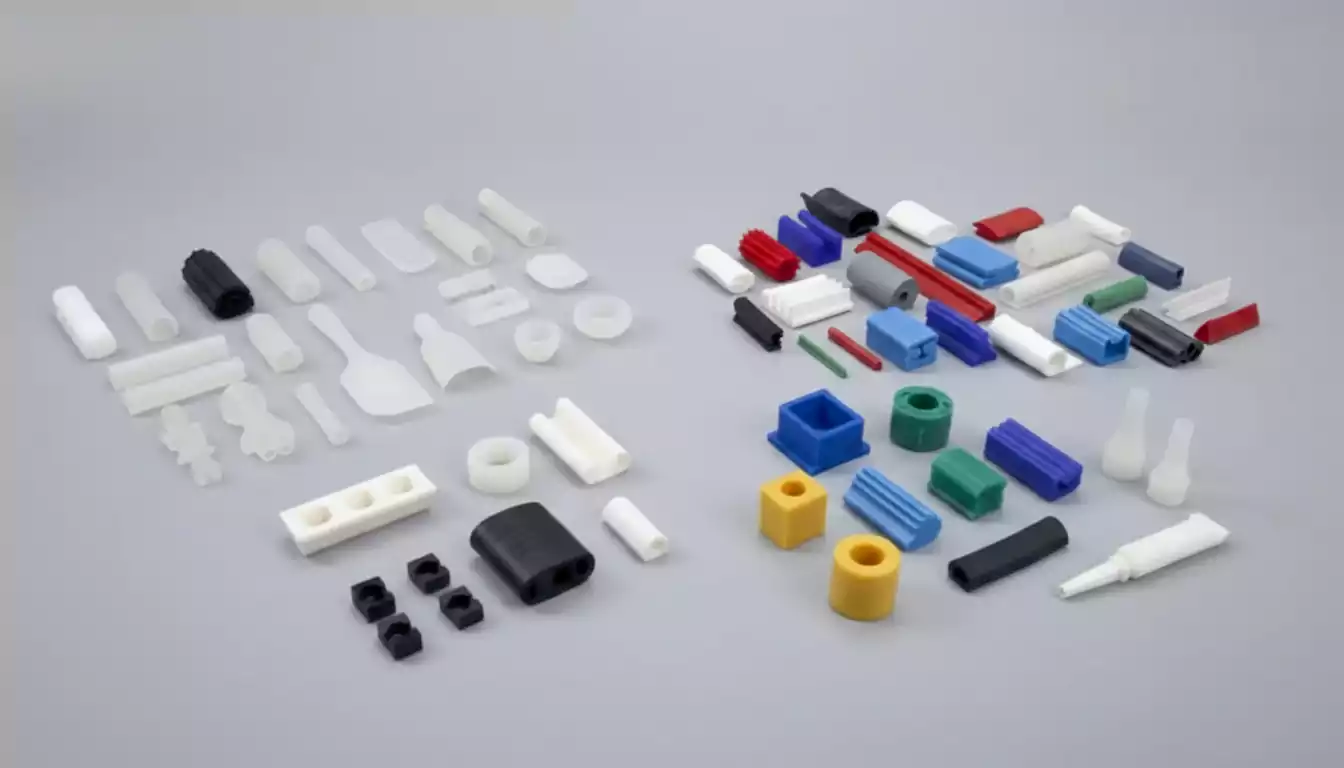
Key Material Characteristics
One reason silicone remains popular is its broad performance range. Few materials can maintain flexibility under extreme temperatures while resisting environmental degradation3.
Standard RTV silicone works well for mold making and general-purpose applications. High-temperature grades can withstand temperatures exceeding 250°C.
Medical-grade silicone provides biocompatibility for healthcare applications. Food-grade silicone meets strict safety standards for consumer products.
| Material Type | Temperature Range | Key Benefit | Common Application |
|---|---|---|---|
| RTV Silicone | -50°C to 200°C | Easy processing | Prototype molds |
| High-Temp Silicone | -60°C to 250°C+ | Heat resistance | Automotive parts |
| Food-Grade Silicone | -40°C to 230°C | Safe contact | Kitchen products |
| Medical-Grade Silicone | -60°C to 250°C | Biocompatibility | Medical devices |
| LSR | -50°C to 200°C | Production efficiency | Consumer goods |
I often remind engineers that environmental conditions should drive material decisions. A part that performs perfectly in a lab may behave very differently in a factory or outdoor environment.
Applications of Silicone Molding Across Industries?
Product developers need manufacturing methods that support speed, accuracy, and flexibility. Silicone molding has become one of the most versatile solutions available.
Silicone molding is widely used in medical devices, automotive components, consumer electronics, industrial equipment, aerospace products, and product development projects. It allows manufacturers to produce realistic prototypes and functional parts quickly without the cost of production tooling.
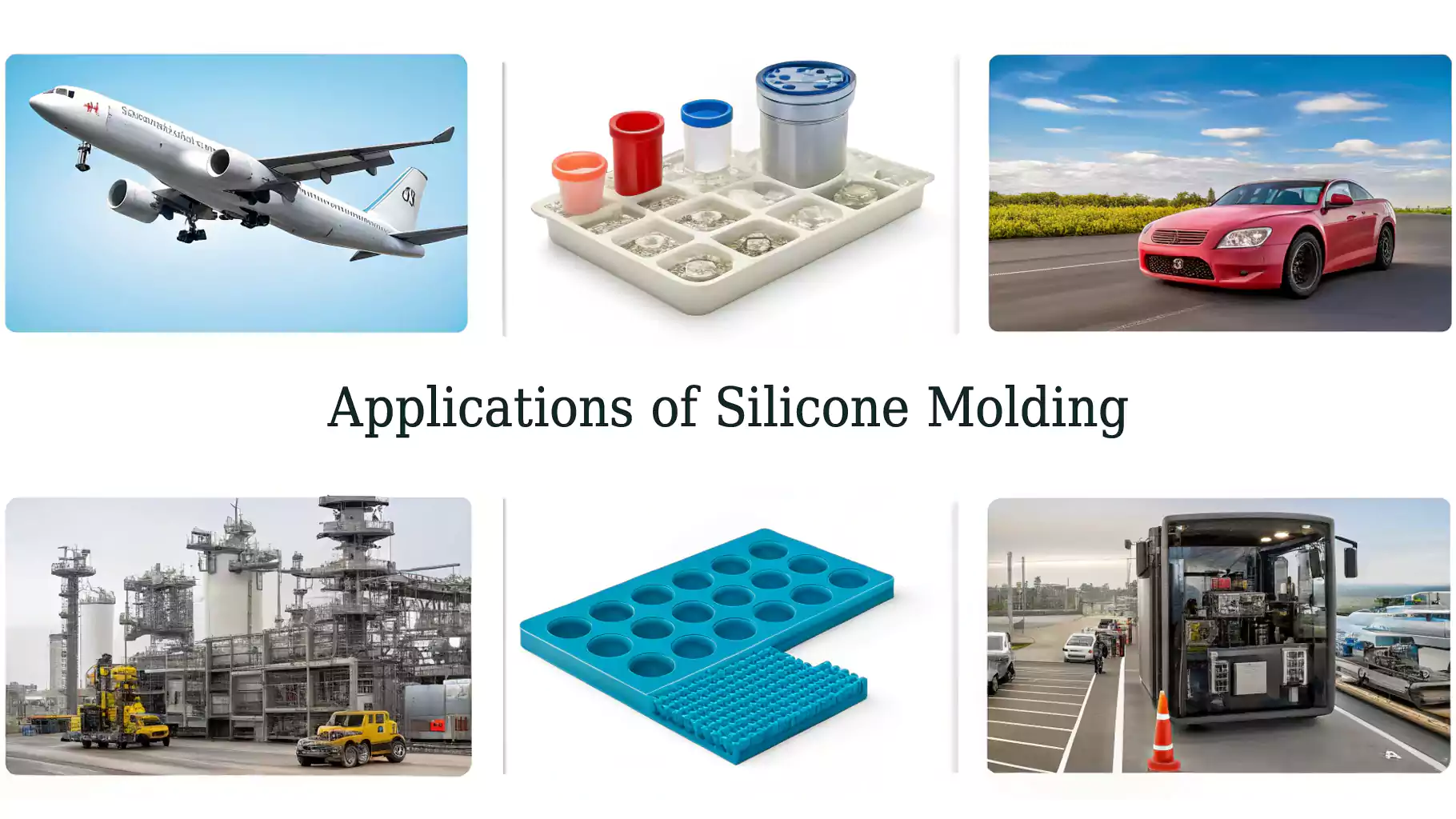
Real-World Industry Applications
I have worked with customers from many industries, and the advantages remain consistent. Silicone molding helps teams validate designs before investing in expensive production tooling.
Medical companies use silicone molding to evaluate device ergonomics and fit. Automotive manufacturers test housing components and interior parts. Consumer electronics brands often use vacuum-cast prototypes for market evaluations.
Case Study: Industrial Automation Sensor Housing Development
One project stands out from my experience. A customer developing an industrial automation sensor needed multiple design revisions before production approval.
| Parameter | Initial Design | Final Design |
|---|---|---|
| Part Size | 120 × 85 × 40 mm | 120 × 85 × 40 mm |
| Material | Polyurethane Resin | Polyurethane Resin |
| Prototype Quantity | 5 Units | 30 Units |
| Mold Material | RTV Silicone | RTV Silicone |
| Surface Finish | SPI-C1 Equivalent | SPI-B2 Equivalent |
| Lead Time | 14 Days | 12 Days |
| Unit Cost | $420 | $145 |
| Dimensional Tolerance | ±0.30 mm | ±0.15 mm |
The engineering team completed three design iterations in just six weeks. Traditional tooling would have required nearly three months for the same cycle. The project saved more than $18,000 in development costs before production tooling was approved.
Experiences like this explain why silicone molding continues to play such an important role in product development.
How to Choose the Right Silicone Molding Manufacturer?
Many suppliers advertise silicone molding services, yet their capabilities can vary significantly. Selecting the wrong partner can lead to delays, quality issues, and missed deadlines.
The right silicone molding manufacturer should offer strong engineering support, proven material expertise, reliable quality control, fast turnaround times, and experience with both prototype and production projects. These capabilities help reduce risk and improve project outcomes.
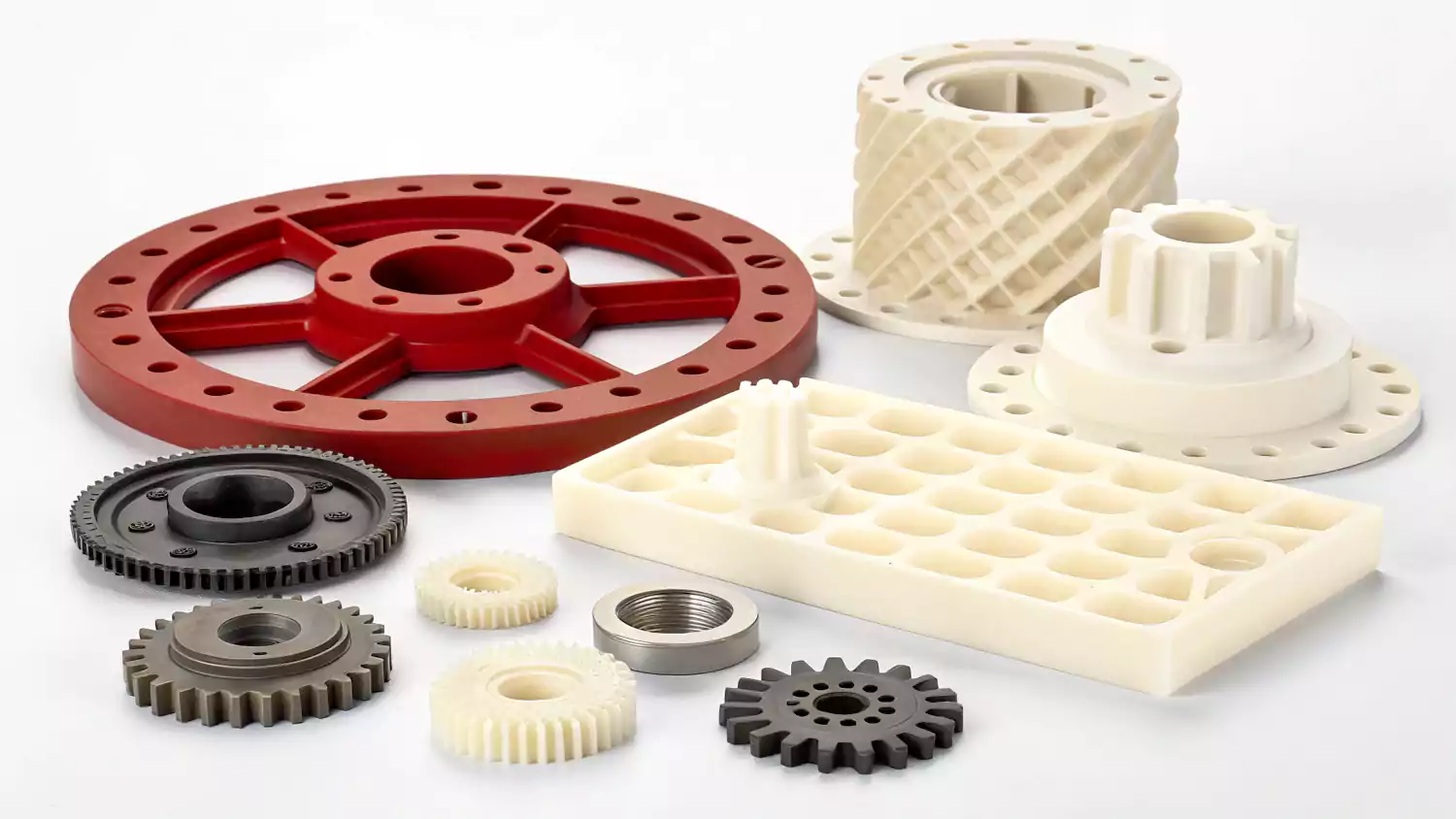
Evaluation Criteria for Manufacturing Partners
When I evaluate manufacturing suppliers, I focus on factors that directly affect project success.
Engineering support is one of the most important. A capable supplier should review designs before production and identify risks early.
Quality control systems also matter. Dimensional inspection, material traceability, and process documentation help ensure consistency.
| Evaluation Factor | Why It Matters |
|---|---|
| Engineering Support | Improves manufacturability |
| Material Expertise | Ensures proper performance |
| Quality Control | Maintains consistency |
| Lead Time | Accelerates development |
| Quoting Speed | Supports project planning |
| IP Protection | Safeguards proprietary designs |
For engineers like David, reliable communication is often just as important as manufacturing capability. Fast responses, accurate quotes, and transparent project updates reduce uncertainty and help projects stay on schedule.
Conclusion
Silicone molding continues to be one of the most effective solutions for rapid prototyping and low-volume production. It helps engineering teams validate designs faster, reduce development costs, and move confidently from concept to production with fewer risks and more opportunities for innovation.
Footnote:
-
"Bubble removal in centrifugal casting: Combined effects of buoyancy ...", https://www.academia.edu/16199208/Bubble_removal_in_centrifugal_casting_Combined_effects_of_buoyancy_and_diffusion. Sources on vacuum casting and degassing describe the use of vacuum pressure to evacuate entrapped air from liquid casting materials, which can reduce voids and improve the finish of cast parts. Evidence role: mechanism; source type: education. Supports: Vacuum casting is often used to remove air bubbles and improve surface quality.. Scope note: The source may describe the general mechanism of vacuum casting rather than quantify surface-quality improvements for every resin or mold geometry. ↩
-
"Injection molding of liquid silicone rubber - Wikipedia", https://en.wikipedia.org/wiki/Injection_molding_of_liquid_silicone_rubber. A polymer-processing or manufacturing reference should support that liquid silicone rubber injection molding is designed for automated, repeatable production and is commonly associated with high-volume manufacturing of silicone parts. Evidence role: mechanism; source type: education. Supports: Liquid Silicone Rubber molding supports higher production volumes.. Scope note: The source would justify the general association between LSR injection molding and high-volume production, but it may not validate the article’s specific volume threshold of 5,000+ parts. ↩
-
"Temperature Range of Silicone Rubber Explained", https://smartechonline.com/resources/what-is-the-temperature-range-of-silicone-rubber/. A neutral materials-science source should document that silicone elastomers are commonly characterized by a wide service-temperature range and resistance to weathering, oxidation, or other environmental stressors, supporting this general performance claim. Evidence role: general_support; source type: research. Supports: Silicone can remain flexible across extreme temperatures and resist environmental degradation.. Scope note: Exact temperature limits and degradation resistance depend on the silicone formulation, additives, cure chemistry, and operating environment. ↩
