Editor's Note: Last updated on May 28, 2026, by Lucy
Many RFQs fail before machining even starts. Missing details create delays, inaccurate pricing, and production risks that can slow an entire project.
A complete RFQ should include detailed CAD files, material specifications, tolerances, surface finish requirements, production quantities, and delivery expectations. Clear technical information helps suppliers provide faster, more accurate quotes while reducing manufacturing risks and unexpected costs.
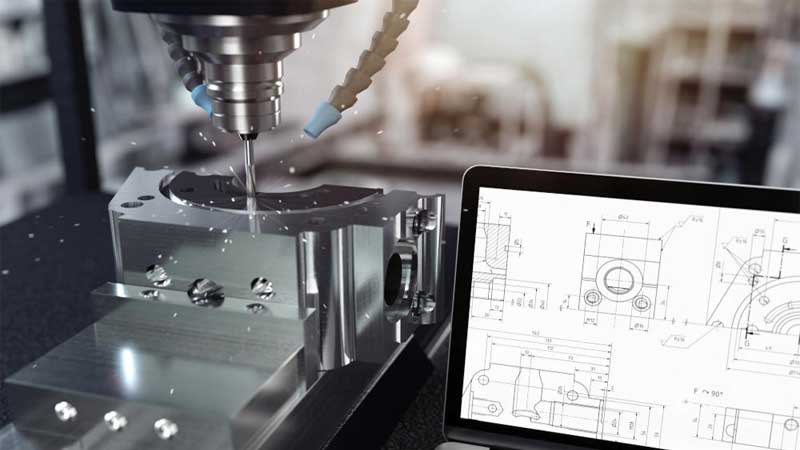
I learned this lesson years ago when I worked on a robotic actuator housing project. The customer only sent a STEP file and a rough material note. We spent three days asking questions before we could even prepare a quote. Since then, I always tell engineers and buyers the same thing: the more detail you put into your RFQ, the more accurate our quote will be. A complete RFQ saves time for both sides and helps avoid production problems later. Companies that rely on professional CNC machining services often see smoother project execution because the quoting process becomes much more predictable from the start.
Define Your Part and Technical Requirements Clearly
Incomplete part information creates confusion fast. Suppliers may guess missing details, and that often leads to inaccurate pricing, longer lead times, or rejected parts.
Engineers should provide complete CAD models, 2D technical drawings, material grades, tolerances, thread specifications, surface finish requirements, and inspection standards before requesting a machining quote. Detailed documentation reduces quoting errors and improves manufacturing accuracy.
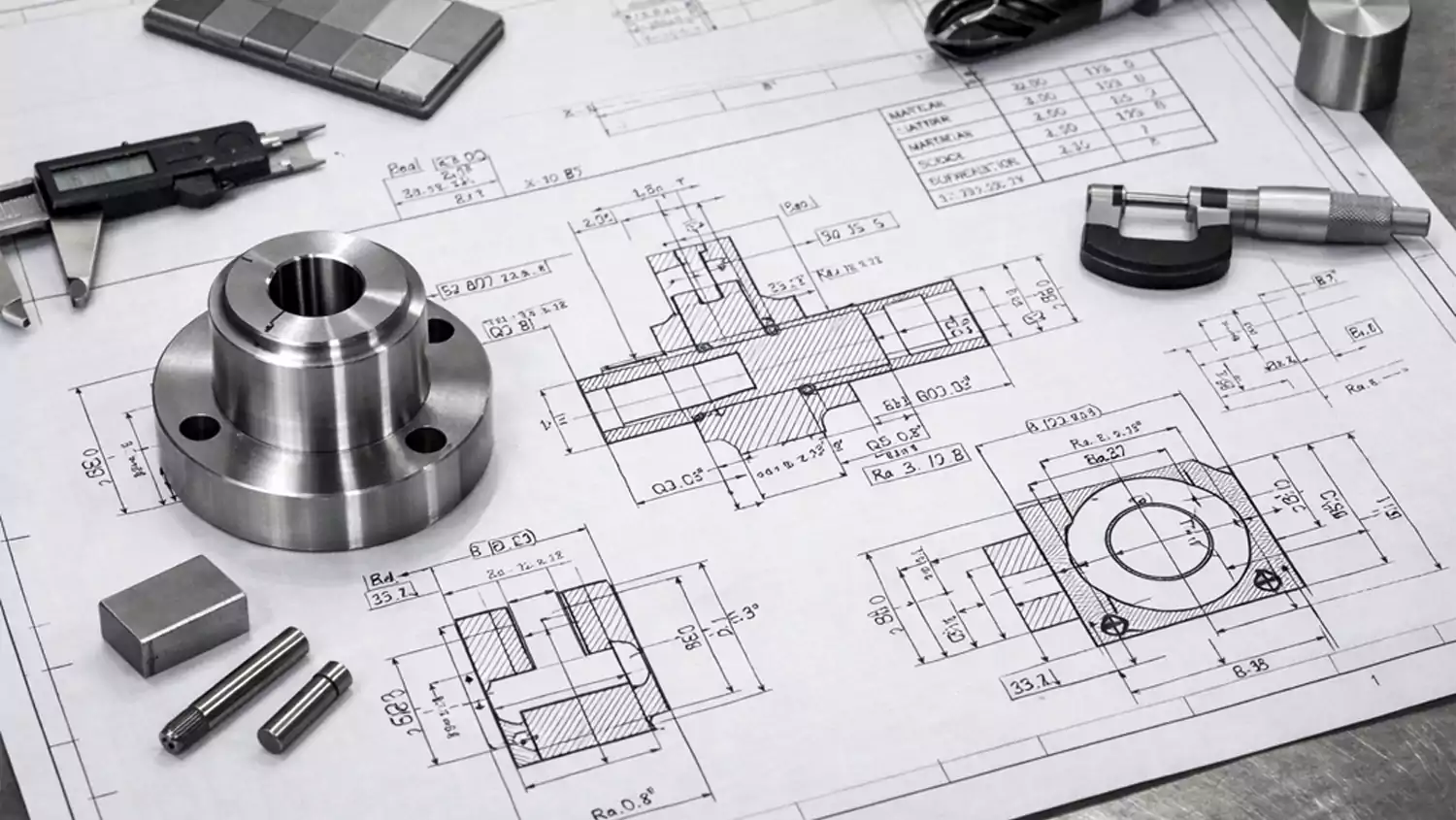
Start With Complete CAD and Drawing Files
I always recommend sending both 3D and 2D files together. A STEP file helps us review geometry quickly. A detailed PDF drawing gives us the manufacturing requirements that CAD models often miss.
Your drawing should clearly show:
| Requirement | Example |
|---|---|
| Dimensions | 125 mm × 85 mm × 42 mm |
| Tolerances | ±0.01 mm critical bore |
| Material | 6061-T6 aluminum |
| Surface finish | Ra 1.6 μm |
| Threads | M8 × 1.25 |
| Heat treatment | Hard anodizing Type III |
| Inspection notes | 100% CMM inspection |
I often see engineers place tight tolerances on every dimension. That increases machining time and inspection cost immediately. Only apply tight tolerances where function truly requires them.
Clarify Functional Requirements Early
A part drawing alone does not always explain how the part works in the final assembly. That missing context matters.
For example, a bearing pocket may need special concentricity control because it affects motor alignment. A cosmetic face may need extra polishing because the product is customer-facing.
When buyers explain the real function of the part, we can often suggest better manufacturing methods or lower-cost alternatives.
Specify Material and Certification Needs
Material confusion is another common RFQ issue. “Stainless steel” is not enough information. We need the exact grade and any certification requirements.
Examples include:
- 304 stainless steel
- 316L stainless steel
- 7075-T651 aluminum
- PEEK plastic
- Titanium Grade 5
Some industries also require:
- Mill certificates
- RoHS compliance1
- REACH compliance2
- Material traceability
- First Article Inspection reports
These details affect both pricing and lead time.
Select the Right Manufacturing Process Before Requesting a Quote
Many RFQs fail because the selected process does not match the part design. That creates unnecessary cost and delays before production even begins.
The right manufacturing process depends on part geometry, material type, production quantity, tolerance requirements, and lead time goals. Matching the process to the application helps reduce machining cost, improve efficiency, and shorten delivery time.
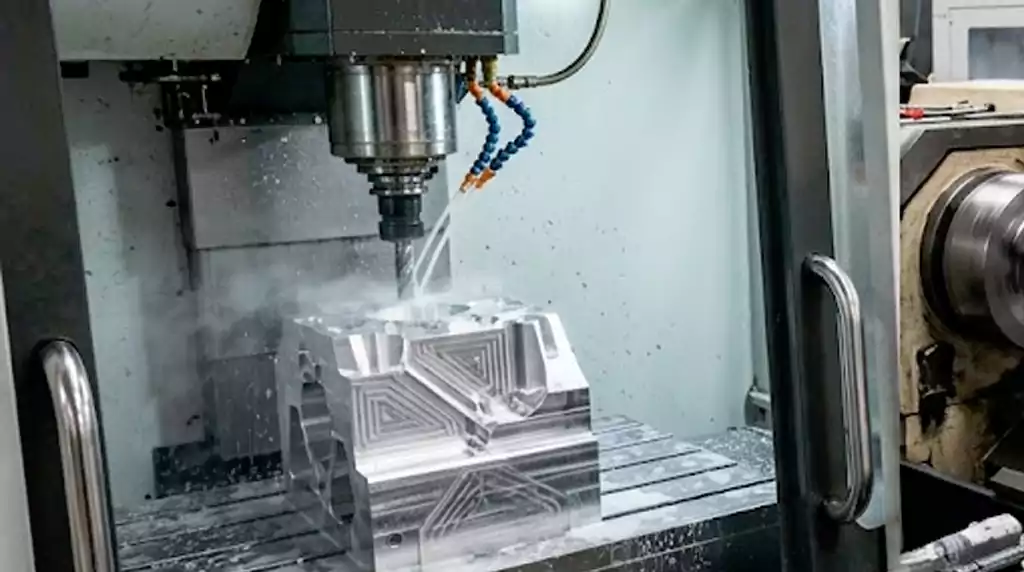
Match the Process to the Part Geometry
I often review RFQs where a simple turned part is requested for full 5-axis machining. That raises the cost for no real reason.
Different part types fit different processes:
| Part Feature | Best Process |
|---|---|
| Cylindrical shafts | CNC turning |
| Complex contours | 5-axis CNC machining |
| Thin wall plastic parts | Injection molding |
| Fast prototypes | 3D printing |
| Flat sheet parts | Laser cutting |
When engineers choose the right process early, suppliers can quote faster and more accurately.
Think About Prototype vs Production Quantities
Prototype machining and production machining are very different.
A prototype may prioritize speed and flexibility. Production runs focus more on cycle time, fixture efficiency, and process stability.
I once worked with a robotics customer who requested 20 prototype housings in 7075 aluminum. Six months later, they needed 8,000 units annually. We redesigned the fixturing and optimized the tool path to reduce cycle time from 52 minutes to 18 minutes per part.
That reduced annual machining cost by nearly 37%.
Case Study: RFQ Optimization for an Automation Housing
One customer from the industrial automation sector approached us with a complex actuator housing project. Their original RFQ lacked several key manufacturing details.
After a technical review, we worked together to improve the RFQ package before quoting.
| Parameter | Original RFQ | Optimized RFQ |
|---|---|---|
| Material | Aluminum | 7075-T651 |
| Quantity | 50 pcs | 50 prototype + 2,000 annual |
| Tolerance | General ±0.005 mm | Critical zones only |
| Surface finish | Undefined | Ra 1.6 μm |
| CAD files | STEP only | STEP + detailed PDF |
| Inspection | Not specified | Full CMM report |
| Lead time estimate | Unknown | 18 working days |
The optimized RFQ reduced quoting time by 60%. It also lowered machining cost by 22% because we could simplify several operations before production started.
This kind of collaboration usually creates better long-term supplier relationships, especially for companies considering outsourcing CNC machining to improve production flexibility and reduce internal manufacturing pressure.
Understand the Hidden Factors That Affect Cost and Lead Time
Many buyers focus only on unit price. They often overlook the technical details that drive machining complexity behind the scenes.
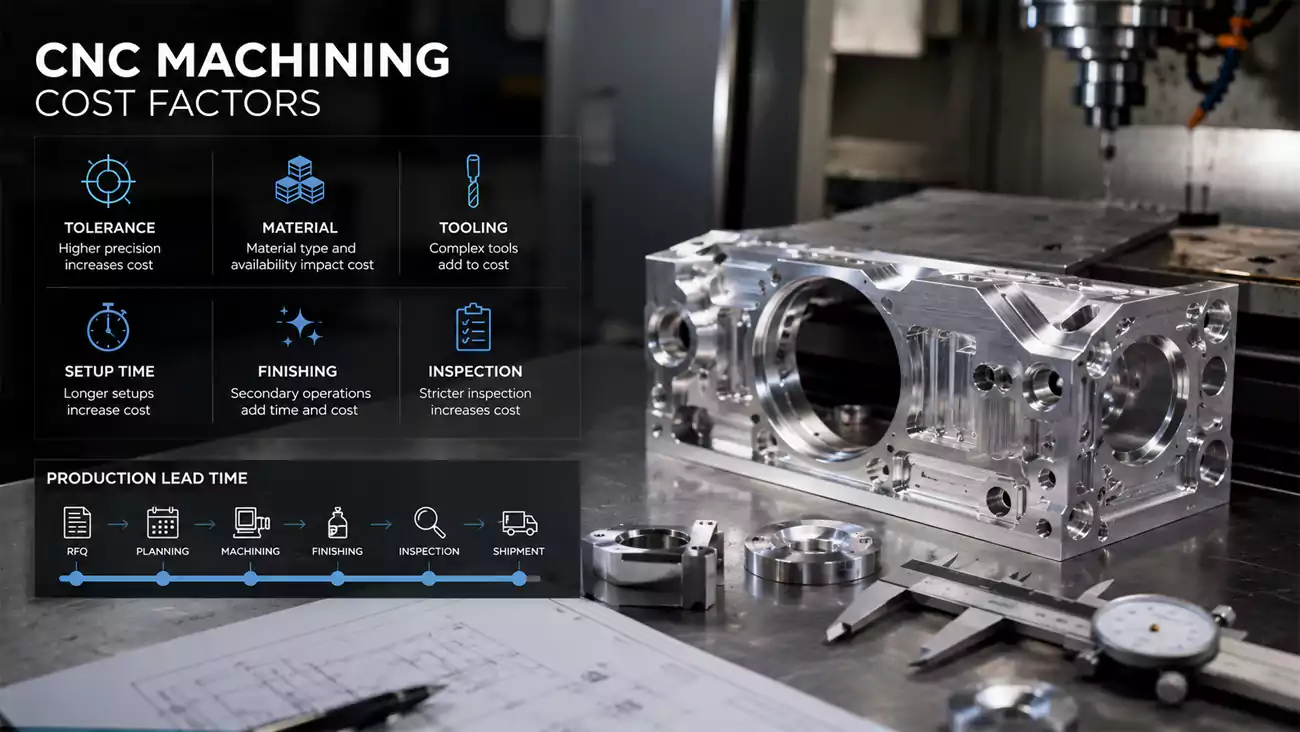
Machining cost and lead time are heavily influenced by tolerance requirements, material availability, tooling complexity, setup time, secondary finishing processes, and inspection standards. Understanding these factors helps buyers avoid unexpected delays and hidden production costs.
Tight Tolerances Increase Machining Time Fast
Every tighter tolerance increases machining difficulty.
For example:
| Tolerance Level | Manufacturing Impact |
|---|---|
| ±0.1 mm | Standard machining |
| ±0.02 mm | Precision setup required |
| ±0.005 mm | Temperature control and advanced inspection |
Many engineers do not realize that ultra-tight tolerances can double machining and inspection time.
I always suggest reviewing tolerances carefully before submitting the RFQ. Functional tolerances matter most. Cosmetic tolerances often do not need to be extremely tight.
Material Availability Affects Delivery
Some materials are easy to source locally. Others require long procurement cycles.
These materials often increase lead time:
- Titanium alloys
- Inconel
- PEEK
- Ultem
- Hardened tool steel
Global supply chain conditions also affect material pricing.3 I have seen aluminum pricing swing dramatically within a few months.
That is why suppliers sometimes need to reconfirm material pricing before final production approval.
Secondary Processes Add Complexity
Machining is often only one part of the manufacturing process.
Additional services may include:
- Anodizing
- Powder coating
- Heat treatment
- Laser engraving
- Passivation
- Assembly
- Packaging
Each secondary operation adds scheduling coordination and quality checks.
A complete RFQ should clearly define which finishing services are required and whether cosmetic appearance standards apply.
Build an Effective RFQ Package for Suppliers
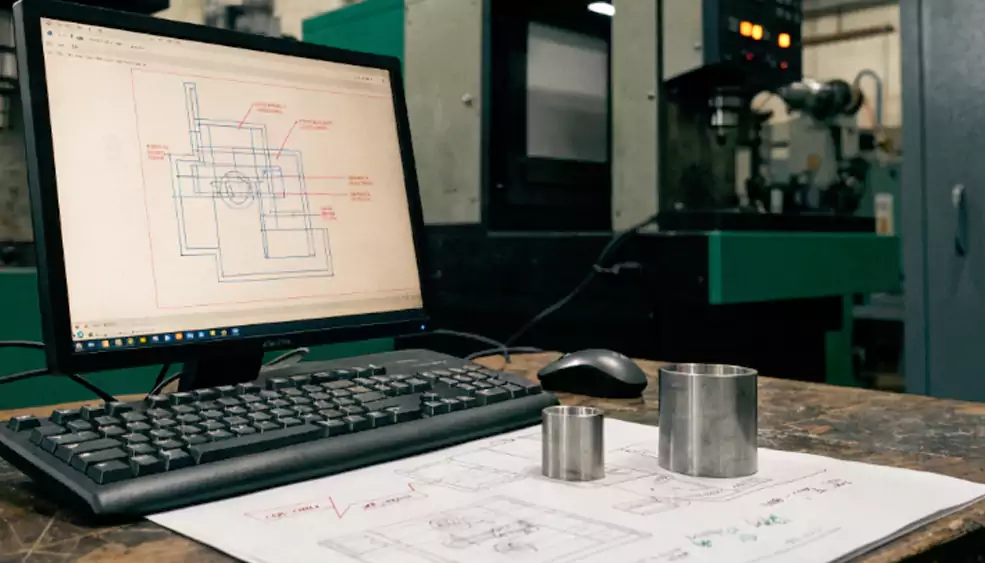
A well-organized RFQ package improves communication immediately. Suppliers can review requirements faster and identify risks earlier.
An effective RFQ package should combine CAD files, technical drawings, material specifications, quantity forecasts, quality requirements, and delivery timelines in one organized document set. Better RFQ organization leads to faster supplier response and more accurate quotations.
Include All Key Technical Documents
A complete RFQ package usually includes:
| Document | Purpose |
|---|---|
| STEP file | Geometry review |
| 2D PDF drawing | Manufacturing details |
| BOM list | Assembly reference |
| Material specs | Material confirmation |
| Surface finish notes | Cosmetic requirements |
| Inspection requirements | Quality control planning |
Organized files reduce back-and-forth communication.
I personally prefer RFQ folders with clear naming structures. It sounds simple, but organized documentation speeds up supplier review significantly.
Communicate Schedule Expectations Clearly
Lead time expectations should always be stated early.
Important timeline details include:
- Prototype deadline
- Production forecast
- Shipping method
- Target approval dates
- Revision schedule
Suppliers can plan machine allocation and raw material purchasing more effectively when timelines are clear.
Protect Intellectual Property
Many engineering teams worry about design confidentiality. That concern is completely valid.
I have worked with customers in robotics, medical devices, and aerospace who required strict NDA protection before sharing CAD files.
A professional supplier should already have processes for:
- NDA agreements
- Controlled file access
- Internal project confidentiality
- Secure data storage
Buyers should confirm these protections before sending sensitive designs. Many global manufacturers also spend time researching reliable CNC machining suppliers in China because supplier transparency and communication standards directly affect long-term project success.
Pre-Quote Checklist and Supplier Selection Tips
Rushed RFQs often create expensive mistakes later. A simple checklist helps engineers and buyers avoid missing critical information.
Before sending an RFQ, buyers should confirm that all CAD files, drawings, material specifications, tolerance notes, surface finish requirements, quantities, and delivery expectations are clearly defined. A complete checklist helps suppliers quote faster and reduces production risk.

Pre-Quote RFQ Checklist
Before sending your RFQ, confirm these items:
| Checklist Item | Status |
|---|---|
| 3D CAD file included | ✓ |
| 2D drawing included | ✓ |
| Material grade defined | ✓ |
| Tolerances specified | ✓ |
| Surface finish defined | ✓ |
| Quantity confirmed | ✓ |
| Delivery timeline included | ✓ |
| Inspection requirements listed | ✓ |
| Secondary operations listed | ✓ |
| Packaging requirements included | ✓ |
This checklist alone can eliminate many common quoting delays.
Evaluate Suppliers Beyond Price
I always encourage buyers to evaluate suppliers using multiple factors:
| Evaluation Area | Why It Matters |
|---|---|
| Technical capability | Complex parts require experience |
| Inspection equipment | Precision depends on quality control |
| Communication speed | Faster answers reduce project delays |
| Process transparency | Better visibility reduces risk |
| Capacity stability | Consistent delivery matters |
A supplier who asks detailed technical questions is usually a good sign. It shows they are reviewing the project carefully instead of simply giving a fast estimate.
Conclusion
A successful machining project starts long before production begins. Clear RFQs help suppliers understand your goals, reduce quoting delays, control manufacturing costs, and improve final part quality. The more complete your RFQ package is, the smoother the entire machining process becomes for everyone involved.

Footnote on evidence:
-
"RoHS - Wikipedia", https://en.wikipedia.org/wiki/RoHS. The European Commission’s RoHS guidance explains that RoHS restricts specified hazardous substances in electrical and electronic equipment placed on the EU market, supporting the point that RoHS compliance may be a required material or regulatory certification for certain manufactured parts. Evidence role: definition; source type: government. Supports: Some industries require RoHS compliance as part of material or certification requirements.. Scope note: RoHS applies primarily to electrical and electronic equipment and related components, so it is not a universal requirement for all machined parts or industries. ↩
-
"EU REACH - International Trade Administration", https://www.trade.gov/eu-reach. The European Chemicals Agency explains that REACH is the EU regulatory framework requiring companies to identify and manage risks from chemical substances, supporting its inclusion as a compliance requirement for material specification in manufacturing procurement. Evidence role: definition; source type: institution. Supports: Some industries require REACH compliance as part of material and certification requirements for manufactured parts.. Scope note: This supports the meaning and regulatory relevance of REACH compliance, but not the article’s broader statement that it affects pricing or lead time. ↩
-
"Special focus: Critical raw materials supply chains - OECD", https://www.oecd.org/en/publications/2025/09/economic-security-in-a-changing-world_78f3b129/full-report/special-focus-critical-raw-materials-supply-chains_daf99c07.html. Commodity-market and mineral-supply reports document that prices for industrial materials such as aluminum, nickel, and titanium feedstocks respond to global supply disruptions, energy costs, trade conditions, and demand shifts; this provides contextual support for the effect of supply-chain conditions on material pricing. Evidence role: general_support; source type: government. Supports: Global supply chain conditions can affect the pricing of materials used in machining.. Scope note: Such reports support broad market-price sensitivity rather than pricing for a specific RFQ, supplier, alloy grade, or purchase quantity. ↩
