Last updated on March 5, 2026, by Lucy Wang
Product timelines keep getting shorter. Tooling budgets stay tight. Many teams feel pressure to move fast but fear investing too early in expensive hardened steel molds that may need changes later.
Rapid mold manufacturing is a tooling strategy that shortens lead time to 2–6 weeks, reduces upfront capital risk, and supports controlled low-to-mid volume production before committing to full hardened steel tooling.
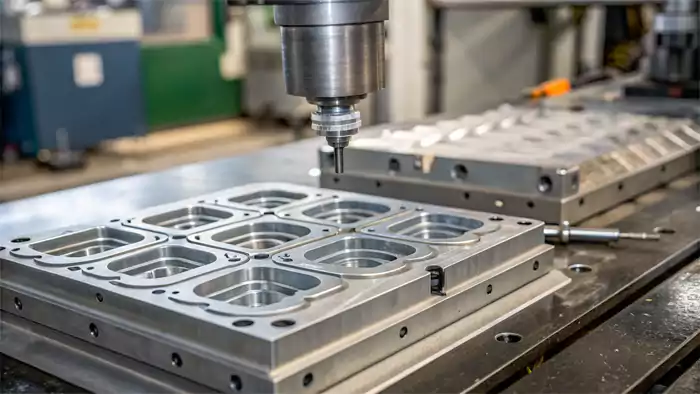
I have worked with many engineering teams who delayed product launch because tooling decisions felt risky. Some waited too long for full production molds. Some rushed and paid heavily for late design changes. Rapid mold manufacturing gives a middle path. It allows validation, pilot production, and market testing without locking the company into a high-cost, long-lead tooling commitment. Now I will break down where it makes sense and how to decide.
What Is Rapid Mold Manufacturing & When Does It Make Strategic Sense?
Many engineers assume rapid molds are temporary or low precision. That belief often prevents smart early-stage decisions.
Rapid mold manufacturing uses aluminum or pre-hardened steel tooling to produce functional, dimensionally accurate parts for prototype, pilot, and bridge production, while reducing both lead time and initial capital exposure.
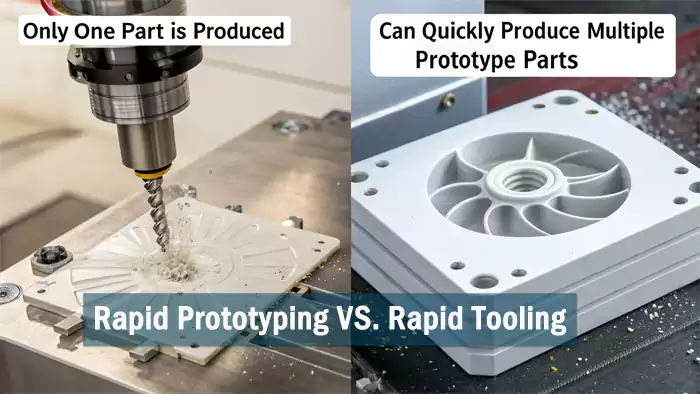
When I review a new project, I do not start by asking about mold material. I start by asking about timing, volume forecast, and design stability. Those factors determine whether rapid tooling is strategic or premature.
Prototype vs Bridge vs Production Mold
| Mold Type | Lead Time | Tool Life | Primary Purpose |
|---|---|---|---|
| Prototype Mold | 2–4 weeks | 1,000–10,000 shots | Functional validation |
| Bridge Mold | 4–8 weeks | 10,000–100,000 shots | Interim production |
| Hardened Steel Mold | 8–16+ weeks | 500,000+ shots | Long-term mass production |
Rapid molds usually use:
- Aluminum bases for fast machining and good thermal conductivity
- Pre-hardened steels like P201 for higher wear resistance
I recommend rapid tooling when:
- The design may still change
- Annual demand is uncertain
- Market launch speed matters
- Automotive pilot runs are required
- Medical device design iterations are ongoing
Many EU OEM programs face compressed timelines. In those cases, waiting 12–16 weeks for hardened steel tooling can delay revenue. Rapid mold manufacturing supports early launch while preserving flexibility. Next, I will explain how different tooling options compare.
Rapid Mold Technologies: Tooling Materials, Lifespan & Volume Strategy?
Choosing tooling type without volume forecasting often leads to over- or under-investment.
The correct rapid mold solution depends primarily on projected production volume, design stability, and lifecycle strategy rather than on part geometry alone.
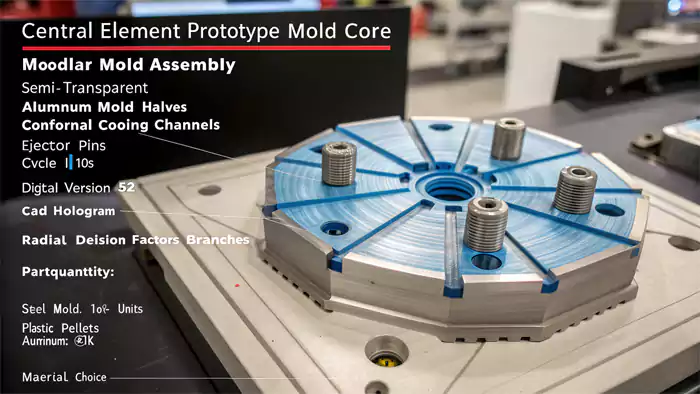
After clarifying expected volume, I evaluate tooling materials and structure. Each option carries different durability, cost, and modification flexibility.
CNC Machined Aluminum Molds
Aluminum molds are ideal for speed.
- Very fast machining
- Excellent heat dissipation
- Lower upfront cost
- Suitable for <50,000 cycles
Aluminum improves cooling efficiency, which can reduce injection cycle time. However, it wears faster under abrasive materials like glass-filled polymers.
Pre-Hardened Steel Rapid Molds2
Pre-hardened steel offers stronger durability.
- Better dimensional stability
- Improved wear resistance
- Suitable for bridge production up to 100,000 cycles
Modular & Insert Tooling
Insert tooling isolates risk. If the cavity needs change, I modify inserts rather than the entire mold base. That reduces engineering revision cost significantly.
Additive-Assisted Tooling (Conformal Cooling)
Conformal cooling channels3 improve thermal balance in complex geometries. They reduce hot spots and shrinkage variation.
| Tool Type | Lead Time | Cost Level | Tool Life | Best Application |
|---|---|---|---|---|
| Aluminum Mold | Short | Low–Medium | Low–Medium | Early validation |
| Pre-Hardened Steel | Medium | Medium | Medium | Bridge production |
| Insert Tooling | Short–Medium | Medium | Medium | Iterative design |
| Conformal Cooling | Medium | Medium–High | Medium | Complex cooling needs |
The correct decision depends more on production forecast than part complexity. A 25,000-unit annual program rarely justifies hardened steel tooling in the first phase. Now I will move into engineering controls that determine success.
DFM, Tolerance Control & Risk Management in Rapid Tooling Projects?
Many teams fear rapid molds will compromise tolerance. That fear usually comes from poor early engineering coordination.
Rapid molds can achieve tight tolerances and stable surface finishes when shrinkage rates, cooling design, venting strategy, and ejection planning are validated through proper DFM and simulation before machining begins.

Once tooling type is selected, engineering discipline becomes critical. I always conduct DFM review before cutting any material.
Critical Engineering Controls
- Accurate shrinkage compensation per material
- Balanced cooling channel layout
- Venting design to prevent gas traps
- Proper ejection alignment to avoid deformation
- Mold flow simulation4 prior to cavity machining
Typical Performance Capability
| Parameter | Typical Range |
|---|---|
| Dimensional Tolerance | ±0.02 mm on critical features |
| Surface Finish | SPI-B1 to SPI-A2 achievable |
| Compatible Materials | ABS, PC, PA, POM, PP |
Case Study: Automotive Sensor Housing
I worked on a PA66 + 30% GF automotive housing project.
| Parameter | Value |
|---|---|
| Material | PA66-GF30 |
| Annual Volume | 28,000 units |
| Mold Type | P20 Bridge Mold |
| Cavities | 2 |
| Lead Time | 5 weeks |
| Tool Cost Reduction | 42% vs hardened steel |
| Achieved Tolerance | ±0.02 mm |
| Initial Cycle Time | 42 sec |
| Optimized Cycle Time | 34 sec |
| Scrap Rate After Optimization | <1.5% |
We adjusted cooling channels by 3 mm in rib zones after simulation analysis. Warpage reduced by 60%. That improvement came from engineering review, not from slowing down production. Finally, I will explain how to evaluate cost and ROI.
Cost, Lifecycle ROI & Procurement Decision Checklist?
Tooling cost alone does not define project success. Lifecycle exposure matters more.
Rapid mold manufacturing reduces development risk, shortens time-to-market, and limits capital exposure during early production phases, even if per-unit tooling amortization appears slightly higher.

After engineering validation, procurement teams must evaluate financial impact and risk tolerance.
Major Cost Drivers
- Mold base material
- CNC machining hours
- Surface finishing level
- Trial shot optimization cycles
- Engineering revision work
ROI Logic
- Faster product launch
- Reduced capital lock-up
- Lower redesign penalty
- Flexible bridge-to-production transition
Break-Even Consideration
If projected annual demand exceeds 120,000 units for multiple years and design is frozen, hardened steel molds may provide better long-term ROI. If volume is uncertain or the product is new, rapid tooling limits financial risk.
Procurement Checklist
- Is the design fully validated?
- What is realistic annual volume?
- What mold lifespan is acceptable?
- Are automotive or medical certifications required?
- What is the contingency plan for revisions?
Rapid mold manufacturing is not a money-saving shortcut. It is structured insurance. It protects engineering flexibility and financial stability during critical development stages.
Ready to kick off your project?
If you're evaluating rapid tooling solutions or planning custom CNC machined parts for automotive, medical, or industrial applications, I can assist with drawing reviews and production forecasting.
I specialize in integrating rapid tooling with precision CNC machining to ensure dimensional stability, batch consistency, and controlled lifecycle costs.
Send your CAD files and anticipated production volume range. I'll review your design from both mold-making and custom part machining perspectives, delivering clear, actionable manufacturing solutions.
Let's mitigate your risks before you start cutting steel.
Conclusion
Rapid mold manufacturing balances speed, risk control, and capital efficiency. It supports smarter product launches and reduces early-stage tooling exposure.
-
Learn why pre-hardened steels like P20 offer higher wear resistance and are preferred for rapid tooling applications. ↩
-
Learn why pre-hardened steel molds offer better durability and wear resistance for higher volume production runs. ↩
-
Explore how conformal cooling channels enhance thermal balance and reduce defects in complex mold geometries. ↩
-
Learn how mold flow simulation helps in designing better molds, reducing defects, and improving product quality. ↩
