Last updated on April 3, 2026, by Lucy
I often see projects fail late because teams skip proper prototyping. That mistake costs time, money, and reputation. I have seen it too many times in real production.
Prototype machining is essential because it enables fast design validation, real-world functional testing, and low-volume production using actual materials, helping engineers reduce risk, avoid costly redesigns, and ensure product performance before full-scale manufacturing.

I have worked with many engineers like David. They do not prototype because they have extra budget. They do it because failure in production is not an option.
What Is Prototype Machining and Why It Matters?
I have seen many teams rush into production. They trust CAD too much. Then problems show up when it is too late.
Prototype machining is the process of creating functional parts using CNC machining or rapid prototyping methods to test design, verify performance, and produce small batches before mass production begins.

I usually explain this early to clients because many confuse concept models with real prototypes. A functional prototype must behave like the final product.
What It Includes
I usually break prototype machining into two main paths:
| Method | Description | Best Use Case |
|---|---|---|
| CNC Machining | Subtractive process using real materials | Functional testing |
| 3D Printing | Additive process, fast and flexible | Early design validation |
Why Companies Depend on It
From my experience, there are three main reasons:
-
Faster validation
I can test real parts instead of guessing from models. -
Functional testing
I check strength, fit, and performance under real conditions. -
Low-volume production
I produce 10–100 parts without tooling cost.
Real Case from My Shop
I once worked on a robotic arm housing for an EU client.
| Parameter | Value |
|---|---|
| Material | 6061 Aluminum |
| Tolerance | ±0.01 mm |
| Quantity | 25 units |
| Lead time | 5 days |
| Process | 5-axis CNC machining |
The first design failed due to vibration issues. We adjusted wall thickness and fillet radius. The second prototype passed all tests. That saved the client from a costly production recall.
7 Industries That Use Prototype Machining the Most?
I have worked across many industries. Some rely on prototyping more than others. These industries cannot afford mistakes.
The industries that rely most on prototype machining include automotive, aerospace, medical, robotics, industrial equipment, consumer electronics, and energy because they require high precision, functional validation, and risk reduction before production.
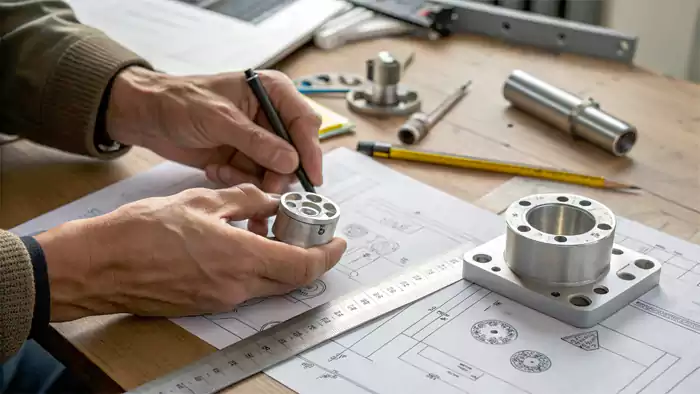
I always remind clients that these industries do not prototype because they have budget. They prototype because failure means recalls or shutdowns1.
1. Automotive
- Why: Safety and performance testing
- Applications: Brackets, housings, engine components
- Materials: Aluminum, steel, plastics
2. Aerospace
- Why: Extreme reliability requirements2
- Applications: Structural parts, turbine components
- Materials: Titanium, Inconel
3. Medical Devices
- Why: Regulatory compliance and precision
- Applications: Surgical tools, implants, housings
- Materials: Stainless steel, PEEK
4. Robotics & Automation
- Why: Complex motion systems
- Applications: End effectors, gear housings
- Materials: Aluminum, engineering plastics
5. Industrial Equipment
- Why: Custom machinery and upgrades
- Applications: Fixtures, machine parts
- Materials: Steel, cast iron
6. Consumer Electronics
- Why: Fast product cycles
- Applications: Enclosures, connectors
- Materials: ABS, aluminum
7. Energy (Oil, Gas, Renewables)
- Why: Harsh environments
- Applications: Valves, turbine parts
- Materials: Stainless steel, alloys
CNC Machining vs Other Prototyping Methods?
I often get this question from engineers. They want to know which method to choose. The answer depends on the goal.
CNC machining is best for high-precision prototypes using real materials, while 3D printing is faster for early concepts and injection molding is only cost-effective for high-volume production.
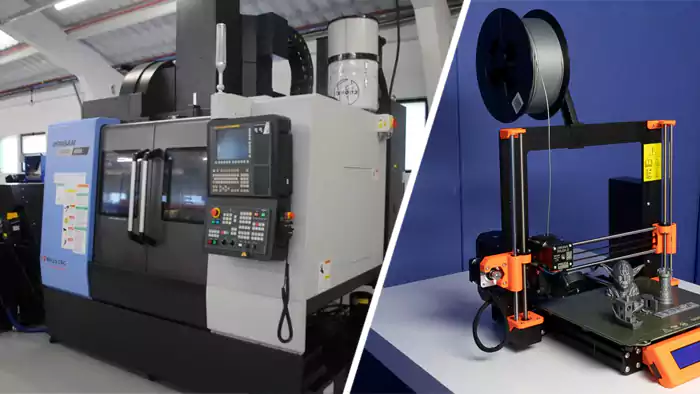
If you want a deeper breakdown, I usually point clients to this detailed guide on CNC machining vs 3D printing because the differences affect real project outcomes.
CNC vs 3D Printing
| Factor | CNC Machining | 3D Printing |
|---|---|---|
| Accuracy | High (±0.01 mm) | Medium |
| Materials | Real engineering materials | Limited |
| Strength | High | Lower |
| Speed | Medium | Fast |
I use 3D printing for early concepts. I switch to CNC when function matters.
CNC vs Injection Molding
| Factor | CNC Machining | Injection Molding |
|---|---|---|
| Tooling cost | None | High |
| Volume | Low | High |
| Lead time | Short | Long setup |
| Flexibility | High | Low |
Injection molding3 makes sense only when production volume is large.
My Rule of Thumb
- Early design → 3D printing
- Functional testing → CNC machining
- Mass production → Injection molding
How to Choose the Right Prototype Machining Partner?
I know how frustrating it is to work with the wrong supplier. I have seen delays, poor quality, and missed tolerances.
The right prototype machining partner should provide tight tolerances, fast lead times, broad material options, and certified quality systems to ensure consistent, reliable, and production-ready results.
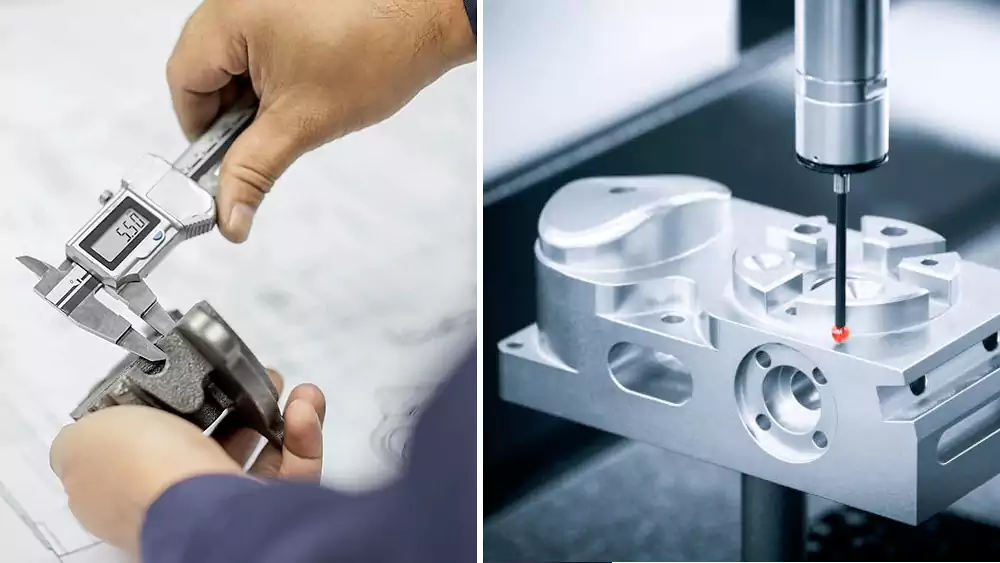
When engineers ask me where to start, I usually recommend understanding the full CNC machining process first. It helps set realistic expectations.
What I Look For
1. Precision Capability
I always check if they can hold ±0.01 mm or better.
2. Lead Time
Fast response matters. I prefer suppliers who can deliver in 3–7 days.
3. Material Range
They should handle both metals and plastics.
4. Certifications
ISO 90014 is a basic requirement for me.
5. Communication
Clear and fast replies save time.
A Bad Example
I once chose a low-cost supplier. The result:
- Tolerance missed by 0.05 mm
- Surface finish poor
- Delay of 10 days
That mistake cost more than choosing a reliable partner.
Our Rapid Prototyping Capabilities?
I built my shop based on real production needs. I focus on speed, precision, and reliability.
Our rapid prototyping services combine CNC machining and advanced manufacturing to deliver high-precision parts in 3–7 days, supporting functional testing and low-volume production across multiple industries.
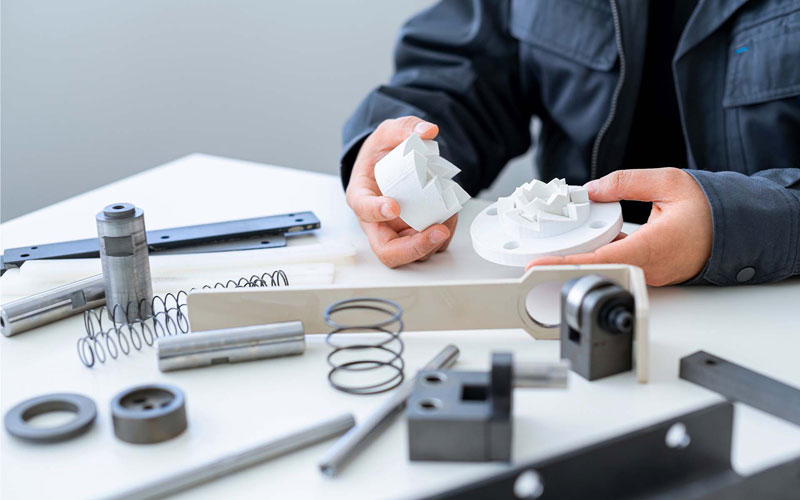
If you want to explore more, you can review our full rapid prototyping capabilities to see how we support different industries.
What We Offer
CNC Capabilities
- 3-axis, 4-axis, 5-axis machining
- Complex geometries
- Tight tolerances
Materials
- Metals: Aluminum, steel, titanium
- Plastics: ABS, POM, PEEK
Lead Times
- Prototype: 3–7 days
- Small batch: 1–2 weeks
Quality Control
- CMM inspection5
- Full dimensional reports
Supported Industries
- Automotive
- Robotics
- Medical
- Industrial equipment
Conclusion
Prototype machining reduces risk, improves product quality, and ensures production success across high-demand industries.
-
Explore this link to understand the critical importance of prototyping in preventing costly recalls and shutdowns in various industries. ↩
-
Learn why aerospace prototyping demands extreme reliability to ensure safety and performance under harsh conditions. ↩
-
Provide a detailed explanation of the processes, characteristics, applications, and advanced technologies of injection molding. ↩
-
Learn about ISO 9001 to ensure your CNC machining supplier meets essential quality management standards for reliable production. ↩
-
Learn why CMM inspection is critical for ensuring dimensional accuracy and maintaining high-quality standards in production. ↩
