Last updated on December 19, 2025 by Lucy
Telecom projects often fail late because standard parts do not fit, overheat, or drift out of tolerance. These issues usually appear only after assembly or field testing.
Custom CNC machining helps telecom electronics manufacturers achieve precise fit, thermal control, and long-term stability when standard components cannot meet real system requirements.

I have spent more than twenty years on the shop floor machining parts for electronic systems. I have learned that telecom equipment rarely fails because of one big mistake. It fails because many small details were ignored early.
Why Do Telecom Electronics Projects Require Custom Machined Parts?
Many telecom products start with off-the-shelf components. Problems appear when systems become smaller, faster, or more integrated.
Telecom electronics require custom machined parts because standard components cannot always meet size, heat, shielding, and assembly constraints in real operating environments.

Telecom equipment works under continuous load. Heat builds up. Vibration exists. Signals become sensitive to interference. Standard housings and brackets often fail to manage these conditions.
In my experience, customization becomes necessary when engineers push frequency higher or space smaller. Enclosures need exact wall thickness for EMI control1. Mounting points must align with PCBs and connectors within tight tolerance. Thermal paths must be controlled, not guessed.
I have seen projects try to force standard parts into custom designs. This usually creates secondary problems. Custom CNC machining solves these issues at the root. It allows engineers to design for function first, then manufacture with precision. This is why customization is not a luxury in telecom electronics. It is often a requirement.
What Telecom Electronic Components Do We Custom Machine?
Many engineers underestimate how many mechanical parts exist inside electronic systems. These parts quietly control performance.
Common telecom electronic components require CNC machining to ensure precise alignment, stable mounting, and controlled heat and signal behavior.

Common Custom Parts in Telecom Equipment
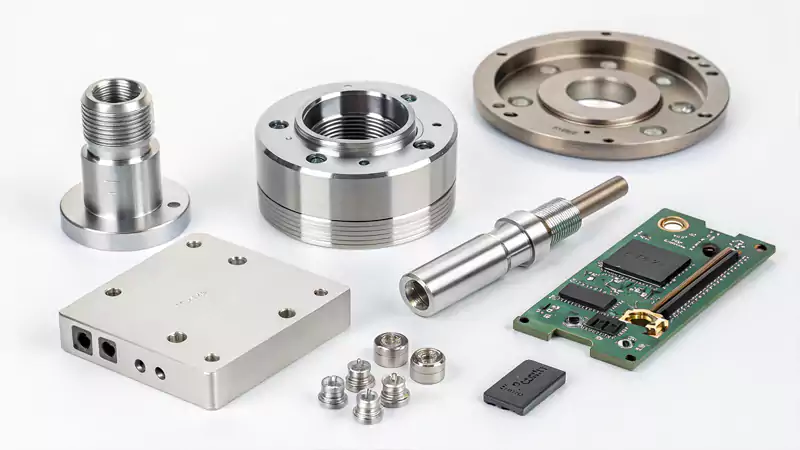
In daily production, I often machine enclosures, heat sinks, RF shields, mounting frames, brackets, faceplates, and connector housings. These parts look simple but carry critical functions.
| Component Type | Primary Function | Key Machining Requirement |
|---|---|---|
| Enclosures | Protection and shielding | Flatness, EMI control |
| Heat sinks | Thermal management | Surface contact, fin accuracy |
| RF shields | Signal isolation | Wall thickness consistency |
| Mounting frames | PCB alignment | Hole position tolerance |
Where These Components Are Used in Real Systems
These parts appear in base stations, signal amplifiers, antennas, power modules, and control units. Each system has unique layout and load conditions.
From my experience, even small alignment errors can cause connector stress or signal loss. CNC machining gives engineers control over these hidden risks. This control is why telecom projects rely heavily on custom mechanical components.
Which Materials Perform Reliably in Telecom Electronics?
Material choice in telecom electronics often decides thermal behavior and long-term reliability.
Materials used in telecom CNC machining must handle heat, electromagnetic effects, and environmental exposure while remaining stable over time.
Metals Commonly Used in Telecom CNC Parts
Aluminum alloys are widely used for enclosures and heat sinks due to good thermal conductivity. Stainless steel appears where strength and corrosion resistance matter. Copper is used for high thermal or electrical needs.
| Material | Key Advantage | Typical Use |
|---|---|---|
| Aluminum 6061 | Light, good heat transfer | Enclosures, frames |
| Aluminum 7075 | High strength | Structural supports |
| Stainless Steel | Strength, durability | Mounts, hardware |
| Copper | Excellent conductivity | Thermal plates |
Thermal, EMI, and Environmental Considerations
I often see designs fail because thermal paths were not planned. Aluminum thickness, surface finish, and contact area all affect heat flow. EMI control also depends on consistent wall thickness and clean machining.
Material selection should match real operating conditions, not lab assumptions. This decision saves redesign time later.
Which CNC Machining Processes Deliver Precision and Consistency?
Precision machining is not just about accuracy on paper. It is about repeatability in production.
CNC machining delivers precision and consistency for telecom electronics by controlling tolerances, surface quality, and assembly interfaces.
Milling, Turning, and Multi-Axis Machining
Most telecom parts rely on CNC milling for pockets, slots, and surfaces. Turning supports round housings and connectors. Multi-axis machining reduces setups and improves alignment.
Tolerance Control and Surface Requirements
Telecom parts often require flatness and parallelism more than extreme dimensional tolerance. Surface finish affects thermal contact and EMI sealing2.
Case Study: Custom CNC Machined Telecom Equipment Enclosure
This project involved a compact outdoor telecom enclosure for a signal distribution unit.
The customer first planned to use a standard aluminum box. Field testing showed overheating and EMI leakage. We reviewed the design and proposed a custom CNC machined enclosure.
| Parameter | Initial Concept | Final CNC Solution |
|---|---|---|
| Material | Aluminum 5052 | Aluminum 6061 |
| Wall Thickness | 2.0 mm | 3.5 mm |
| Flatness | Not controlled | ≤0.05 mm |
| EMI Sealing | Gasket only | Machined groove |
| Quantity | 60 pcs | 60 pcs |
By switching to 6061 and increasing wall thickness, heat dissipation improved and machining stability increased. The machined sealing groove improved EMI control without extra parts.
This change reduced internal temperature by 8°C during testing. The enclosure passed field validation without redesign. This case shows how CNC machining and material choice directly improve system performance.
How Do You Choose the Right Partner for Telecom CNC Machining?
Many telecom projects struggle because suppliers lack system understanding.
Choosing the right CNC machining partner means selecting a team that understands telecom requirements, not just machining drawings.
Engineering Support and Communication
I believe suppliers must ask questions. Silence often means hidden risk. Clear communication3 saves time.
Quality Control and Traceability
Telecom parts often require batch consistency. Inspection records4 and process control matter.
Experience with Global Telecom Clients
Experience reduces trial and error. A partner with telecom background can suggest improvements early.
What Manufacturing Trends Are Shaping the Future of Telecom Electronics?
Telecom equipment continues to evolve quickly. Manufacturing must follow.
Future telecom manufacturing demands smaller parts, higher precision, and faster response from CNC machining partners.

Higher frequencies demand tighter tolerances. Smaller devices increase heat density. These trends push CNC machining toward higher accuracy and better process control.
From the shop floor view, customization will increase, not decrease. This makes reliable CNC partners even more important.
Conclusion
Custom CNC machining enables telecom electronics manufacturers to control fit, heat, and reliability when standard components cannot meet real-world system demands.

-
Learn about the critical role of EMI control in telecom equipment to ensure optimal performance and reliability. ↩
-
Learn about effective EMI sealing techniques to enhance the performance and reliability of telecom devices. ↩
-
Explore this link to understand how clear communication can enhance project efficiency and reduce risks. ↩
-
Learn about the critical role of inspection records in maintaining quality and ensuring compliance in manufacturing. ↩
