Last updated on April 27, 2026, by Lucy
Struggling with restricted airflow, inconsistent exhaust sound, or limited manufacturing precision? Traditional fabrication methods often introduce inefficiencies that reduce performance and weaken your competitive edge.
CNC machining improves motorcycle exhaust systems by optimizing internal airflow, minimizing turbulence, ensuring tight tolerances, and enabling complex geometries—resulting in higher performance, cleaner sound, and consistent production quality.

Manufacturers aiming to achieve real performance gains must focus not only on design—but on how precision manufacturing directly controls airflow behavior and acoustic output.
How Do Motorcycle Exhaust Systems Affect Performance and Sound?
Struggling to balance power output and sound control? Poor exhaust design often creates back pressure and turbulence, reducing engine efficiency and weakening acoustic consistency.
Motorcycle exhaust systems affect performance by controlling airflow efficiency and back pressure, while sound is shaped by gas velocity and internal structure—making precision design essential for both power and acoustic tuning.
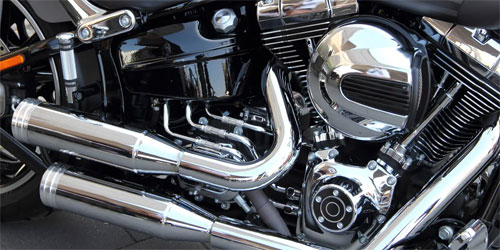
Motorcycle exhaust systems are engineered to manage how combustion gases exit the engine1. Their design directly influences horsepower, efficiency, and sound profile.
Key Components (Headers, Mufflers, Pipes)
- Headers direct exhaust gases from cylinders
- Mid-pipes maintain flow continuity
- Mufflers regulate sound and pressure
How Exhaust Design Influences Performance
A simplified relationship:
| Factor | Impact on Performance |
|---|---|
| High airflow | Increased horsepower |
| High back pressure | Reduced efficiency |
| Smooth flow path | Improved combustion |
Airflow vs Sound Balance
- Higher airflow → louder, aggressive tone
- Restricted flow → quieter but less efficient
Precision in geometry is key to balancing both.
How Does CNC Machining Improve Exhaust Performance?
Facing inconsistent performance due to manufacturing limitations? Traditional welding introduces internal irregularities that disrupt airflow and reduce efficiency.
CNC machining improves exhaust performance by creating smooth internal surfaces, maintaining tight tolerances, and enabling complex geometries—leading to better airflow, reduced turbulence, improved sealing, and consistent sound output.
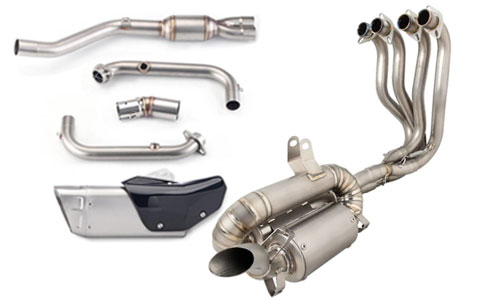
CNC machining eliminates inconsistencies found in traditional fabrication methods, allowing precise control over airflow behavior.
Precision Airflow Optimization
Smooth internal surfaces reduce turbulence and increase flow efficiency.
Tight Tolerances and Sealing
Tolerance ≤ ±0.01 mm
| Feature | Benefit |
|---|---|
| Tight fit | Prevents leaks |
| High precision | Improves efficiency |
| Consistency | Stable performance |
Lightweight and Complex Structures
- Material optimization reduces weight
- Complex geometries improve flow dynamics
- Integrated designs enhance structural strength
CNC machining ensures that airflow, performance, and sound are controlled at a microscopic level.
What Materials and Manufacturing Methods Are Best for Exhaust Systems?
Choosing the wrong material or process can lead to heat failure, corrosion, and poor durability—especially under extreme operating conditions.
The best exhaust materials and manufacturing methods combine heat resistance, corrosion protection, and precision shaping—typically using stainless steel or titanium with CNC machining and investment casting for optimal performance and durability.

Material selection directly determines durability, performance stability, and lifecycle cost.
Material Comparison
| Material | Strength | Heat Resistance | Cost | Application |
|---|---|---|---|---|
| Stainless Steel | High | High | Medium | OEM |
| Titanium | Very High | Very High | High | Racing |
| Aluminum | Medium | Low | Low | Non-critical |
Surface Treatments
Manufacturing Methods
| Method | Advantage | Limitation |
|---|---|---|
| Welding | Low cost | Inconsistent |
| CNC Machining | High precision | Higher cost |
| Investment Casting | Complex shapes | Setup required |
Precision investment casting3 is especially effective for producing complex exhaust geometries with excellent surface finish and reduced material waste.
Where Are CNC Machined Exhaust Components Used?
Not sure where CNC machining delivers the most value? Different applications demand different levels of precision, durability, and performance.
CNC machined exhaust components are used in OEM production, aftermarket upgrades, racing motorcycles, and custom builds—where precision, consistency, and performance optimization are essential.

CNC machining is widely adopted across the motorcycle industry due to its reliability and scalability.
Application Breakdown
| Segment | Key Requirement | CNC Advantage |
|---|---|---|
| OEM | Consistency | Repeatability |
| Aftermarket | Performance | Customization |
| Racing | Efficiency | Precision |
| Custom | Flexibility | Design freedom |
Across all segments, precision manufacturing ensures consistent results.
Why Choose CNC Machining for Custom Exhaust Parts?
Struggling with inconsistent quality or limited scalability in custom exhaust production? Traditional methods often fail to deliver repeatable precision.
CNC machining is ideal for custom exhaust parts because it ensures high precision, repeatability, scalability, and design flexibility—making it suitable for both prototyping and mass production.
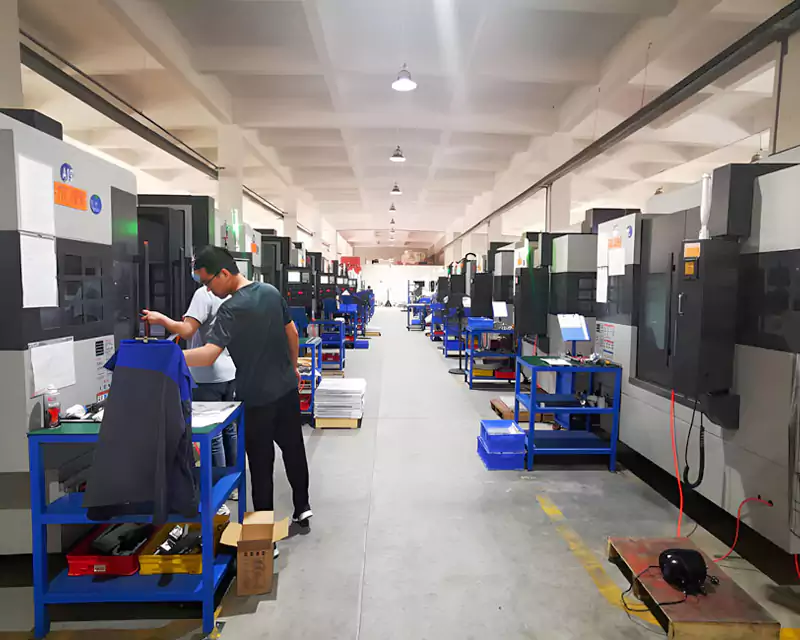
CNC machining supports both innovation and production efficiency.
Key Advantages
- High precision and repeatability
- Fast prototyping cycles
- Scalable production
- Complex geometry capability
Quality and Reliability
| Factor | CNC Benefit |
|---|---|
| Accuracy | Tight tolerances |
| Consistency | Batch uniformity |
| Durability | Reliable performance |
CNC machining enables manufacturers to meet both engineering and market demands effectively.
FAQs
What material is best for motorcycle exhaust systems?
Stainless steel offers the best balance of durability and cost, while titanium is preferred for high-performance applications.
Can CNC machining improve exhaust sound quality?
Yes. It ensures consistent internal geometry, resulting in cleaner and more controlled sound output.
What tolerances are required for exhaust components?
High-performance exhaust parts typically require tolerances within ±0.01 mm.
Is CNC machining suitable for mass production?
Yes. It supports both prototyping and large-scale manufacturing with consistent quality.
Conclusion
CNC machining has become a critical enabler in modern motorcycle exhaust manufacturing, allowing precise control over airflow, structure, and acoustic performance. By eliminating internal inconsistencies and enabling complex geometries, it transforms theoretical design advantages into real-world performance gains.
When combined with advanced materials and processes such as precision investment casting, manufacturers can achieve superior durability, efficiency, and scalability. For OEMs, aftermarket brands, and custom builders, CNC machining is not just a manufacturing solution—it is a strategic advantage that drives innovation, enhances product value, and ensures long-term competitiveness in performance-driven markets.

-
"Muffler | The Engines of Our Ingenuity - University of Houston", https://engines.egr.uh.edu/episode/2966. This source explains the fundamental role of motorcycle exhaust systems in directing combustion gases away from the engine and their impact on engine performance. Evidence role: definition; source type: encyclopedia. Supports: Motorcycle exhaust systems are engineered to manage how combustion gases exit the engine.. Scope note: The source provides general principles applicable to most motorcycle exhaust systems but may not cover all design variations. ↩
-
"Effect of exhaust back pressure on engine power", https://ntrs.nasa.gov/citations/19930093104. This source discusses the relationship between exhaust flow efficiency, back pressure, and engine power output, supporting the proportionality claim in the article. Evidence role: mechanism; source type: education. Supports: Power ∝ Exhaust Flow Efficiency − Back Pressure. Scope note: The relationship is a simplified model and actual engine performance depends on multiple interacting factors beyond exhaust flow and back pressure. ↩
-
“What Is Precision Casting,” https://alliedcasting.com/what-is-precision-investment-casting/. This source outlines the advantages of precision investment casting, including its ability to produce complex geometries with excellent surface finish while minimizing material waste, thereby supporting the argument that it is effective for venting components. Role of evidence: Mechanism; Source type: Educational. Supporting claim: Investment casting is particularly well-suited for manufacturing complex exhaust geometries with excellent surface finish and reduced material waste. Scope note: This source may focus on general casting applications rather than specifically on exhaust geometries. ↩
