Table of Contents:
Explore CNC Machining Services: A Practical Guide to Processes and Capabilities
- November 9, 2024
- Tony
- Last updated on November 13, 2025 by Lucy
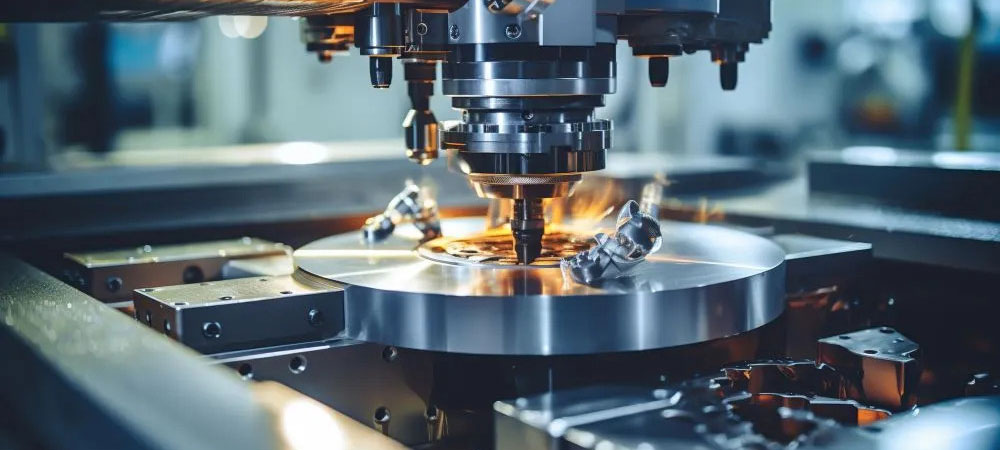
After twenty years in precision machining, I’ve learned that understanding CNC processes isn’t just technical knowledge – it’s business intelligence. Here’s what actually matters when you’re sourcing machined components.
1. The CNC Processes That Drive Modern Manufacturing
CNC Turning - For Round Parts That Matter
When your design calls for cylindrical components, turning is your answer. The workpiece rotates while stationary cutting tools remove material.
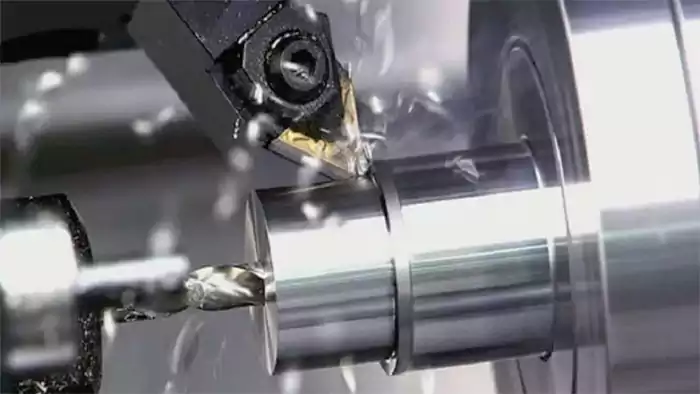
Common Applications:
- Shafts and bushings
- Valve components
- Fasteners and fittings
- Hydraulic components
Our Typical Tolerances:
- Diameter: ±0.01mm
- Concentricity: 0.02mm TIR
- Surface finish: Ra 0.8μm
CNC Milling - Complexity Made Simple
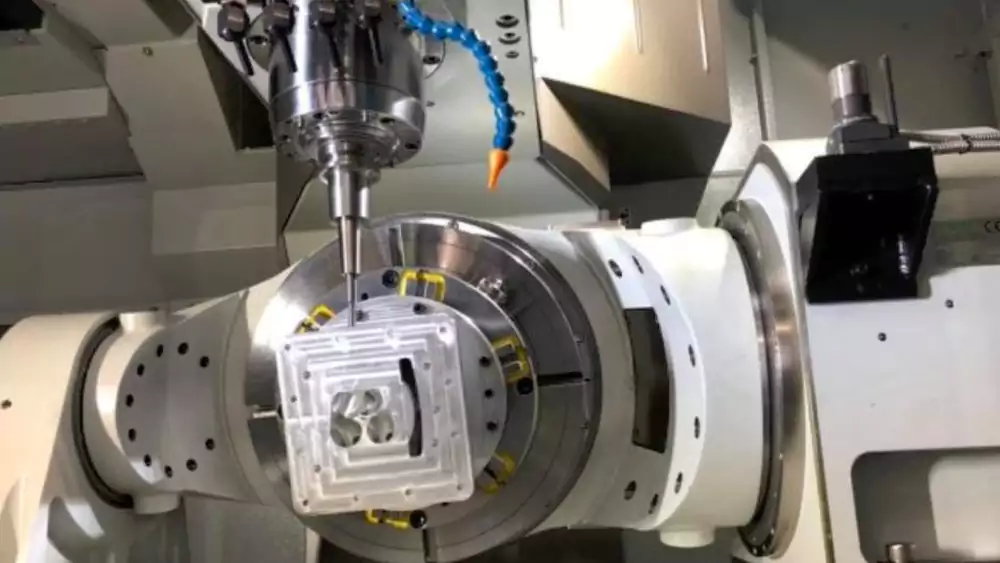
From simple brackets to complex enclosures, milling handles geometries that would be impossible with manual methods.
| Milling Type | Best For | Our Capabilities |
|---|---|---|
| 3-Axis | Basic contours, flat surfaces | ±0.05mm positioning |
| 4-Axis | Complex contours, indexed features | Simultaneous rotary motion |
| 5-Axis | Complex 3D shapes, reduced setups | ±0.025mm full contouring |
Secondary Processes That Complete the Picture
Grinding
When you need mirror finishes or super tight tolerances
- Surface grinding: Flatness to 0.005mm
- Cylindrical grinding: Roundness within 0.0025mm
EDM (Electrical Discharge Machining)
- Perfect for hard materials (up to 65 HRC)
- Complex internal features
- No cutting forces on delicate parts
Laser Cutting
- Sheet metal up to 20mm thick
- ±0.1mm positional accuracy
- No tooling costs for prototypes
2. Material Selection: Matching Properties to Purpose
| Material | Best For | Key Considerations |
|---|---|---|
| 6061 Aluminum | General purpose, good strength-to-weight | Excellent machinability, anodizes well |
| 7075 Aluminum | High-strength applications | More challenging to machine, superior strength |
| 304 Stainless | Corrosion resistance, food grade | Work hardens - requires sharp tools |
| 316 Stainless | Marine, chemical applications | More difficult to machine than 304 |
| Carbon Steel | Structural components, wear parts | Requires corrosion protection |
| Titanium | Aerospace, medical implants | Low thermal conductivity - challenging machining |
| Plastics (Delrin, Nylon) | Electrical insulation, wear parts | Heat management critical during machining |
📌Case Study: Automotive Transmission Bracket
The Challenge: A tier-one automotive supplier needed 15,000 transmission mounting brackets in 10 weeks. The part required multiple machining operations and had to withstand engine vibration.
Material: 6061-T6 Aluminum
Manufacturing Process Breakdown:
- CNC Milling (5-Axis)
- Primary material removal
- Complex contouring for weight reduction
- Mounting surface finishing to Ra 1.6μm
- CNC Turning
- Bushing bore finishing to H7 tolerance
- Threading for M12 mounting bolts
- Secondary Operations
- Deburring and edge breaking
- Anodizing per MIL-A-8625
- Laser marking for traceability
Quality Results:
- First-article inspection: 100% to print
- Production yield: 99.8%
- Dimensional consistency: CpK > 1.67
- Delivery: 2 weeks ahead of schedule
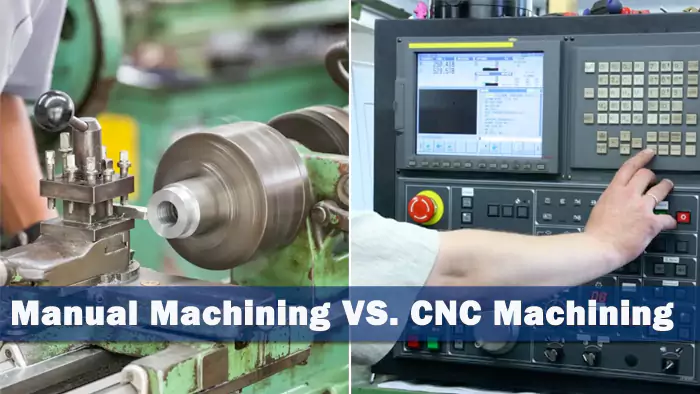
3. Why CNC Beats Conventional Machining Every Time
Precision You Can Count On
- Manual machining: Typically ±0.1mm
- CNC machining: Routinely ±0.025mm
- High-precision CNC: Down to ±0.005mm
Repeatability That Scales
- Manual: Operator-dependent results
- CNC: Identical parts from first to thousandth
Complex Geometry Made Practical
- 5-axis simultaneous machining
- Undercuts and complex contours
- Consistent results across production runs
4. Matching Processes to Your Production Needs
| Production Scenario | Recommended Approach | Key Benefits |
|---|---|---|
| Prototypes (1-10 pcs) | 3/5-axis milling, turning | Fast turnaround, design validation |
| Low volume (10-500 pcs) | CNC machining with soft jaws | Cost-effective tooling, quick changes |
| Medium volume (500-5,000 pcs) | Dedicated fixtures, optimized toolpaths | Reduced cycle times, consistent quality |
| High volume (5,000+ pcs) | Automated cells, pallet systems | Maximum efficiency, minimal operator intervention |
5. Quality Assurance: Beyond Basic Measurements
First-Article Inspection
- Full dimensional validation
- Material certification
- Surface finish verification
- Functional testing when required
In-Process Controls
- Statistical process control (SPC)
- Tool wear monitoring
- Automated probing
- Regular process audits
Final Inspection
- CMM for complex geometries
- Functional gaging for critical features
- Surface roughness testing
- Documentation package with every shipment
6. Making the Right Choice: Process Selection Guidelines
For Simple Geometries:
- Start with 3-axis milling or basic turning
- Consider material availability and machinability
- Evaluate secondary processing needs
For Complex Components:
- 5-axis machining reduces setups
- Consider splitting complex parts into simpler assemblies
- Evaluate trade-offs between machining time and part count
For High-Volume Production:
- Design for manufacturability analysis
- Process optimization for cycle time reduction
- Automated inspection integration
Conclusion
Good machining isn’t just about having the right equipment – it’s about knowing which process to use when. The difference between a good part and a great one often comes down to process selection and execution.
Ready to Optimize Your Next Project?
Send me your drawings – I’ll provide specific process recommendations and honest pricing based on twenty years of machining experience.
