How to choose a cutting method: Practical Guide to CNC and Laser Cutting
- December 17, 2024
- Tony
- Last updated on November 11, 2025, by Lucy

Choosing the right cutting method can make or break your project’s productivity and part quality. For many manufacturers, the question isn’t which is better — it’s which is better for this job. Let’s walk through how CNC and laser cutting each work, where they shine, and how you can combine them to get the best results.
1. What is CNC cutting?
CNC cutting uses computer-controlled tools to remove material from metal, plastic, or other solid blocks. The process is known for its high dimensional accuracy, tight tolerances, and consistent surface finishes.
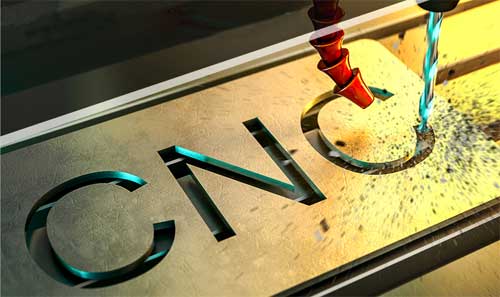
Typical CNC cutting is ideal for:
- Precision parts with tight fits and tolerances down to ±0.01 mm
- Thicker or denser materials
- Components that require threading, pocketing, or contouring after cutting
2. What is laser cutting?
Laser cutting works by directing a concentrated laser beam to melt or vaporize material along a programmed path. It’s fast, clean, and perfect for thin sheets or complex profiles.
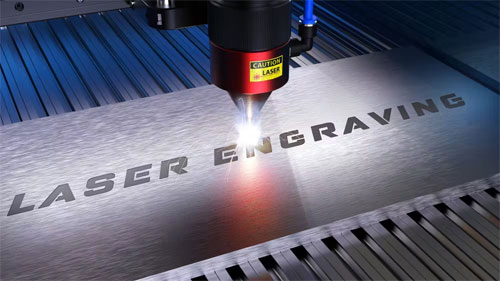
It’s widely used for:
- Sheet metal enclosures, panels, and decorative parts
- Complex geometries with narrow kerf widths
- Medium to high production runs needing speed and repeatability
3. CNC vs. Laser Cutting: Main Differences
| Key Factor | CNC Cutting | Laser Cutting |
|---|---|---|
| Precision & Surface Finish | Excellent precision and surface finish, even on thick or complex parts | Very fine detail on thin materials; some thermal distortion possible |
| Material Type | Handles metals, plastics, composites, wood | Best for metals, acrylic, and thin materials |
| Thickness Capability | Excels in thick and hard materials | Best for thin to medium sheets |
| Speed | Slower but more versatile | Much faster for 2D profiles |
| Maintenance & Energy Use | Moderate | High power usage, more maintenance |
4. How to choose the cutting method according to the project requirements?
Selecting the right cutting method depends on the following factors:
Material Type and Thickness
CNC cutting is ideal for thicker and harder materials, like steel. Laser cutting works better for thin sheet metals or intricate patterns.
Productivity and Cost
If your project requires quick turnaround and deals with thin materials or simple designs, laser cutting is more cost-effective. For larger quantities or thicker materials, CNC cutting offers higher productivity.
Budget
CNC cutting typically has lower operating and maintenance costs, while laser cutting requires more investment and energy. Choose the method that best fits your budget.
📌Case Study: Combining CNC and Laser Cutting for an Aluminum Enclosure
At Allied Metal Solutions, we recently produced a batch of custom aluminum enclosures for an industrial automation client.
Project background:
The client needed 500 pieces of control box enclosures made from 5052 aluminum sheet, 3 mm thick, with precise hole patterns, threaded inserts, and a final anodized finish. Dimensional tolerance: ±0.05 mm on key mounting points.
How we handled it:
1. Laser Cutting Stage:
- We used fiber laser cutting to blank out the base and side panels from large sheets.
- Cutting speed: approx. 2,200 mm/min
- Edge quality was excellent — no burrs, no secondary deburring needed.
2. CNC Machining Stage:
- Each panel was then CNC milled for the counterbore holes and threaded M4 inserts.
- Tolerance held at ±0.03 mm for hole positions.
- Surface roughness achieved: Ra 1.6 μm.
3. Finishing:
- Parts were bead-blasted and anodized in matte silver.
- Assembly fit-up was perfect — no rework required.
Result:
By combining laser cutting for speed and CNC machining for precision, total lead time was reduced by 28%, and cost dropped by 15% compared to using CNC alone.
The client later expanded the order for a different enclosure series using the same hybrid process.
5. Mixing CNC cutting and laser cutting
In some complex projects, combining the advantages of CNC cutting and laser cutting may be ideal.
Combining both methods gives you flexibility:
- Use laser cutting for sheet outlines and fast prototyping.
- Use CNC milling or drilling for critical dimensions or threading.
- Minimize setup time and material waste by matching each process to its strengths.
Many of our clients in robotics, automation, and machinery fabrication use this hybrid workflow — laser for bulk sheet work, CNC for fine finishing — to balance speed, cost, and precision.
6. FAQ about Cutting Method Selection
Which cutting method is suitable for high volume production?
CNC cutting is usually better suited for high volume production because it is faster and relatively less expensive, especially when working with thick plates.
How to control cutting cost and improve quality?
By choosing the right cutting method and optimizing the processing parameters (e.g. speed, power, etc.), you can effectively reduce the cutting cost and ensure the cutting quality at the same time.
Comparison of maintenance and operation costs between CNC cutting and laser cutting
Equipment for CNC cutting usually has lower maintenance costs, but for tasks requiring higher precision, laser cutting offers better quality, but its maintenance and operating costs are higher.
7. Conclusion
Choosing the right cutting method can boost productivity, improve quality, and reduce costs. Understanding the advantages, disadvantages, and suitable applications of CNC and laser cutting will help you make the best decision for your project.
If you still have any questions about machining, feel free to contact our expert team for a free consultation.
