Editor's Note: Last updated on May 18, 2026, by Lucy
Many engineers lose time and money because they choose the wrong machining process or work with suppliers who cannot hold stable tolerances.
CNC machining is a computer-controlled manufacturing process that cuts metal or plastic into precise parts with high repeatability, tight tolerances, and reliable production quality for prototypes and mass production.
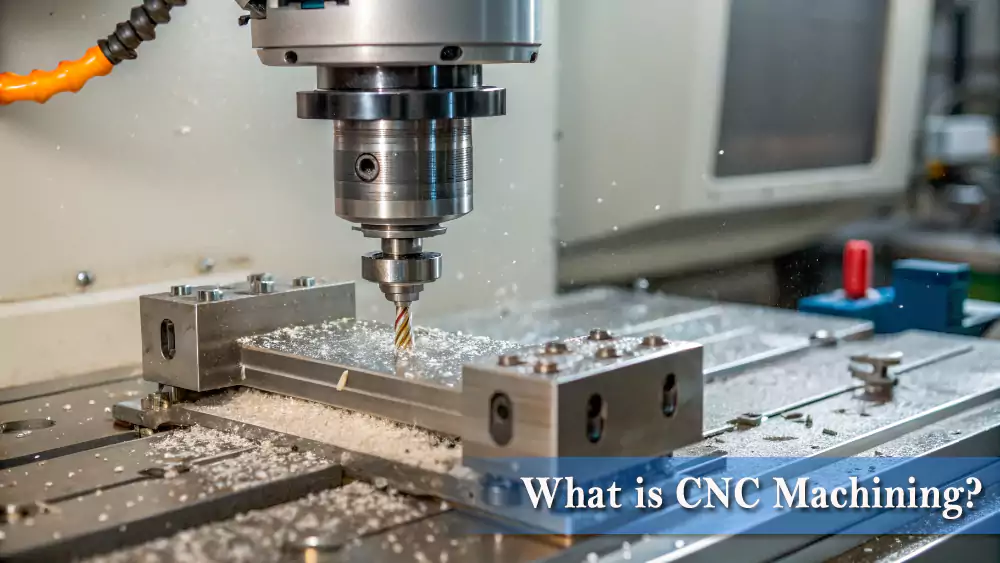
I still remember the first time I stood beside a CNC machine during a night shift at a small machining shop. I watched raw aluminum turn into a finished aerospace bracket within minutes. That moment changed how I understood manufacturing. CNC machining looked complex at first, but after years in the industry, I learned that most successful machining projects depend on a few simple things: smart design, the right material, stable tooling, and clear communication between engineers and machinists.
What Is CNC Machining and How Does It Work?
Many buyers hear the term CNC machining every day, but many still feel unsure about how the process actually works or why it matters so much in modern manufacturing.
CNC machining uses computer-controlled cutting tools to remove material from a solid workpiece and create highly accurate parts that match digital CAD designs with excellent consistency.

CNC Machining Basics
CNC stands for Computer Numerical Control. The machine follows programmed instructions instead of relying on manual operation. This allows manufacturers to produce identical parts again and again with very small dimensional variation.
I often explain CNC machining as a digital version of traditional machining. The difference is control. A computer controls every movement of the cutting tool. This gives much higher precision and repeatability than manual machining methods.
Today, CNC machining supports industries that require high-performance components. Aerospace companies use it for structural parts. Medical companies use it for surgical tools. Robotics companies use it for precision motion systems. I work with many engineers who need complex parts made quickly without sacrificing accuracy. CNC machining solves that problem because it supports rapid prototyping and scalable production at the same time.
Another reason CNC machining matters is material flexibility. The same machine shop can often cut aluminum, stainless steel, titanium, copper, ABS, PEEK, and many other engineering materials.
How CNC Machining Works
The process usually starts with a CAD model. Engineers create the part digitally using software like SolidWorks or Fusion 360. After that, CAM software converts the design into machining instructions called toolpaths.
The CNC machine reads these instructions and moves the cutting tools across multiple axes. Servo motors control every movement with very high accuracy. The cutting tool removes material layer by layer until the finished geometry appears.
Several things affect machining quality during this process:
| Factor | Effect on Part Quality |
|---|---|
| Tool rigidity1 | Reduces vibration and chatter |
| Cutting parameters | Controls surface finish and tool life |
| Fixturing stability | Prevents movement during machining |
| Tool wear | Affects dimensional consistency |
| Machine calibration | Maintains tolerance accuracy |
I learned this lesson years ago during a robotics project. A customer needed precision aluminum housings with tight flatness control. The first production run showed inconsistent results because the workholding fixture was too weak. We redesigned the fixture and reduced vibration immediately. The tolerance issue disappeared without changing the machine itself.
That experience taught me that CNC success often depends more on setup quality than machine size or machine price.
What Are the Main Types of CNC Machining and Materials?
Many engineers struggle to choose the right machining process because milling, turning, and 5-axis machining can sound very similar at first.
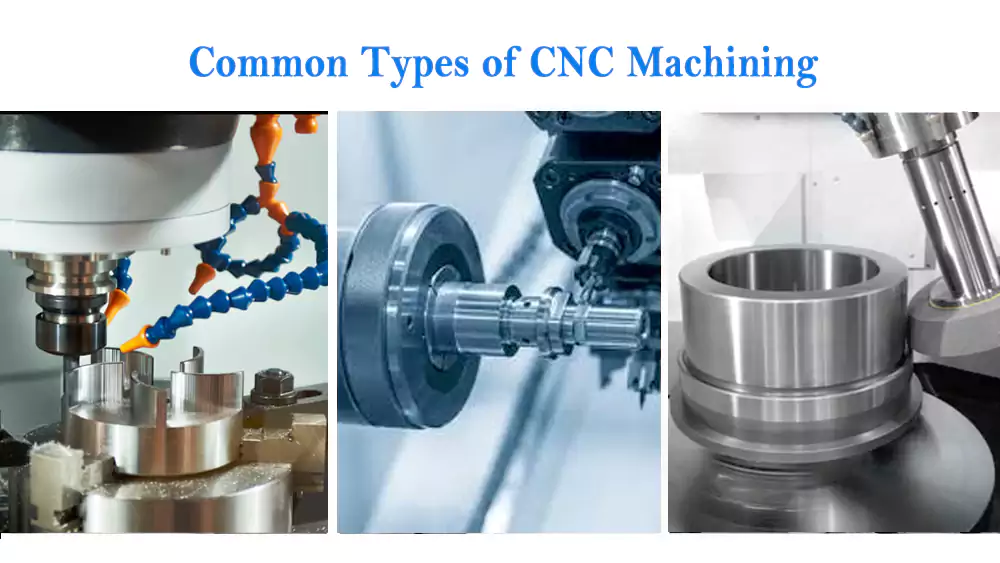
The most common CNC machining processes are CNC milling, CNC turning, drilling, grinding, and 5-axis machining, each designed for different part shapes and manufacturing needs.
CNC Milling
CNC milling uses rotating cutting tools to remove material from a fixed workpiece. It works well for pockets, slots, flat surfaces, and complex 3D contours.
CNC Turning
CNC turning rotates the workpiece while stationary tools remove material. This process is best for shafts, pins, bushings, and cylindrical components.
CNC Drilling and Grinding
CNC drilling creates highly accurate holes with repeatable depth and diameter control. Grinding improves surface finish and dimensional precision, especially for hardened steel parts.
5-Axis CNC Machining
5-axis machining allows the cutting tool to approach the part from different angles without multiple repositioning steps.2 This improves accuracy and reduces setup time.
I once worked on a batch of aerospace brackets that required extremely tight tolerances. The customer needed stable repeatability across 1,200 parts. We optimized the toolpath strategy and reduced tool stick-out to improve rigidity.
Here are the actual production parameters we used:
| Parameter | Value |
|---|---|
| Material | 7075-T6 Aluminum |
| Machine Type | 5-Axis CNC Mill |
| Critical Tolerance | ±0.01 mm |
| Tool Diameter | 6 mm Carbide End Mill |
| Tool Stick-Out | 14 mm |
| Spindle Speed | 18,000 RPM |
| Feed Rate | 1,450 mm/min |
| Depth of Cut | 0.3 mm |
| Production Quantity | 1,200 pcs |
The result was much better surface stability and a 12% reduction in cycle time. The customer received every part without rejection.
Common CNC Machining Materials
Material selection always affects both manufacturing cost and final product performance. I often recommend aluminum for prototypes because it machines quickly and offers a good balance between strength and cost.
Stainless steel works better for corrosion resistance. Titanium performs well in aerospace and medical applications because of its high strength-to-weight ratio. Engineering plastics help reduce weight and improve chemical resistance.
| Material | Strength | Machinability | Typical Applications |
|---|---|---|---|
| Aluminum 6061 | Medium | Easy | Brackets, housings |
| Aluminum 7075 | High | Medium | Aerospace components |
| Stainless Steel 304 | Medium | Difficult | Food equipment |
| Stainless Steel 316 | High | Difficult | Marine components |
| Copper | Medium | Medium | Electrical parts |
| PEEK | High | Difficult | High-temperature parts |
I usually tell engineers not to over-engineer materials during early prototyping. Expensive materials increase machining cost fast. In many cases, aluminum prototypes help validate the design before moving into titanium or hardened steel production later.
How Can Better Design Reduce CNC Machining Costs?
Many expensive machining problems start with CAD designs that are difficult or inefficient to manufacture.
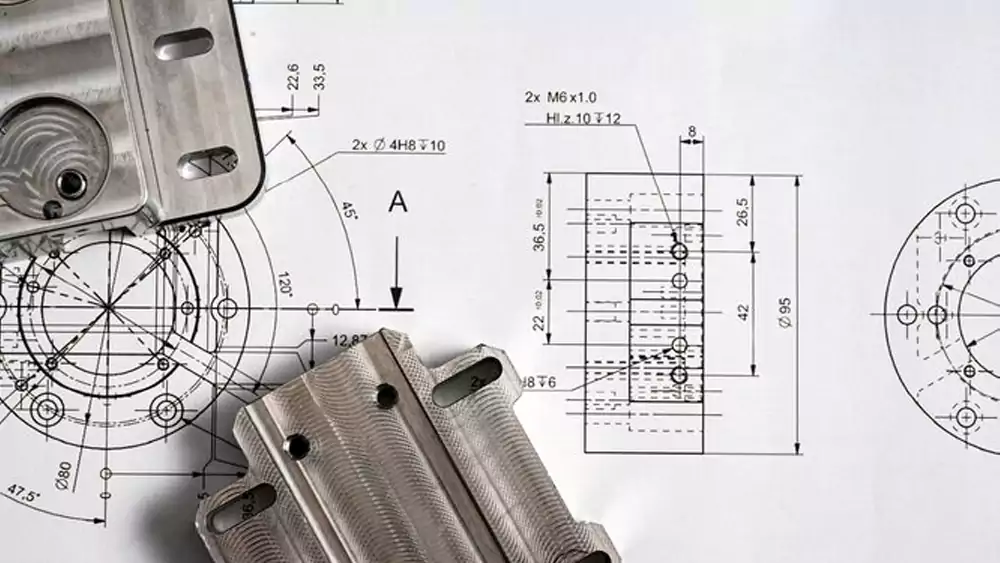
Good CNC machining design uses realistic tolerances, proper wall thickness, standard tooling sizes, and simple geometry to improve manufacturability and reduce production cost.
Design Rules That Improve Machining Efficiency
I review customer drawings almost every day. One common issue is unnecessary tight tolerances. Very tight tolerances increase machining time, inspection requirements, and tooling cost.
I usually recommend applying precision tolerances only to critical features.
Wall thickness also matters. Thin walls can vibrate during machining and cause dimensional instability. For most metal parts, I suggest maintaining at least 0.8 mm to 1.0 mm wall thickness whenever possible.
Internal corner design is another major factor. Perfectly sharp corners require extra machining passes and specialized tooling. Adding proper internal radii improves machining efficiency and extends tool life.
Here are several design recommendations that often reduce machining cost:
| Design Feature | Recommended Practice |
|---|---|
| Internal corners | Add larger radii |
| Threads | Use standard thread sizes |
| Deep pockets | Avoid excessive depth |
| Tolerances | Tighten only critical areas |
| Wall thickness | Maintain structural stability |
I remember helping a customer redesign a robotic housing with deep internal cavities. The original design required extremely long tools that created vibration problems. We slightly modified the cavity depth and radius size. The redesign reduced machining time by nearly 20% without affecting functionality.
Practical Cost Reduction Methods
Many engineers believe machining costs only depend on material prices, but design and process choices usually have a much bigger impact.
One simple method is avoiding deep pockets with very small corner radii. Those features require longer tools and slower cutting speeds.
Another effective method is combining machining operations into fewer setups. Every setup adds labor time and increases the chance of dimensional variation.
Batch size also affects pricing. Larger production quantities spread setup costs across more parts.
| Cost Reduction Method | Benefit |
|---|---|
| Use standard tools | Reduces setup complexity |
| Relax non-critical tolerances | Shortens machining time |
| Increase batch quantities | Lowers per-part cost |
| Simplify geometry | Improves machining efficiency |
| Use aluminum prototypes | Reduces development cost |
I always encourage engineers to provide both 3D files and detailed 2D drawings. Clear documentation prevents quoting mistakes and reduces communication delays between engineering teams and suppliers.
Why Is CNC Machining Used Across So Many Industries?
Many companies wonder whether CNC machining is suitable for their products or industry requirements.
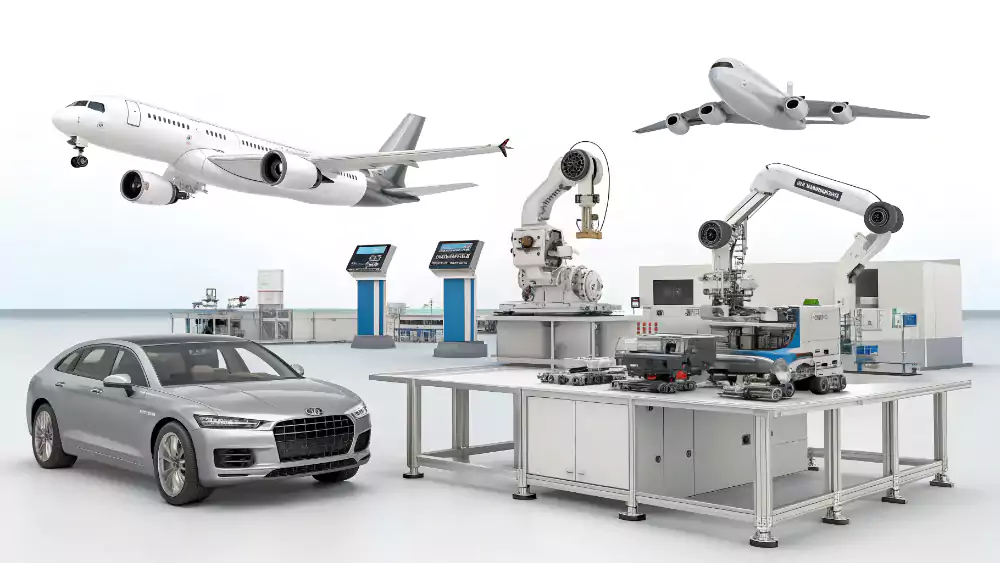
CNC machining is widely used in aerospace, automotive, robotics, medical devices, electronics, and industrial automation because it delivers precise and repeatable functional parts.
Industrial Applications
CNC machining supports industries that cannot tolerate inconsistent quality.
In aerospace manufacturing, precision matters because every component affects safety and performance. CNC machining produces structural brackets, housings, and lightweight aluminum assemblies with excellent accuracy.
In robotics, precision motion systems require tight tolerances to maintain smooth movement and repeatable positioning. Many robotics customers I work with need custom aluminum frames and actuator housings produced quickly for testing and production.
Medical manufacturers use CNC machining for surgical tools and implant components because the process provides strong dimensional control and excellent surface quality.
Industrial automation companies also depend heavily on CNC machining for machine frames, fixtures, and end-effectors.
One reason engineers continue choosing CNC machining is flexibility. The same manufacturing process can support single prototypes, low-volume production, and large repeat orders without major tooling changes.
Main Advantages of CNC Machining
Engineers often compare CNC machining with casting, injection molding, or 3D printing when selecting a manufacturing process.
CNC machining offers excellent accuracy, repeatability, material strength, surface finish, and flexibility for both prototypes and production manufacturing.
One major advantage of CNC machining is dimensional precision. Modern CNC systems can maintain very tight tolerances across large production batches.
Material performance is another key advantage. Unlike some additive manufacturing methods, CNC machining uses fully dense engineering materials with strong mechanical properties.
Surface quality is also much better in many cases. Machined surfaces often require little or no post-processing depending on the application.
I also value the speed of CNC machining during product development. Many prototype projects move from CAD design to finished parts within days instead of weeks.
| Manufacturing Method | Main Strength | Main Limitation |
|---|---|---|
| CNC Machining | Precision and material strength | Higher cost at massive volume |
| 3D Printing | Fast prototyping | Lower mechanical strength |
| Injection Molding | High-volume plastic production | Expensive tooling |
| Casting | Large metal parts | Lower dimensional precision |
For engineers who need reliable functional components with stable tolerances, CNC machining remains one of the best manufacturing solutions available today.
Conclusion
CNC machining gives engineers reliable precision, strong materials, scalable production, and fast turnaround, making it one of the most trusted manufacturing methods for modern industrial products.
-
"Analyzing the Effects of Tool Holder Stiffness on Chatter Vibration ...", https://journals.bilpubgroup.com/index.php/jmmr/article/view/5428. Machining research can support that insufficient tool or system stiffness contributes to vibration and chatter, which can degrade surface finish and dimensional accuracy. Evidence role: mechanism; source type: paper. Supports: Tool rigidity reduces vibration and chatter in CNC machining.. Scope note: The evidence would explain the mechanical relationship between rigidity and chatter; the magnitude of improvement depends on the specific tool, holder, workpiece, and cutting parameters. ↩
-
"Understanding 5-Axis Machining Concepts", https://www.autodesk.com/autodesk-university/class/Understanding-5-Axis-Machining-Concepts-2018. An engineering source on multi-axis machining explains that five-axis machines provide additional rotational axes, allowing the tool or workpiece to be oriented from multiple angles in a single setup, supporting the claim about reduced repositioning. Evidence role: mechanism; source type: education. Supports: Five-axis machining enables tool access from multiple angles with fewer repositioning steps.. Scope note: The degree of repositioning reduction depends on part geometry, fixture strategy, and machine configuration. ↩
