Choosing between Nylon and Delrin can stall a project fast. Both are strong engineering plastics, but the wrong pick can lead to wear, warping, tolerance issues, and higher manufacturing costs.
Delrin (POM) is generally the better choice for precision CNC machined parts because it offers superior dimensional stability, lower moisture absorption, better machinability, and lower friction. Nylon is usually the better option when impact resistance, toughness, and wear performance are the primary requirements.
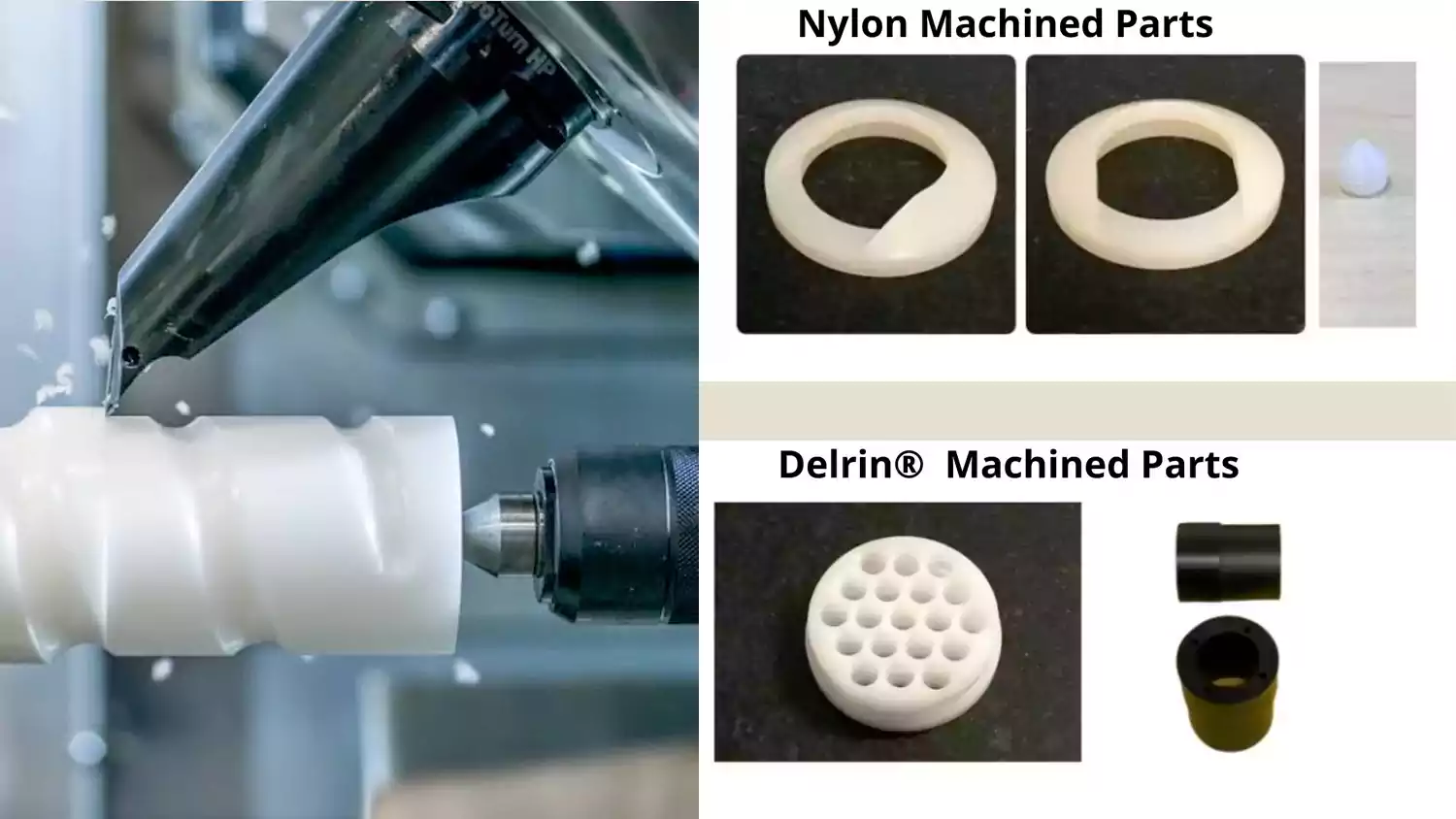
I always tell my guys: Delrin is for when you need precision that stays put, while Nylon is the one I reach for when a part needs to be tough enough to take some abuse.
What Are the Differences Between Nylon and Delrin?
Many engineers compare Nylon and Delrin because both are widely used engineering plastics. They often appear in gears, bushings, rollers, wear components, and automation equipment. The challenge is understanding where their strengths and weaknesses differ.
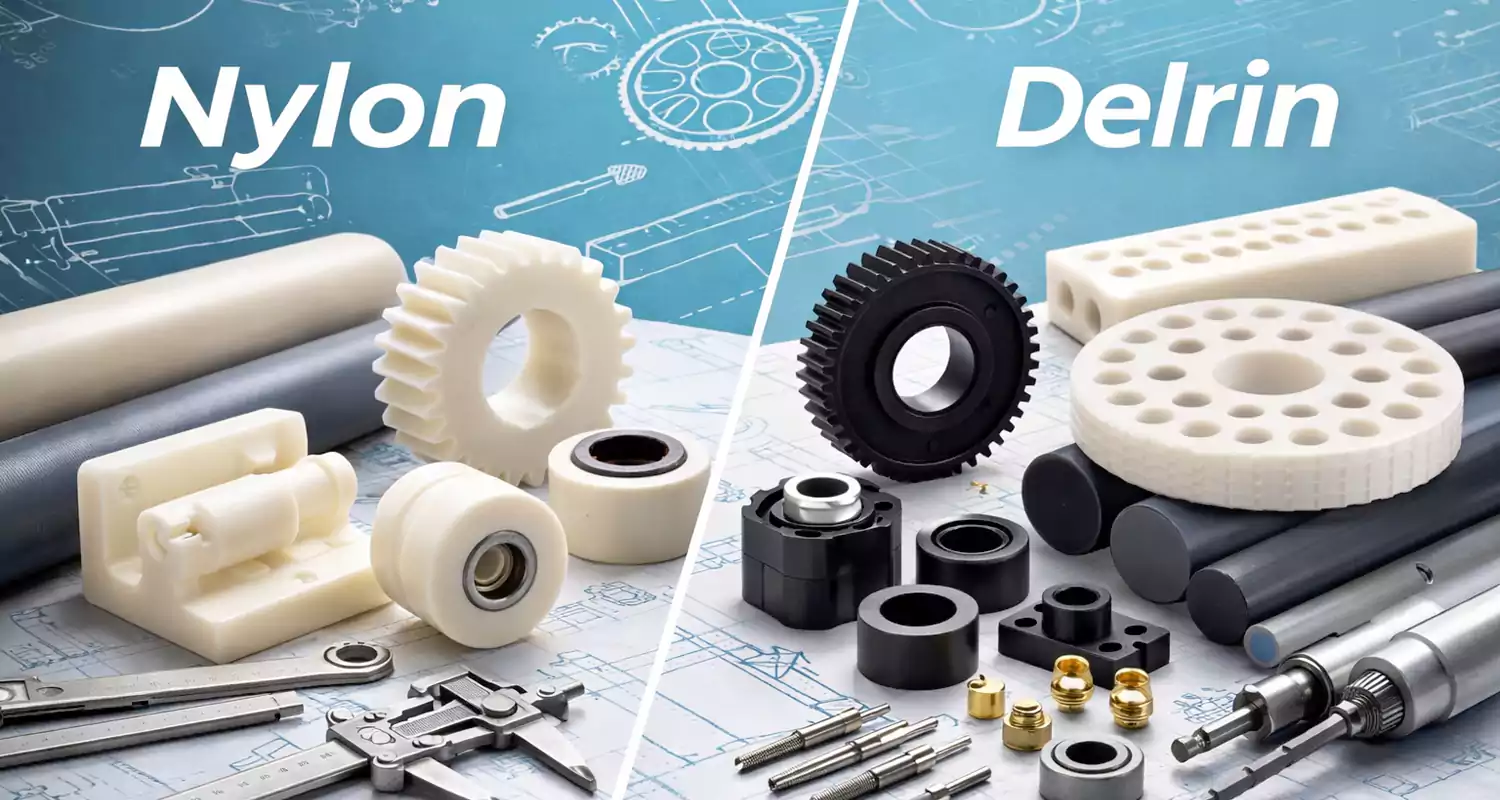
The main difference between Nylon and Delrin is that Delrin provides better dimensional stability, lower friction, and easier machining, while Nylon offers greater toughness, impact resistance, and wear resistance. Delrin is typically preferred for precision parts, while Nylon is often chosen for demanding wear applications.
Understanding the Material Differences
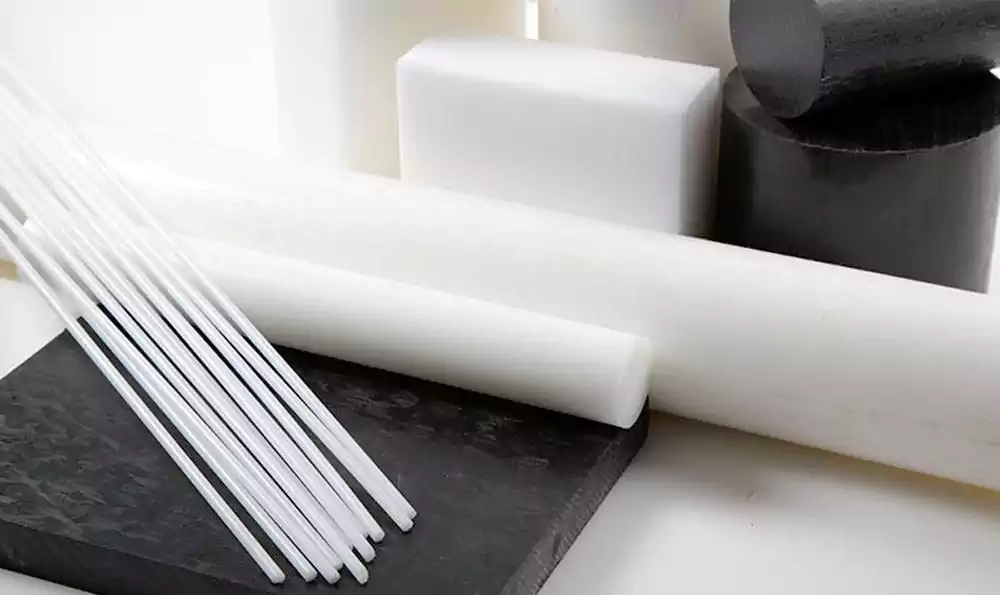
Nylon and Delrin belong to different polymer families. Nylon is a polyamide material known for its toughness and abrasion resistance. Delrin is an acetal resin developed to provide dimensional stability, low friction, and consistent mechanical performance.
One of the most important differences is moisture absorption. Nylon naturally absorbs moisture from the surrounding environment. This can improve toughness, but it can also cause dimensional growth. Delrin absorbs very little moisture, which allows parts to maintain their original dimensions for much longer periods.
Key Property Comparison
| Property | Nylon (PA) | Delrin (POM) |
|---|---|---|
| Stiffness | Moderate | High |
| Toughness | Excellent | Good |
| Wear Resistance | Excellent | Very Good |
| Moisture Absorption | High | Very Low |
| Dimensional Stability | Good | Excellent |
| Friction Coefficient | Low | Very Low |
| Machinability | Good | Excellent |
| Chemical Resistance | Good | Excellent |
What This Means in Practice
When I work on automation projects, Delrin is often chosen for components that require accurate positioning and smooth motion1. Nylon is usually selected when impact loads, vibration, or abrasive contact are expected. Neither material is universally better. The right choice depends on the application's priorities.
For engineers evaluating plastic materials, understanding the strengths of Nylon material properties and applications can help narrow the selection process before comparing it directly against Delrin.
Nylon vs Delrin Material Properties and CNC Machining Performance?
Material performance affects not only how a part functions but also how easily it can be machined and how stable it remains after manufacturing.
Delrin machines more cleanly, holds tighter tolerances, and maintains dimensional stability better than Nylon. Nylon offers superior toughness and impact resistance but may experience slight dimensional changes due to moisture absorption and internal material stresses.
How These Materials Machine
As a machinist, I notice the difference immediately once cutting begins.
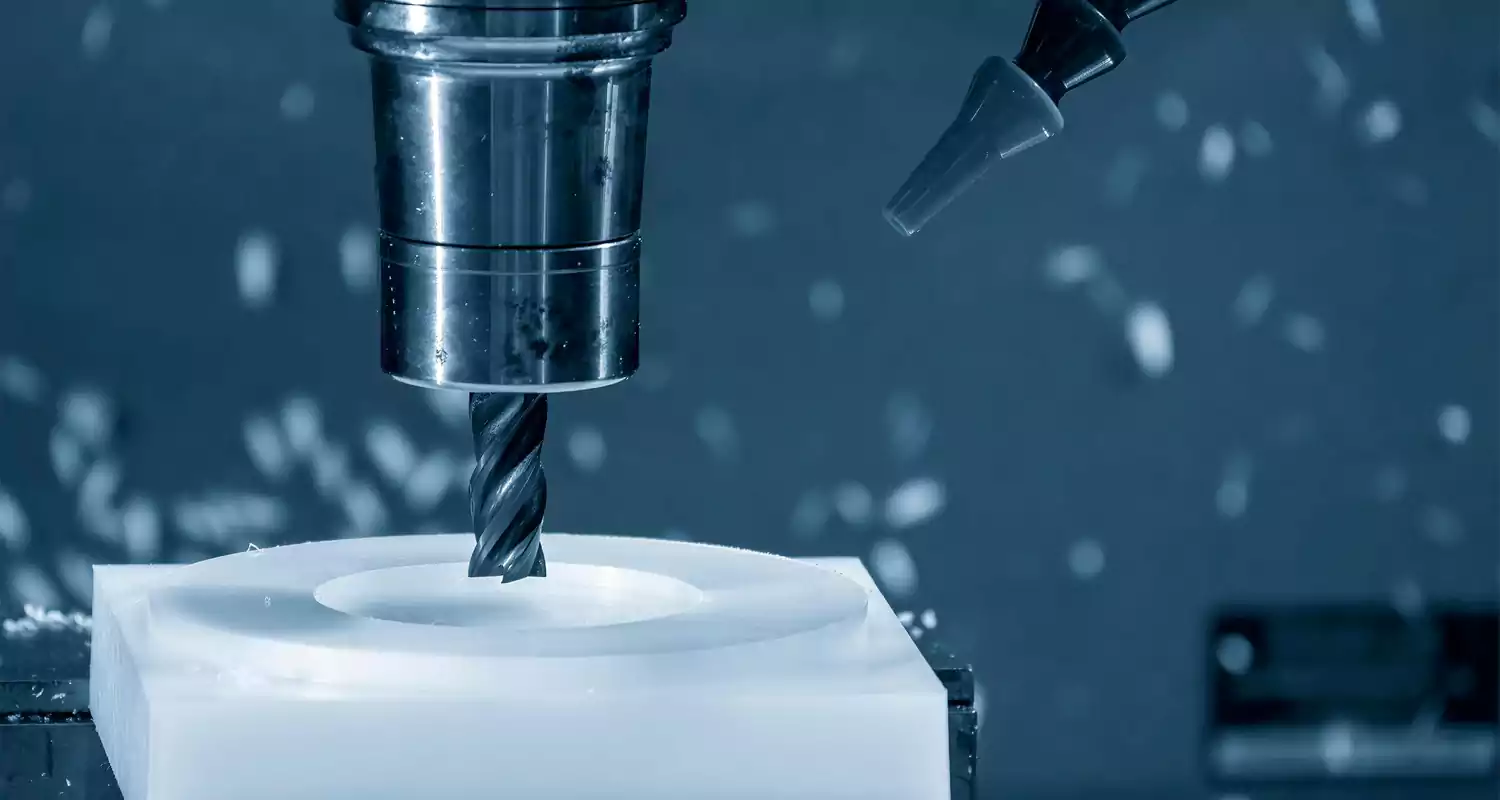
Delrin produces short, clean chips and typically leaves an excellent surface finish. It machines consistently and rarely causes problems with chip control. Tight tolerances are easier to maintain because the material remains dimensionally stable.
Nylon behaves differently. It tends to produce long, stringy chips that require careful management. It is also more flexible than Delrin, which means heat buildup and part movement must be monitored during machining.
CNC Machining Comparison
| Machining Factor | Nylon | Delrin |
|---|---|---|
| Surface Finish | Good | Excellent |
| Chip Formation | Stringy | Clean |
| Tool Wear | Low | Low |
| Tolerance Capability | Good | Excellent |
| Dimensional Stability | Moderate | Excellent |
| Heat Sensitivity | Moderate | Low |
| Post-Machining Movement | Possible | Minimal |
Real Manufacturing Case Study
Several years ago, a customer producing packaging equipment approached us with an issue involving conveyor guide bushings. The original Nylon bushings worked well initially but experienced dimensional growth after operating in a humid environment.
Project Parameters
| Item | Nylon Version | Delrin Version |
|---|---|---|
| Material | PA6 Nylon | POM Delrin |
| Shaft Diameter | 20 mm | 20 mm |
| Bushing OD | 32 mm | 32 mm |
| Operating Load | 450 N | 450 N |
| Operating Temperature | 40°C | 40°C |
| Relative Humidity | 80-90% | 80-90% |
| Production Volume | 8,000 pcs/year | 8,000 pcs/year |
| Tolerance Requirement | ±0.03 mm | ±0.03 mm |
Results After Six Months
| Performance Metric | Nylon | Delrin |
|---|---|---|
| Dimensional Change | +0.08 mm | +0.01 mm |
| Wear Performance | Excellent | Excellent |
| Friction Stability | Moderate | Excellent |
| Maintenance Frequency | Monthly | Quarterly |
| Customer Feedback | Good | Excellent |
The customer eventually switched to Delrin because dimensional consistency was more important than impact resistance in their application.
Nylon vs Delrin Applications?
The best material depends heavily on the application. I rarely think of Nylon and Delrin as direct competitors. I see them as solutions for different engineering problems.
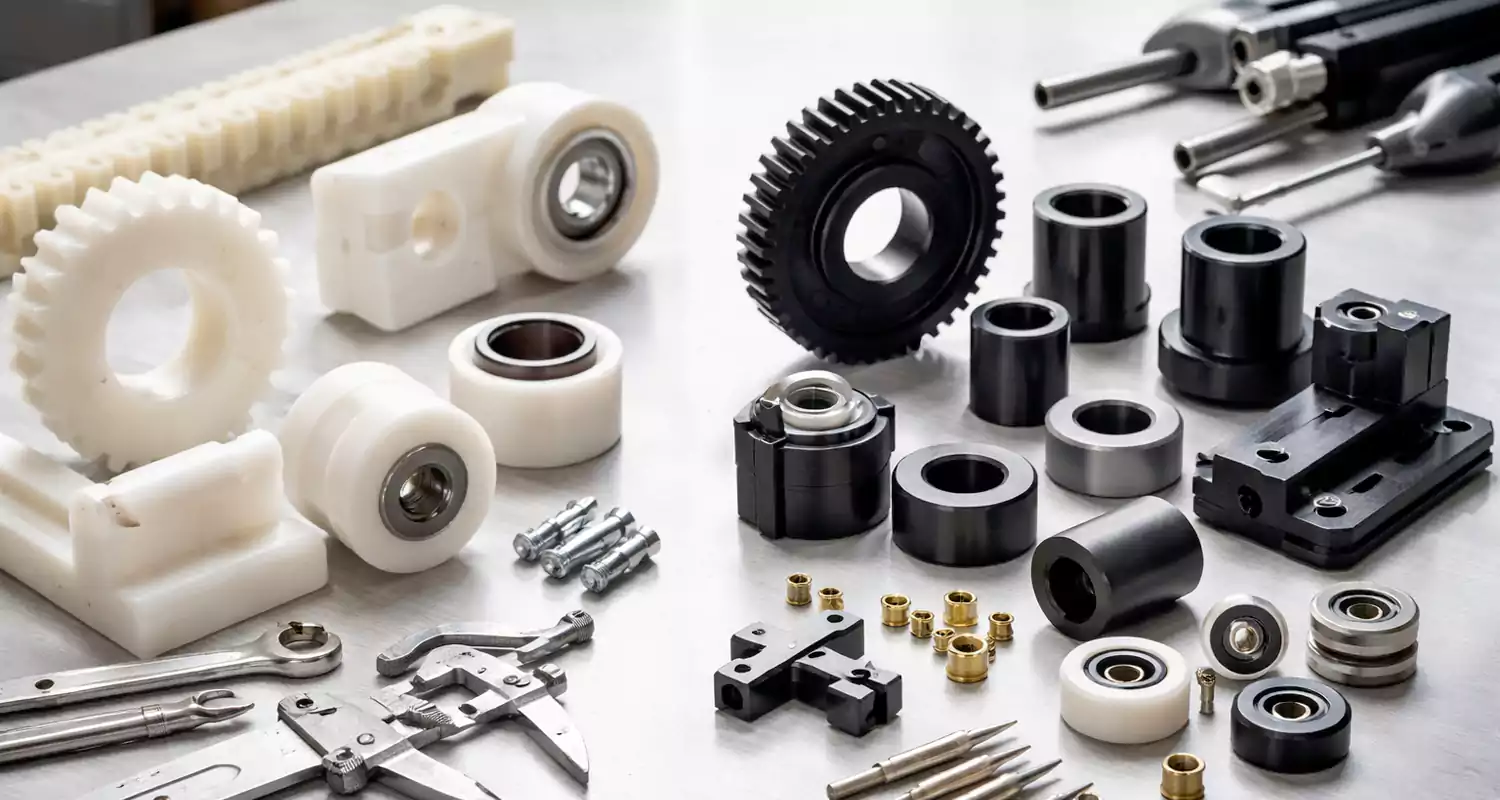
Nylon is best suited for wear-resistant, impact-resistant, and heavy-duty industrial components, while Delrin is ideal for precision gears, bushings, bearings, and low-friction mechanical assemblies that require tight dimensional control.
Common Nylon Applications
Nylon performs extremely well in demanding industrial environments where wear and impact are concerns.2
Typical applications include:
- Industrial gears
- Conveyor rollers
- Wear pads
- Chain guides
- Bushings
- Guide rails
- Impact-resistant housings
- Material handling components
I often recommend Nylon for factory equipment that operates under heavy loads or experiences repeated mechanical shock.
Common Delrin Applications
Delrin is often selected when precision and smooth movement are required.3
Typical applications include:
- Precision gears
- Bearings
- Bushings
- Valve components
- Medical device parts
- Automation equipment
- Electrical insulators
- Sliding mechanisms
Industry Application Examples
| Industry | Nylon Applications | Delrin Applications |
|---|---|---|
| Industrial Automation | Wear Strips | Precision Gears |
| Automotive | Chain Guides | Fuel System Components |
| Medical Equipment | Protective Covers | Device Fixtures |
| Consumer Products | Durable Structural Parts | Sliding Components |
| Robotics | Wear Components | Motion Control Parts |
The tighter the tolerance requirement, the more likely I am to recommend Delrin.
How to Choose Between Nylon and Delrin?
Many engineers ask which material is better. The answer depends on what matters most in the design.
Choose Delrin when dimensional stability, precision, low friction, and tight tolerances are critical. Choose Nylon when impact resistance, wear resistance, load-bearing capability, and toughness are the primary design priorities.
A Simple Decision Framework
Material selection becomes easier when the primary design requirement is identified first.
| Requirement | Recommended Material |
|---|---|
| Tight Tolerances | Delrin |
| Low Friction | Delrin |
| High Dimensional Stability | Delrin |
| High Impact Resistance | Nylon |
| Heavy Wear Conditions | Nylon |
| Shock Loading | Nylon |
| Humid Environment | Delrin |
| Precision Motion Components | Delrin |
Questions I Ask Before Making a Recommendation
Before selecting a material, I typically ask:
- What tolerance must the part maintain?
- Will humidity affect the operating environment?
- Does the part experience shock loading?
- Is low friction important?
- Does the assembly require long-term dimensional stability?
- What is the expected service life?
The answers usually make the material choice straightforward.
CNC Machining Services for Nylon and Delrin Parts?
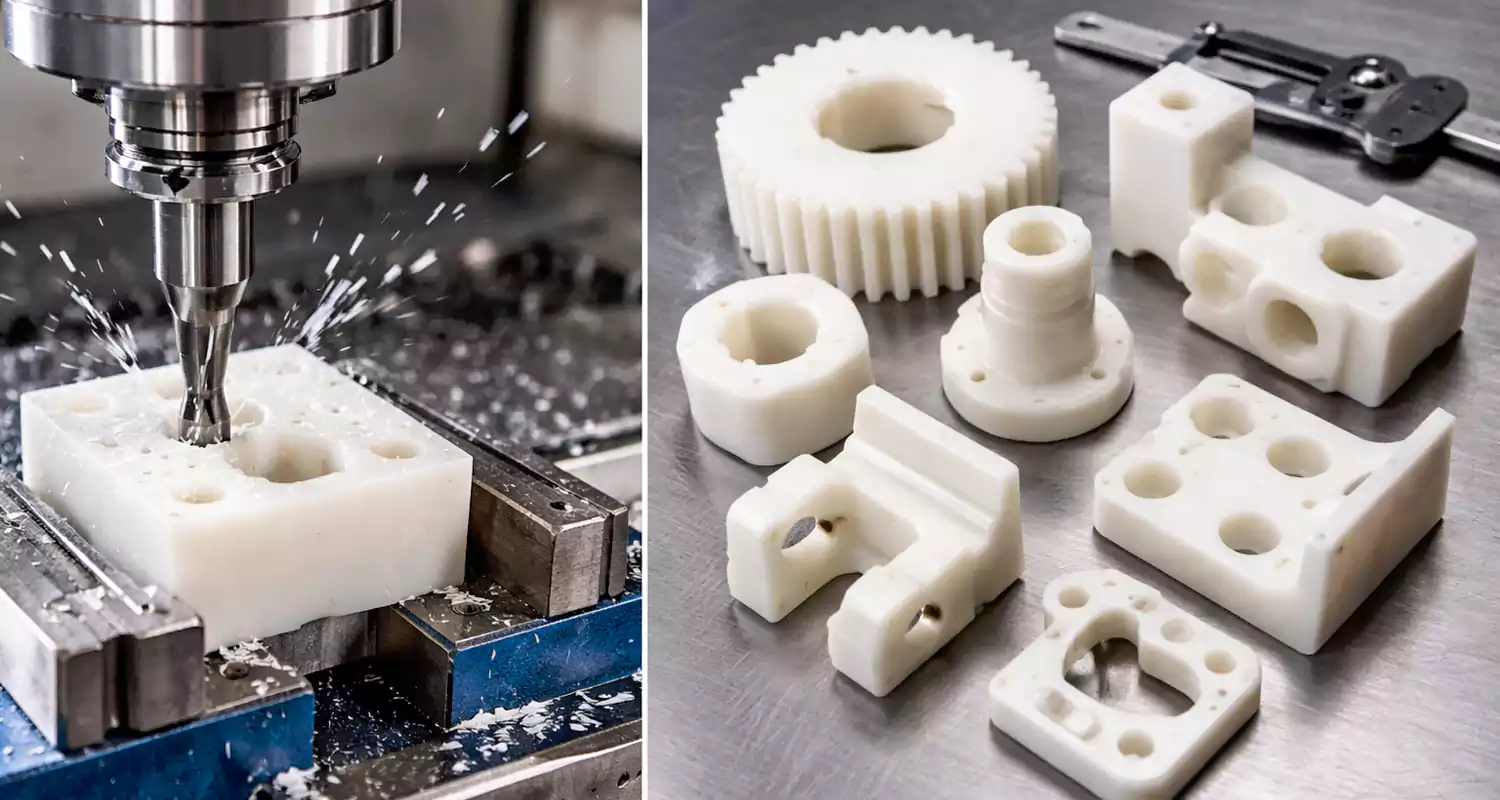
Even the best engineering plastic can underperform if it is machined incorrectly. Tooling, workholding, and machining strategy all affect final part quality.
Professional CNC machining services ensure Nylon and Delrin parts achieve the required tolerances, surface finishes, and long-term performance by applying the correct machining parameters, fixturing methods, and quality control procedures.
Important Machining Considerations
At Allied Metal, I regularly machine both Nylon and Delrin parts for customers in aerospace, robotics, automation, medical equipment, and industrial machinery industries.
For Delrin projects, I focus on:
- Precision tolerance control
- Excellent surface finishes
- Stable fixturing
- Consistent repeatability
For Nylon projects, I pay close attention to:
- Heat management
- Chip evacuation
- Material stabilization
- Dimensional control
What Engineers Should Look for in a CNC Supplier
| Capability | Why It Matters |
|---|---|
| Material Certification | Verifies material quality |
| Precision Machining | Ensures assembly fit |
| Plastic Machining Expertise | Reduces manufacturing risk |
| Quality Inspection | Improves consistency |
| Rapid Prototyping Support | Speeds development |
| Production Scalability | Supports future growth |
Engineers who require custom plastic components often benefit from working with a supplier that specializes in both Delrin and Nylon CNC machining services, especially when a project moves from prototyping into production.
Conclusion
Delrin and Nylon are both outstanding engineering plastics, but they solve different problems. Delrin delivers superior precision, dimensional stability, and low-friction performance, making it the preferred choice for tight-tolerance CNC machined parts. Nylon excels in demanding environments where toughness, wear resistance, and impact strength matter most. When the material selection matches the operating conditions, both materials can provide exceptional performance, long service life, and cost-effective manufacturing results.

Footnotes:
-
"Delrin® | High-Performance Acetal Homopolymer (POM) Resin", https://www.delrin.com/. Engineering descriptions of polyoxymethylene/acetal identify low friction, good wear behavior, and dimensional stability as characteristic properties, supporting its use in precision moving components; the source would support the material rationale rather than documenting the author's specific project choices. Evidence role: general_support; source type: encyclopedia. Supports: Delrin/POM is suitable for components requiring accurate positioning and smooth motion because of its dimensional stability and low-friction behavior.. Scope note: Contextual support only: application suitability varies with load, lubrication, temperature, tolerance requirements, and the specific acetal grade. ↩
-
"The Mechanical Properties of Nylon 6 (PA6)/ACRYLONITRILE ...", https://www.academia.edu/90345365/The_Mechanical_Properties_of_Nylon_6_PA6_ACRYLONITRILE_BUTADIENE_STYRENE_Abs_Blends. A neutral materials reference on nylon/polyamide should document its toughness, wear resistance, and use in mechanically stressed components, supporting the article’s description of nylon as suitable for wear- and impact-prone industrial settings. Evidence role: general_support; source type: encyclopedia. Supports: Nylon performs well in demanding industrial environments where wear and impact are concerns.. Scope note: Such a source would support nylon’s relevant material properties in general, but not prove performance in every industrial environment or application listed. ↩
-
"Polyoxymethylene - Wikipedia", https://en.wikipedia.org/wiki/Polyoxymethylene. A neutral source on polyoxymethylene/acetal should describe its dimensional stability, low friction, and use in precision mechanical parts such as gears, bearings, or sliding components, supporting the claim that Delrin-type acetal materials are suited to precision and smooth motion. Evidence role: mechanism; source type: encyclopedia. Supports: Delrin is often selected when precision and smooth movement are required.. Scope note: The evidence would support the material-property rationale for this selection, but may refer to polyoxymethylene or acetal generally rather than the Delrin brand specifically. ↩
