Choosing the wrong plastic can lead to premature wear, dimensional instability, frequent maintenance, and unexpected production downtime. Many engineers struggle to determine whether Nylon or UHMW is the better choice for demanding industrial applications.
Nylon is the better material for industrial parts that require strength, stiffness, load-bearing capacity, and machining precision. UHMW is the better material for applications that require ultra-low friction, exceptional wear resistance, impact durability, and long service life under continuous sliding conditions.
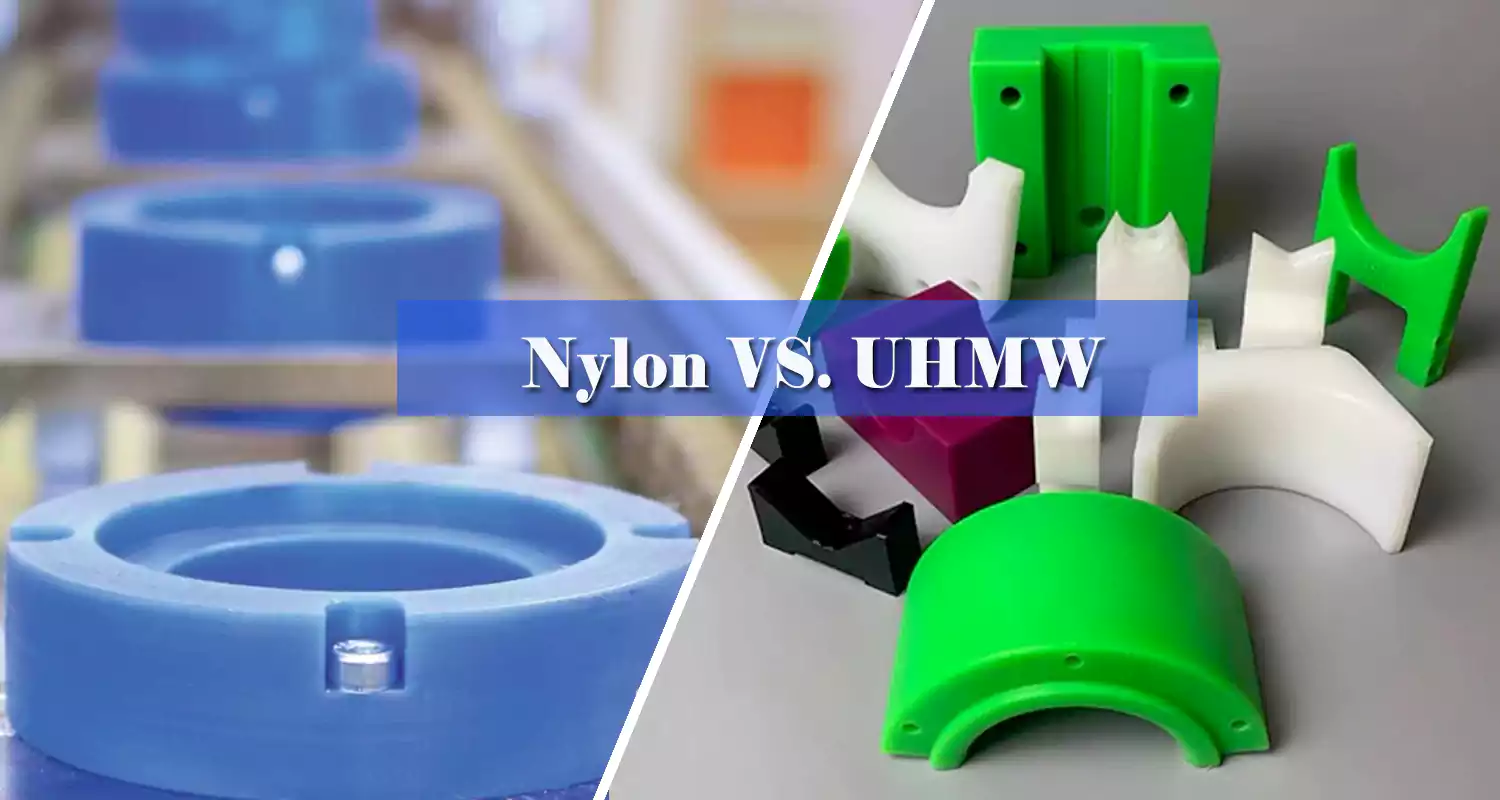
As a CNC machinist, I have worked with both materials for more than two decades. I have seen Nylon excel in heavily loaded mechanical components. I have also seen UHMW dramatically extend service life in conveyor and sliding systems. The key is not finding the strongest material. The key is matching the material to the real operating conditions.
Nylon vs UHMW at a Glance?
Many engineers compare strength and cost first. Yet the biggest performance differences often appear after equipment enters production.
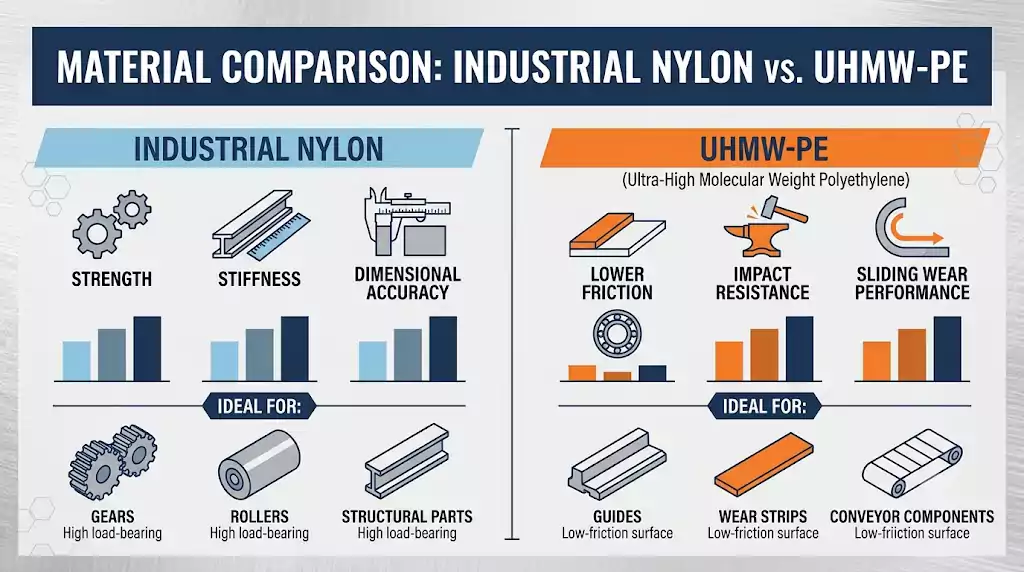
Nylon provides higher strength, stiffness, and dimensional accuracy, making it ideal for gears, rollers, and structural machine parts. UHMW provides lower friction, better impact resistance, and superior sliding wear performance, making it ideal for guides, wear strips, and conveyor components.
Quick Comparison Table
| Property | Nylon | UHMW |
|---|---|---|
| Density | Medium | Low |
| Tensile Strength | Higher | Lower |
| Stiffness | Higher | Lower |
| Impact Resistance | Good | Excellent |
| Friction Coefficient | Moderate | Very Low |
| Wear Resistance | Excellent | Excellent |
| Water Absorption | Higher | Very Low |
| Machinability | Excellent | Good |
| Dimensional Stability | Good | Excellent in wet environments |
| Cost | Moderate | Moderate |
Understanding the Core Difference
I often explain the difference in simple terms. Nylon behaves like a structural engineering plastic.1 UHMW behaves like a dedicated wear and sliding material.
When I machine gears, rollers, bushings, and load-bearing parts, I usually recommend Nylon. The material maintains rigidity and dimensional accuracy under load.
When I machine conveyor guides, chain guides, wear strips, and chute liners, I usually recommend UHMW. The material offers smoother movement and exceptional abrasion resistance.2
That distinction answers most material selection questions before detailed calculations begin.
Mechanical Properties and Environmental Performance?
A material may perform well on paper but fail in real operating conditions. Environmental exposure often determines long-term success.
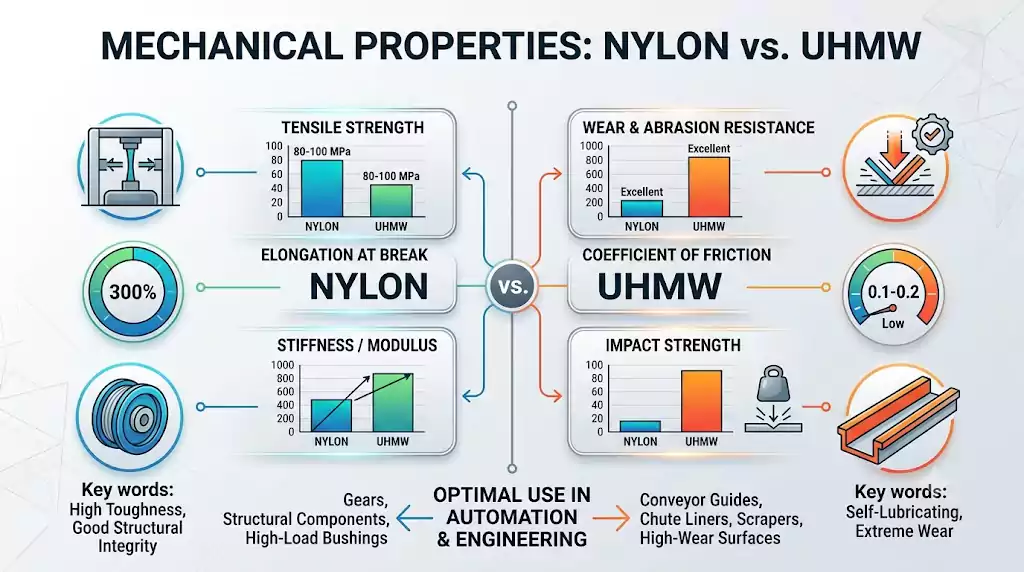
Nylon offers higher tensile strength, stiffness, and load-carrying capability, while UHMW delivers superior impact resistance, moisture resistance, and dimensional stability in wet or harsh industrial environments.
Strength and Stiffness
Nylon has a clear advantage when structural performance matters.
| Property | Nylon | UHMW |
|---|---|---|
| Tensile Strength | Higher | Lower |
| Compressive Strength | Higher | Lower |
| Rigidity | Higher | Lower |
| Load Capacity | Better | Moderate |
I frequently machine Nylon components for automation systems where accurate positioning and load support are critical.
Impact Resistance
UHMW performs exceptionally well in applications involving repeated impacts.
In one packaging equipment project, products continuously contacted guide surfaces at high speed. Nylon guides eventually showed signs of wear and fatigue. UHMW guides absorbed impact energy more effectively and delivered a significantly longer service life.
Moisture Absorption and Dimensional Stability
This factor is often overlooked during material selection.
| Property | Nylon | UHMW |
|---|---|---|
| Water Absorption | Higher | Near Zero |
| Humidity Sensitivity | Moderate | Very Low |
| Wet Environment Stability | Good | Excellent |
Engineers comparing engineering plastics often review a detailed Nylon Material Guide to better understand how moisture absorption can affect dimensional stability in demanding industrial environments.
For applications exposed to water, cleaning chemicals, or high humidity, UHMW often provides more predictable long-term performance.
Friction, Wear Resistance, and Machinability?
Wear resistance alone does not determine material performance. The type of wear and the operating conditions matter just as much.
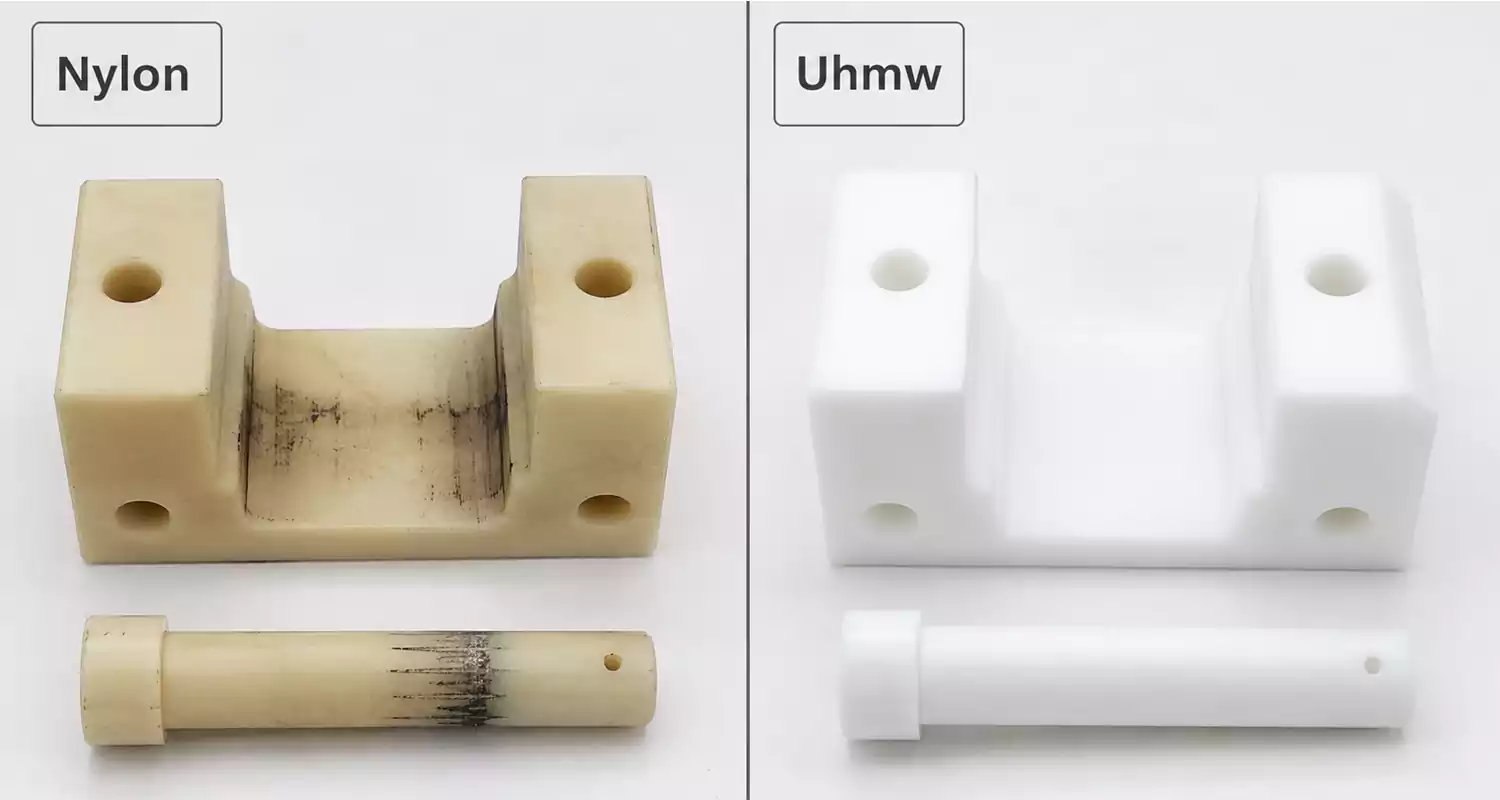
UHMW provides extremely low friction and excellent sliding wear resistance, while Nylon offers better rigidity, tighter machining tolerances, and superior performance in heavily loaded wear applications.
Friction Performance
UHMW is widely recognized for its low coefficient of friction.3
| Property | Nylon | UHMW |
|---|---|---|
| Friction Coefficient | Moderate | Very Low |
| Self-Lubricating Properties | Good | Excellent |
| Sliding Performance | Good | Excellent |
This characteristic makes UHMW especially valuable in conveyor systems and automated material handling equipment.
Wear Performance
Different wear mechanisms produce different results.
UHMW excels in continuous sliding applications. Nylon performs exceptionally well when higher loads are present and dimensional rigidity is required.
Machinability Comparison
Both materials machine well. Nylon generally offers better precision.
| Machining Factor | Nylon | UHMW |
|---|---|---|
| Surface Finish | Excellent | Good |
| Dimensional Accuracy | Excellent | Moderate |
| Tight Tolerance Capability | Better | Moderate |
| Rigidity During Machining | Better | Lower |
For custom parts that require precise tolerances and repeatable production quality, manufacturers often choose professional Nylon CNC Machining Service solutions to achieve consistent machining results.
Cost and Industrial Applications?
Material price matters, but total operating cost often has a greater impact on profitability.
Nylon is commonly used for precision mechanical parts that must support loads and maintain dimensional accuracy, while UHMW is commonly used for wear-intensive components where low friction and maximum service life are the primary requirements.
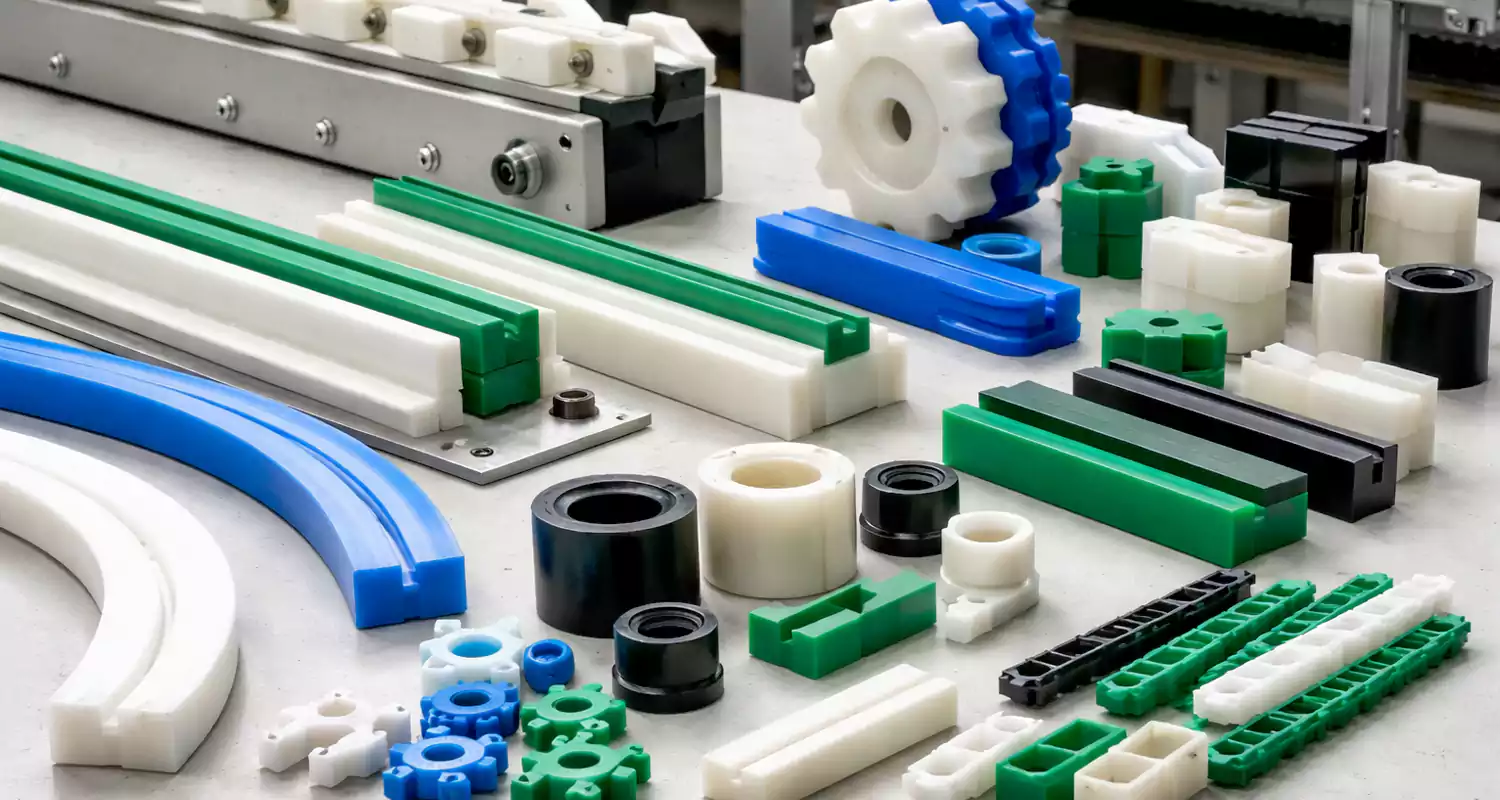
Common Nylon Applications
- Gears
- Rollers
- Bushings
- Bearings
- Structural machine components
- Precision automation parts
Common UHMW Applications
- Conveyor guides
- Wear strips
- Chain guides
- Chute liners
- Food processing equipment
- Bulk material handling systems
As modern equipment designs continue to evolve, engineers increasingly evaluate multiple Engineering Materials before selecting the best balance of performance, durability, and manufacturing cost.
Real Manufacturing Case Study
Several years ago, I worked with an automation equipment manufacturer that experienced excessive guide rail wear.
The original design used machined Nylon guides.
| Parameter | Nylon Guide | UHMW Guide |
|---|---|---|
| Conveyor Speed | 1.5 m/s | 1.5 m/s |
| Product Weight | 18 kg | 18 kg |
| Operating Hours | 20 hrs/day | 20 hrs/day |
| Average Service Life | 11 Months | 25 Months |
| Noise Level | Higher | Lower |
| Maintenance Frequency | Monthly | Quarterly |
The engineering team originally focused on stiffness. The actual issue was sliding abrasion. After switching to UHMW, service life more than doubled and maintenance costs decreased significantly.
That project reinforced a lesson I still follow today. Material selection should always reflect real operating conditions rather than assumptions.
How to Select the Right Material for Your Application?
Many engineers search for a single winner. In reality, both materials can be the correct choice when used in the right application.
Choose Nylon when strength, stiffness, dimensional accuracy, and load capacity are the priority. Choose UHMW when low friction, sliding wear resistance, impact durability, and long-term service life are the priority.
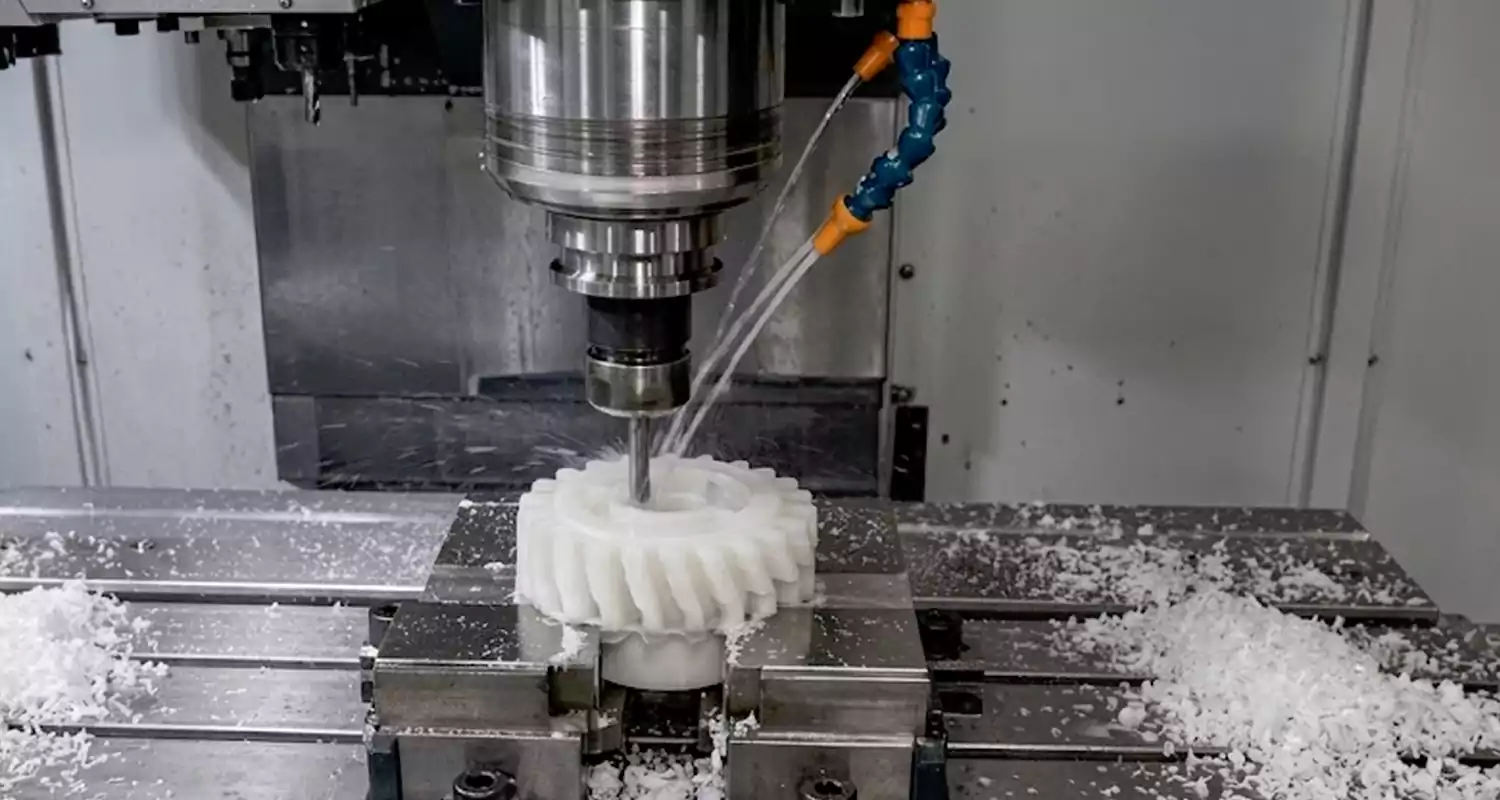
Choose Nylon When:
- High strength is required
- Structural support is important
- Tight machining tolerances are needed
- Gears or precision mechanical parts are involved
- Load-bearing performance matters
Choose UHMW When:
- Friction must be minimized
- Continuous sliding contact exists
- Wear strips or guides are required
- Wet environments are present
- Impact resistance is critical
Quick Decision Matrix
| Requirement | Best Choice |
|---|---|
| High Strength | Nylon |
| High Stiffness | Nylon |
| Low Friction | UHMW |
| Sliding Wear Resistance | UHMW |
| Precision Machining | Nylon |
| Wet Environment | UHMW |
| Impact Resistance | UHMW |
| Structural Components | Nylon |
Conclusion
The choice between Nylon and UHMW is not about finding a universally better material. Nylon delivers the strength, rigidity, and precision needed for structural and load-bearing components. UHMW delivers the low friction, wear life, and impact resistance needed for demanding sliding applications. When the material matches the real operating conditions, both can provide years of reliable performance and lower overall ownership costs.

Footnotes:
-
"Nylon - Wikipedia", https://en.wikipedia.org/wiki/Nylon. Engineering polymer references describe nylon/polyamide materials as engineering thermoplastics with comparatively high strength, stiffness, and wear resistance, supporting their use in structural plastic components. Evidence role: definition; source type: encyclopedia. Supports: Nylon behaves like a structural engineering plastic.. Scope note: This supports nylon’s general engineering-plastic classification, not performance in every grade, filler system, or application geometry. ↩
-
"Overview of tribological properties of UHMW polyethylene under ...", https://iopscience.iop.org/article/10.1088/1742-6596/2382/1/012013/pdf. Tribology and polymer-property references commonly identify ultra-high-molecular-weight polyethylene as having a very low coefficient of friction and high abrasion or wear resistance, which contextualizes its use in sliding guides, wear strips, and liners. Evidence role: general_support; source type: paper. Supports: UHMW offers smoother movement and exceptional abrasion resistance.. Scope note: The evidence would support UHMW’s general friction and wear characteristics; actual smoothness and abrasion life depend on load, surface finish, counterface material, contamination, and operating conditions. ↩
-
"Super Hydrophobic UHMWPE/PTFE/PVA Composites with ...", https://pmc.ncbi.nlm.nih.gov/articles/PMC12196722/. A general UHMWPE material reference describes ultrahigh-molecular-weight polyethylene as having a very low coefficient of friction and self-lubricating behavior, supporting the article’s characterization of UHMW’s sliding-friction performance. Evidence role: general_support; source type: encyclopedia. Supports: UHMW is widely recognized for its low coefficient of friction.. Scope note: Reported friction values vary by grade, counterface, load, lubrication, and test method, so the source would support the general property rather than a universal coefficient. ↩
