Nylon parts often fail when engineers choose the wrong grade or overlook moisture effects. This can lead to wear issues, dimensional changes, and costly redesigns.
Nylon is a high-performance engineering plastic that combines strength, wear resistance, low friction, and lightweight performance. It is widely used for gears, bushings, rollers, and structural components because it offers excellent durability, easy machinability, and lower maintenance costs than many metal alternatives.
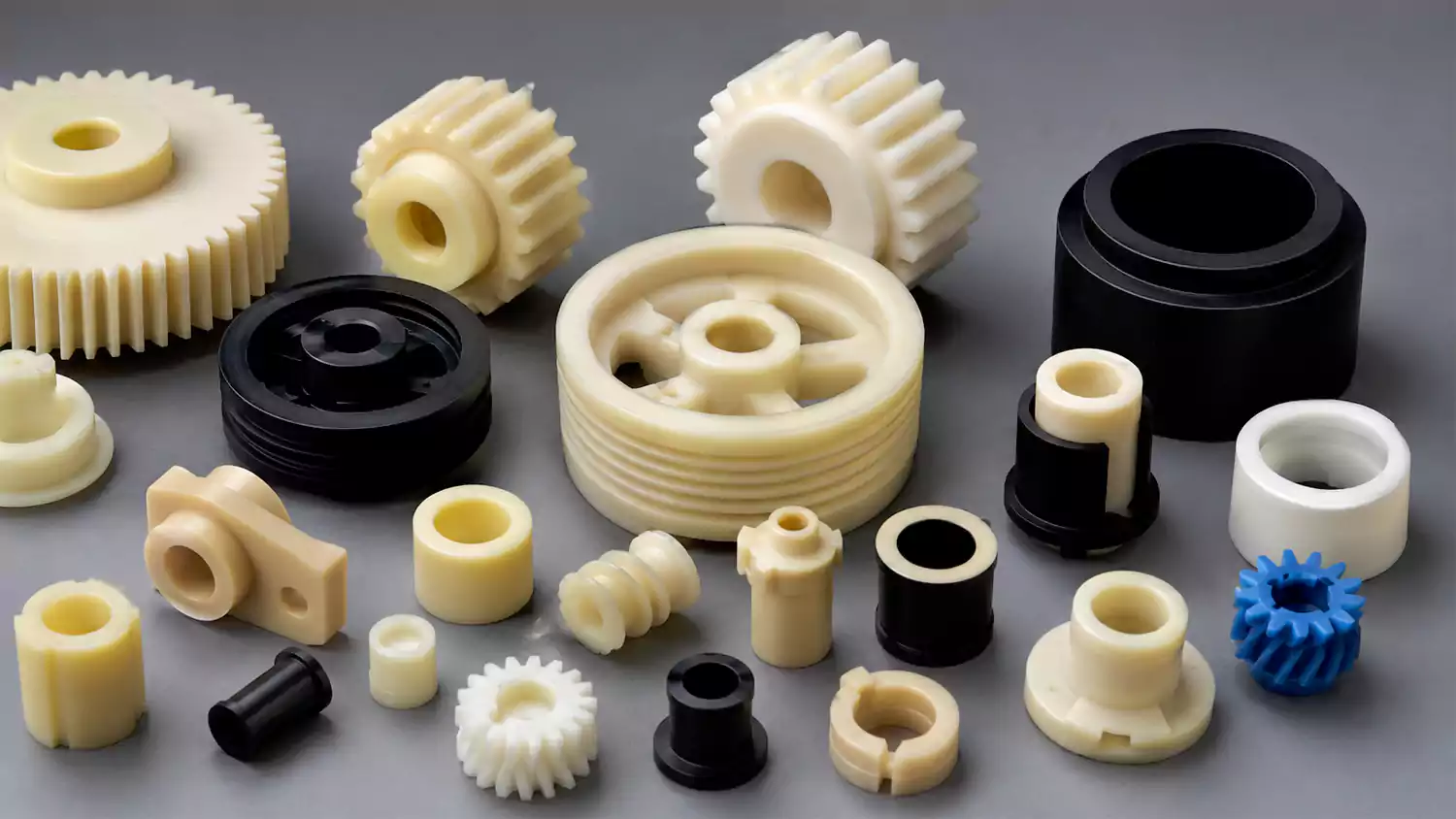
For many engineers, nylon is more than just a plastic. It is often a practical replacement for metal components that need lower weight, reduced noise, and better wear performance. In this guide, I will explain how nylon materials work, how different grades compare, where they are commonly used, and what engineers should know before machining nylon parts.
What Is Nylon Material?
Many designers know nylon is widely used. Yet many are unsure which nylon grade fits their application best.
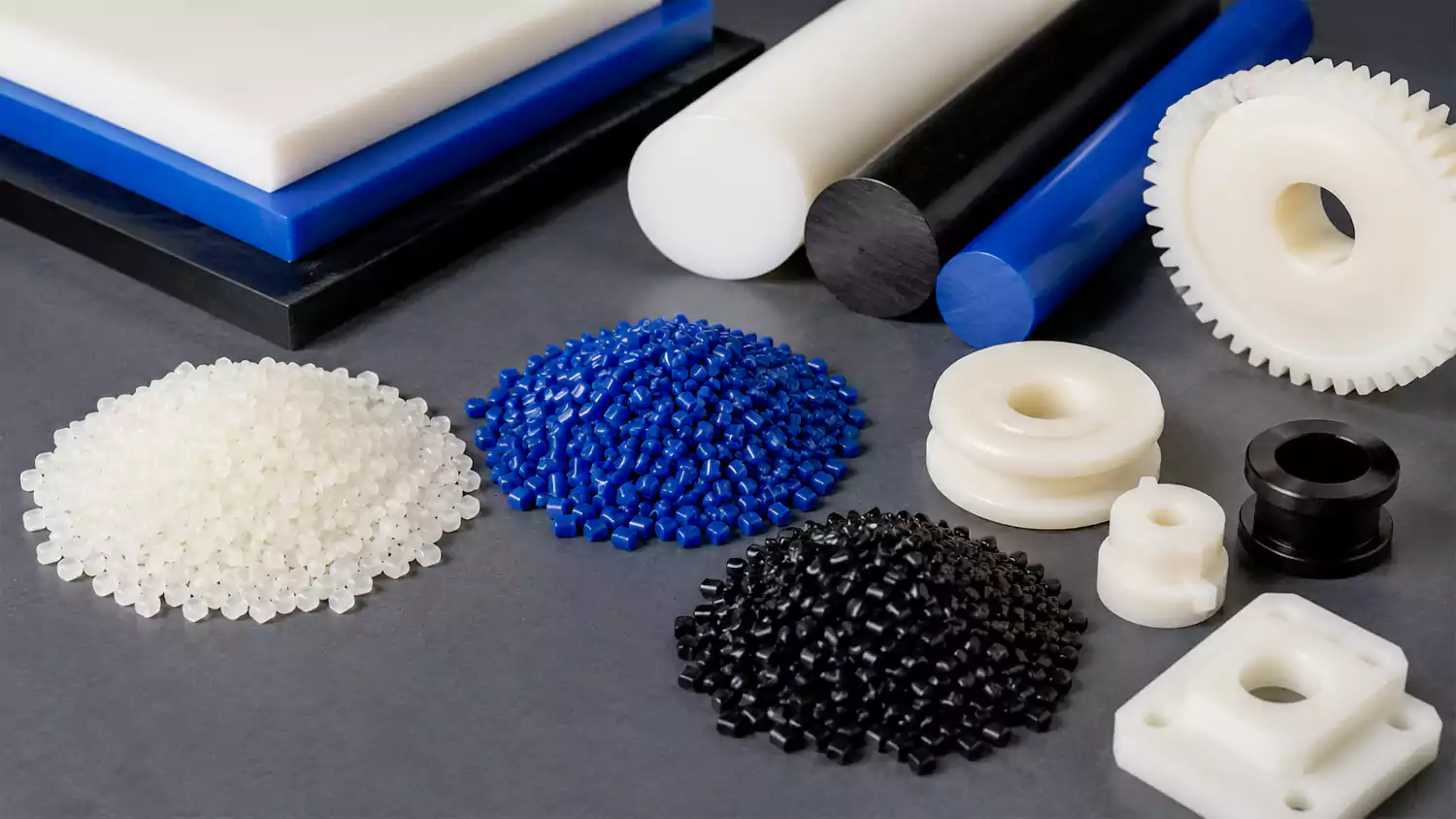
Nylon is a synthetic engineering thermoplastic from the polyamide family. It offers high strength, excellent wear resistance, low friction, and good chemical resistance, making it one of the most commonly used materials for industrial machinery components and CNC machined plastic parts.
Understanding Nylon as an Engineering Plastic
Nylon was first developed as a replacement for natural materials such as silk.1 Today, it has become one of the most widely used engineering plastics in manufacturing.
What makes nylon attractive is its balance of properties. It offers much higher strength than commodity plastics while remaining easier to machine and lighter than metal. In many industrial applications, nylon can replace aluminum, brass, or steel components when weight reduction and wear resistance are priorities.
Key Characteristics of Nylon
| Property | Typical Performance |
|---|---|
| Density | 1.12–1.15 g/cm³ |
| Tensile Strength | 60–90 MPa |
| Elongation | 20–100% |
| Wear Resistance | Excellent |
| Friction Coefficient | Low |
| Impact Resistance | Good |
| Chemical Resistance | Good |
| Moisture Absorption | Moderate to High |
One important characteristic is moisture absorption. Nylon absorbs water from the environment. This can affect dimensions and mechanical performance.2 Engineers should always consider operating conditions when selecting nylon grades.
Why Engineers Choose Nylon
From my experience working with industrial customers, nylon is often selected because it reduces maintenance requirements. Properly designed nylon components can run with less lubrication, generate less noise, and reduce wear on mating parts. These benefits often lower total ownership costs over the life of the equipment.
For projects that require tight tolerances and reliable production quality, many engineers also choose professional Nylon CNC Machining Service suppliers to ensure consistent material selection and machining accuracy.
Nylon Material Properties, Grades and Performance?
Choosing nylon based only on strength numbers can create problems later. Different grades behave very differently under load, temperature, and moisture exposure.
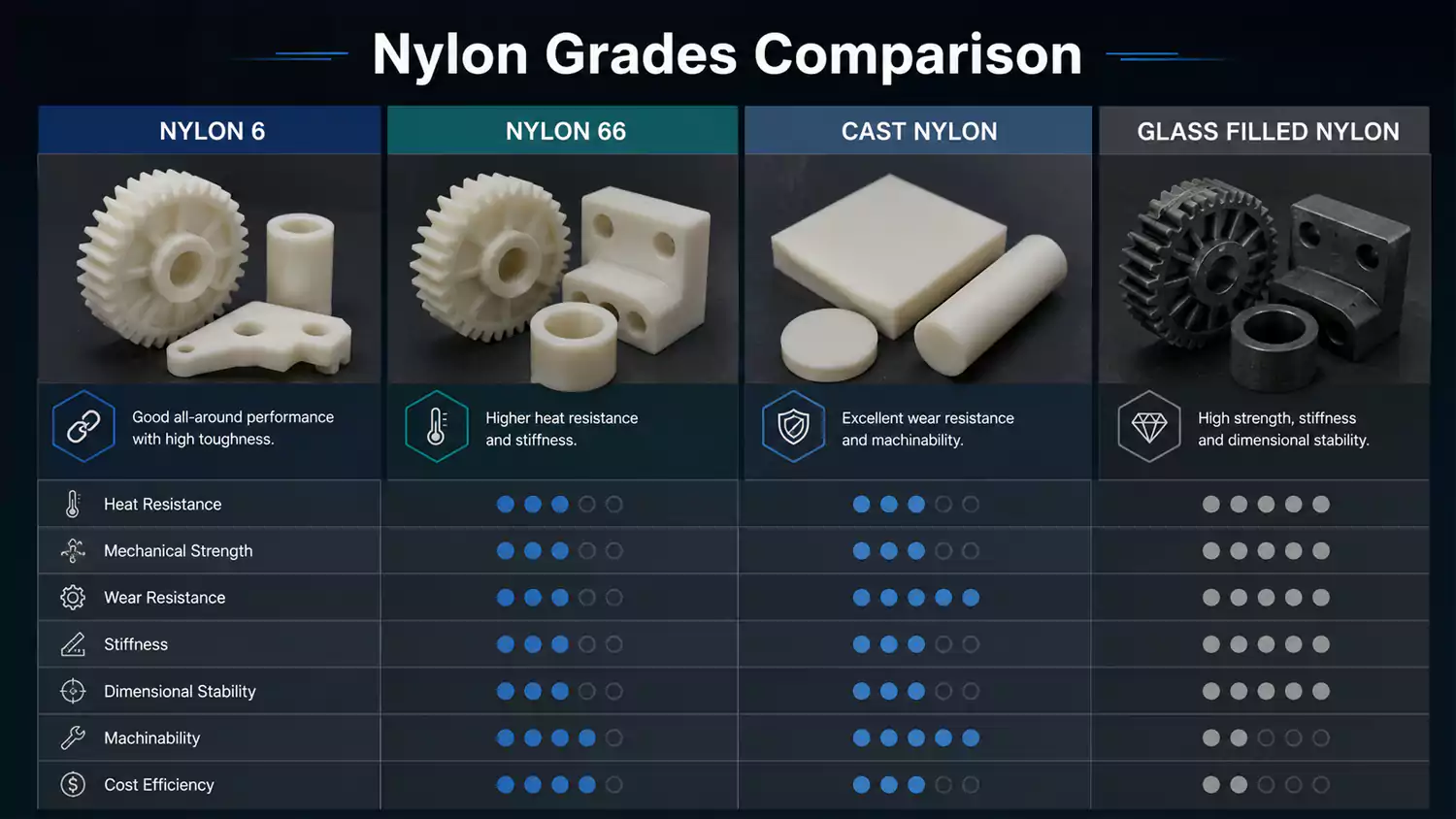
The most common nylon grades are Nylon 6, Nylon 66, cast nylon, glass-filled nylon, and oil-filled nylon. Nylon 66 provides higher strength and heat resistance, cast nylon offers better dimensional stability, while specialty-filled grades improve stiffness, wear resistance, or friction performance for demanding industrial applications.
Common Nylon Grades
| Grade | Main Advantages | Typical Applications |
|---|---|---|
| Nylon 6 | Toughness, machinability | General industrial parts |
| Nylon 66 | Higher strength and heat resistance | Structural components |
| Cast Nylon | Better dimensional stability | Large machined parts |
| Glass-Filled Nylon | Increased stiffness | High-load components |
| Oil-Filled Nylon | Reduced friction | Bearings and wear parts |
Nylon 6 vs Nylon 66
Many engineers ask me whether Nylon 6 or Nylon 66 is better. The answer depends on the application.
Nylon 66 generally provides higher tensile strength and better temperature resistance. Nylon 6 offers improved toughness and easier machining. For many automation components, Nylon 6 delivers an excellent balance between performance and manufacturing cost.
Performance Factors That Matter
When evaluating nylon materials, I usually focus on:
- Mechanical strength
- Wear resistance
- Friction characteristics
- Moisture absorption
- Operating temperature
- Chemical exposure
- Machining stability
These factors often have a greater impact on part performance than simple material cost.
Nylon Material Applications and Material Comparisons?
Many engineers know nylon is versatile. Yet understanding where it truly outperforms other materials can improve both product performance and manufacturing efficiency.
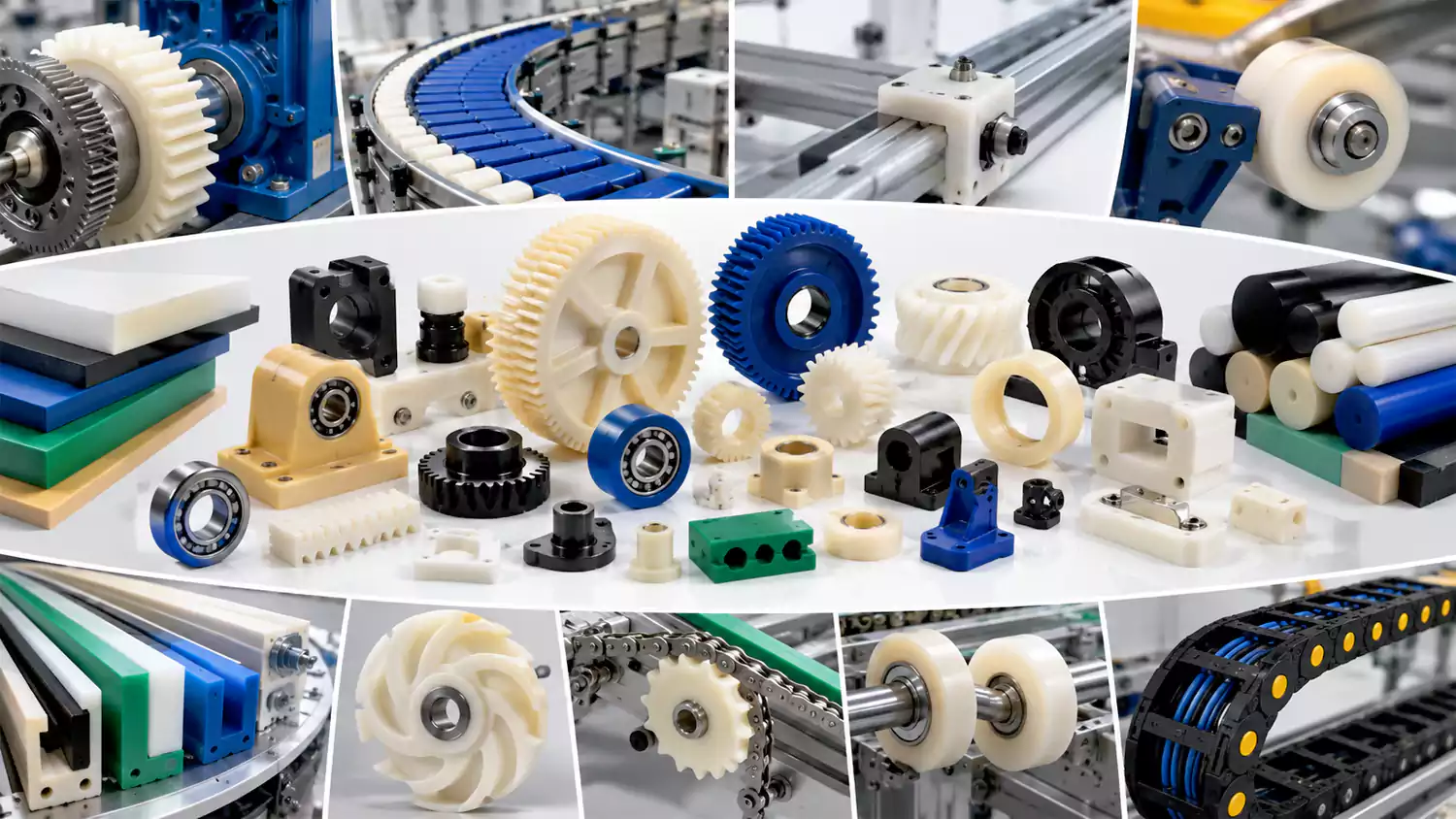
Nylon is widely used for gears, bearings, bushings, wear strips, rollers, guide rails, and automation components. Compared with metals, it reduces weight and noise. Compared with many engineering plastics, it provides a stronger combination of wear resistance, toughness, and load-bearing capability.
Common Industrial Applications
Nylon is widely used across industries including:
- Industrial automation
- Robotics
- Packaging machinery
- Food processing equipment
- Agricultural machinery
- Material handling systems
- Automotive assemblies
Typical nylon parts include:
| Component | Benefit |
|---|---|
| Gears | Low noise operation |
| Bushings | Reduced friction |
| Rollers | Lightweight performance |
| Wear Strips | Excellent durability |
| Guide Rails | Smooth motion |
| Pulleys | Corrosion resistance |
Nylon vs Other Engineering Materials
| Material | Strength | Weight | Wear Resistance | Cost |
|---|---|---|---|---|
| Nylon | High | Low | Excellent | Moderate |
| Acetal (POM) | Moderate | Low | Very Good | Moderate |
| UHMW | Lower | Very Low | Excellent | Low |
| Aluminum | High | Medium | Moderate | Higher |
| Steel | Very High | High | Moderate | Higher |
Real Manufacturing Case Study
A customer in the industrial automation sector approached us with a conveyor guide assembly that experienced excessive wear.
The original design used anodized aluminum guide blocks. Frequent maintenance caused downtime.
We redesigned the assembly using cast nylon.
| Parameter | Original Aluminum Part | Cast Nylon Part |
|---|---|---|
| Material | 6061-T6 Aluminum | Cast Nylon 6 |
| Quantity | 500 pcs/year | 500 pcs/year |
| Thickness | 20 mm | 20 mm |
| Operating Speed | 1.8 m/s | 1.8 m/s |
| Service Life | 8 months | 22 months |
| Component Weight | 0.86 kg | 0.39 kg |
| Noise Reduction | Baseline | -35% |
| Annual Maintenance Events | 6 | 2 |
The result surprised the customer. The nylon component lasted nearly three times longer. The lighter weight reduced drive load. Maintenance costs dropped significantly. This project reinforced something I have seen many times over the past two decades: the best material is not always the strongest material. It is the material that delivers the best balance of performance, manufacturability, and lifecycle cost.
CNC Machining Nylon Parts and Design Considerations?
Many nylon parts perform poorly because designers apply metal-part design rules to plastic materials. This often creates avoidable machining and performance issues.
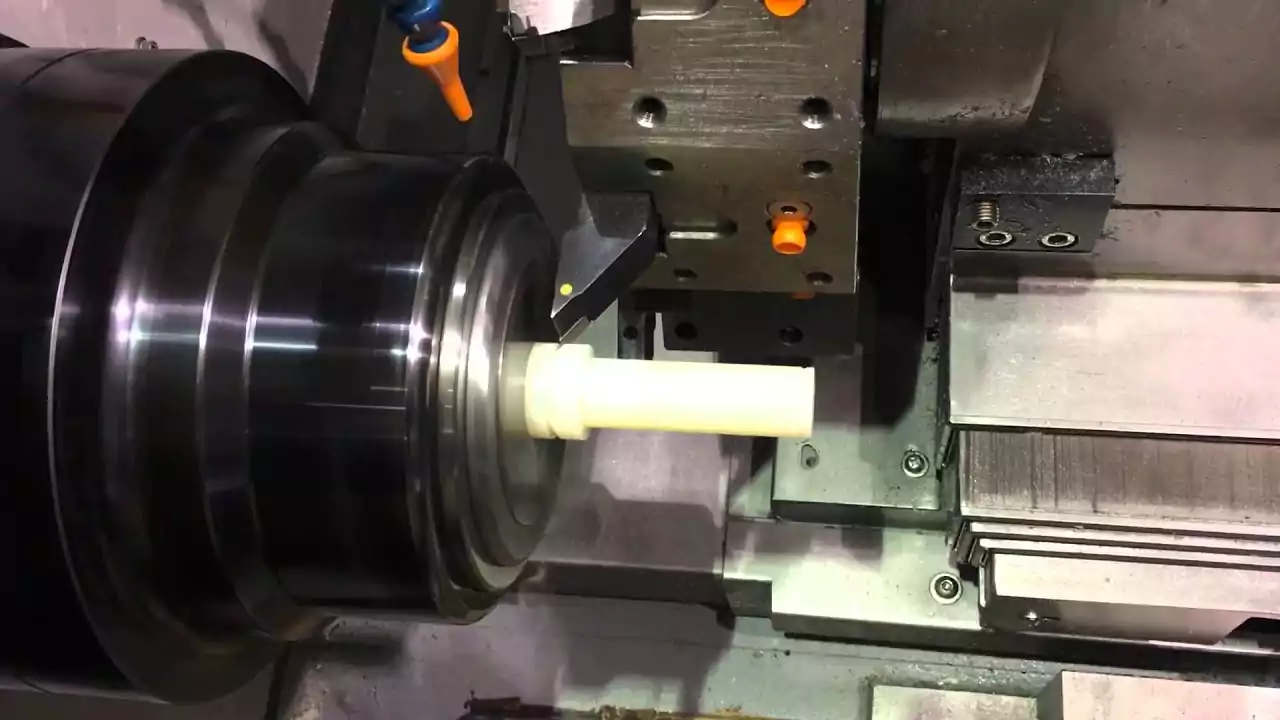
Successful CNC machining of nylon requires selecting the correct grade, controlling heat during machining, allowing for moisture-related dimensional changes, and applying realistic tolerances. Proper design and machining practices improve accuracy, stability, surface finish, and long-term part performance.
Machining Characteristics of Nylon
Nylon machines very well compared with many engineering plastics.
Advantages include:
- Fast material removal rates
- Low tool wear
- Smooth surface finishes
- Minimal cutting forces
- Complex geometry capability
However, nylon also presents challenges.
Material heat buildup can cause expansion during machining. Internal stresses may lead to movement after cutting. Moisture content can influence dimensional stability.3
Design Guidelines for Nylon Components
| Design Factor | Recommendation |
|---|---|
| Wall Thickness | Maintain uniform thickness |
| Sharp Corners | Add radii whenever possible |
| Tight Tolerances | Apply only where necessary |
| Large Flat Surfaces | Consider rib reinforcement |
| Threaded Features | Use inserts when needed |
Tolerance Considerations
One mistake I often see is applying metal-level tolerances to nylon parts.
For critical dimensions, nylon can achieve excellent precision. Still, designers should understand that environmental humidity may influence dimensions over time.
For highly precise applications, I often recommend:
- Cast nylon grades
- Proper material conditioning
- Controlled storage environments
- Functional tolerance analysis
Choosing the Right Manufacturing Partner
For engineers like David who manage complex automation projects, supplier capability matters as much as material selection.
A capable CNC machining partner should provide:
- Material traceability
- DFM feedback
- Tight tolerance control
- Rapid quoting
- Consistent quality systems
- Confidential handling of CAD data
These factors help reduce project risk and shorten development timelines.
Conclusion
Nylon remains one of the most practical and versatile engineering plastics available today. When engineers select the right grade and apply sound machining practices, nylon delivers an excellent combination of strength, wear resistance, weight reduction, and long-term cost savings. For many industrial applications, it continues to be one of the smartest material choices for achieving reliable performance and lower maintenance over the entire product lifecycle.

Footnotes:
-
"Nylon - Wikipedia", https://en.wikipedia.org/wiki/Nylon. A historical reference on nylon’s invention supports that early nylon development was closely associated with replacing silk, particularly in applications such as stockings and wartime materials; this supports the historical framing rather than proving all later industrial uses derived from that purpose. Evidence role: historical_context; source type: institution. Supports: Nylon was first developed as a replacement for natural materials such as silk.. Scope note: The source may document nylon’s early commercial and wartime substitution for silk, but it may not establish that every initial research goal was exclusively silk replacement. ↩
-
"Dimensional stability and mechanical performance evolution of ...", https://www.sciencedirect.com/science/article/pii/S2238785421005676. Polymer engineering literature reports that polyamides absorb moisture and that absorbed water can alter dimensional stability and mechanical properties; the support is grade- and conditioning-dependent rather than a single universal value for all nylons. Evidence role: mechanism; source type: paper. Supports: Moisture absorption in nylon can affect dimensions and mechanical performance.. Scope note: The magnitude of dimensional or mechanical change varies by nylon type, filler content, humidity, temperature, and conditioning history. ↩
-
"Hygromechanical Behavior of Polyamide 6.6: Experiments and ...", https://pmc.ncbi.nlm.nih.gov/articles/PMC10459301/. Technical and polymer-science sources describe nylon/polyamide as hygroscopic and report that absorbed moisture changes physical dimensions and mechanical properties; this supports the link between moisture content and dimensional stability, although the magnitude depends on grade, conditioning history, and ambient humidity. Evidence role: mechanism; source type: paper. Supports: Moisture content can influence dimensional stability.. Scope note: The source would support the mechanism generally rather than provide tolerances for a specific machined component. ↩
